

 Preview
 Send
Send Share
Share
 Details

 Download
 Similars
 X-Ray
X-Ray Diaporama
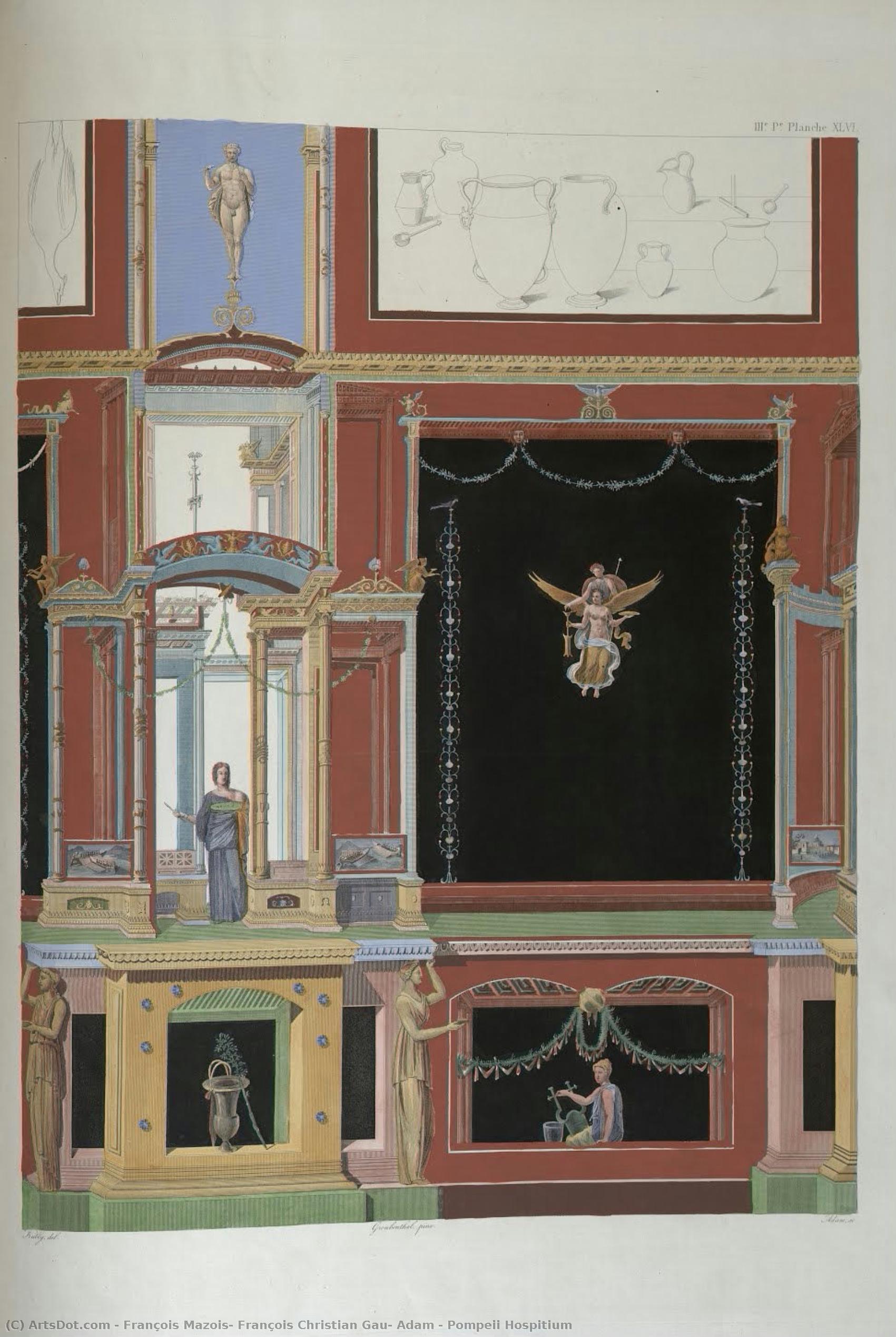
Pompeii Hospitium
 1824
1824 32.0 x 49.0 cm
 Read More
Purchase a high-resolution, enhanced digital image, far superior to the online preview.
Each file is meticulously prepared by our in-house specialists using advanced tools and expert manual retouching. We ensure every image has exceptional clarity, precise color accuracy, and fine detail.
The final file is delivered via email within 72 hours, optimized for immediate use in professional, editorial, and print environments. This is the same quality trusted by top-tier design studios, publishers, and galleries.
Digital Image
Download a high-resolution file for personal display, printing, and creative projects. ( Buy Print Buy Hand Made Painting)
Included in Every Digital Image Order
Expert Digital Delivery, Guaranteed
When you choose ArtsDot.com, you're not just getting an image - you're receiving a professionally enhanced digital artwork, crafted with precision and backed by a satisfaction guarantee. Here's everything that comes with your order, automatically:

Fast Email Delivery
Your high-resolution digital image file will be emailed to you within 72 hours of ordering - ready for immediate use.

AI-Enhanced Digital File
Your artwork is professionally optimized using advanced AI tools and manual editing, ensuring maximum detail, clarity, and color accuracy.

Free Lifetime Re-Delivery
Accidentally deleted or lost your file? No worries - we'll resend it to you anytime, free of charge.

No Import Fees - Ever
Enjoy your artwork instantly with zero customs, duties, or delivery fees - digital downloads are always tax-free.

Color Accuracy Guarantee
We ensure your digital image reflects the original colors as closely as possible using professional tools and color management.

60-Day Satisfaction Guarantee
If you're not satisfied with your digital image, we'll revise it or refund 100% within 60 days - no questions asked.

100% Money-Back Guarantee
Not satisfied? Get a full refund within 60 days of receiving your digital file - no questions asked.

Bulk Order Discounts
Buy 3 images, save 10% - Buy 5, save 15% - Buy 10+, save 20%. Great for creative projects, galleries, and agencies.
Related Artworks








Artist Biography
The Architects of Antiquity: The Legacy of François Mazois and Gau
In the grand tapestry of nineteenth-century French art, few threads are as intricately woven with the dust of ancient ruins as those belonging to François Mazois and Franz Christian Gau. This collaborative duo emerged not merely as artists, but as archaeological visionaries whose work bridged the gap between the romanticized past and the scientific precision of a new era. Their partnership, forged in the intellectual fervor of the early 1800s, was driven by an unwavering passion for reviving the grandeur of antiquity, seeking to breathe life back into the silent stones of Pompeii and beyond.
The origins of this creative union were rooted in distinct yet complementary talents. Born in Lorient, France, Mazois rose to prominence as an architect deeply embedded in the Romantic period. While his early sensibilities embraced the stylistic ideals championed by masters like Ingres, his true calling lay in the meticulous observation required by the burgeoning field of archaeology. In 1824, he joined forces with Gau, a man of German descent whose architectural prowess was matched only by his precision in drawing. Together, they established a studio dedicated to documenting and recreating Roman ruins with an unprecedented level of accuracy that would captivate the European consciousness.
A Monumental Vision: From Nubia to Pompeii
The artistic journey of these pioneers was marked by a profound exploration of lost civilizations. Before their most famous collaborations, Gau had already established himself as a formidable scholar through his expeditions to Nubia. His monumental work, Antiquités de la Nubia, provided a detailed record of the monuments along the Nile, serving as a vital supplement to the French expedition in Egypt. This rigorous approach to architectural measurement and documentation became the cornerstone of the duo's shared methodology.
Their most enduring achievement, however, remains inextricably linked to the rediscovery of Pompeii. The pair undertook the monumental task of reconstructing the Hospitium—a breathtaking architectural marvel that served as a guest house for travelers. This project was far more than a mere reconstruction; it was an act of historical resurrection. For the Universal Exhibition of Paris in 1867, their work stood as a testament to the power of classical revival. The structure was painstakingly crafted to mirror the original Temple of Jupiter Optimus Maximus in Rome, utilizing authentic techniques and materials sourced directly from Italy to ensure an evocative emotional resonance.
Technique, Palette, and Historical Significance
The aesthetic language of Mazois and Gau was defined by a restrained elegance that honored the historical context of their subjects. Influenced by the architectural principles of Palladio and the sculptural grandeur of Michelangelo Buonarroti, they avoided unnecessary ornamentation in favor of structural truth. Their visual palette was intentionally evocative, relying on earthy, classical tones such as:
- Ochre: To capture the sun-drenched warmth of Mediterranean ruins.
- Ivory: Providing a sense of aged marble and light.
- Terracotta: Grounding their compositions in the raw, organic materials of antiquity.
Beyond their architectural reconstructions, Gau’s influence extended into the very fabric of Parisian urbanism. As the Architect of the City of Paris, he directed the restoration of historic churches like Saint-Julien-le-Pauvre and was a key figure in the revival of Gothic architecture, notably through the design of the Church of Sainte-Clotilde. The legacy of Mazois and Gau persists not just in the drawings they left behind, but in the way they taught the modern world to look upon the ruins of the past with both scientific reverence and artistic wonder.
françois mazois, françois christian gau, adam
1783 - 1826 , France
Quick Facts
- Artistic Movement Or Style: Neoclassical
- Date Of Birth: October 12, 1783
- Full Name: François Mazois & Gau
- Nationality: French
- Notable Artworks: ["Pompeii's Hospitium"]
- Place Of Birth: Lorient, France

