 Preview
 Send
Send Share
Share
 Details

 Download
 Similars
 X-Ray
X-Ray Diaporama
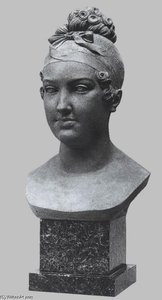
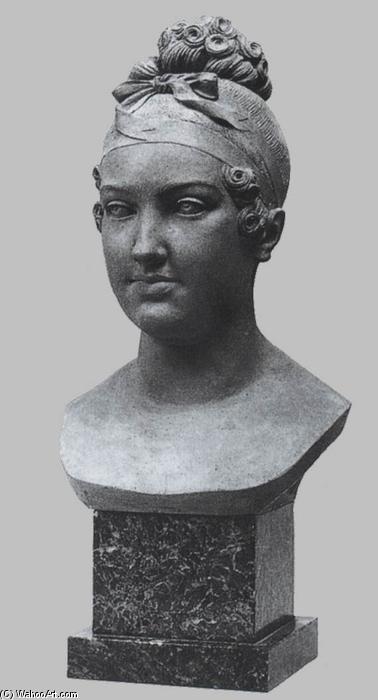
Bust of the Empress Marie-Louise

 Read More
Hand Made Oil Reproduction
Hand-painted oil on canvas in your size and frame, made to order by our artists. ( Buy Print Buy Image)




































Pick from our preset sizes that match the artwork's original proportions.

You may enter your own dimensions to fit a specific frame or space. If your selected size does not match the original image's proportions, we will either crop the artwork or extend the painting with additional hand-painted elements. A digital mockup will be sent for your approval before production begins.
Please note that the on-screen preview does not reflect the actual cropping or extension. Only the mockup will accurately show the final composition.
While custom sizes are available, we recommend selecting a dimension from the predefined list to preserve the original proportions.
After order, ArtsDot.com team will email client for instructions and provide a mockup preview
Worldwide Delivery () in 3/4 weeks instead of standard 5 weeks. (29 August). No compromise on quality.

Free Worldwide Express Shipping

High-Quality Linen Canvas

Full Shipping Insurance

Customs Tax Refund Guarantee

True Color Matching Guarantee

60-Day Return Policy (Defects Only)

100% Money-Back Guarantee

Bulk Discount Offer
 Glass option is only available in size under 110 CM

Bust of the Empress Marie-Louise
Reproduction Medium
Reproduction Size
-


Total Price
$ 263
Related Artworks





Artist Biography
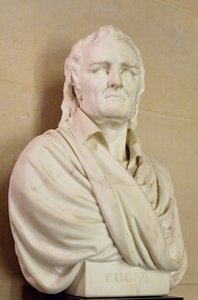
François Nicolas Delaistre (1746 – 1832): Neoclassical Elegance and Roman Influence
François Nicolas Delaistre, born in Paris in 1746, stands as a pivotal figure in the French neoclassical sculpture movement. His artistic journey began under the tutelage of Félix Lecomte and Louis-Claude Vassé, establishing him firmly within the Parisian art milieu of his formative years. However, it was his triumph at the Prix de Rome in 1772 – awarded for sculptural excellence – that truly propelled him onto the international stage and secured his residency at the École royale des élèves protégés and subsequently the Académie de France en Rome between 1773 and 1777. This period proved instrumental in shaping his artistic sensibilities, fostering connections with luminaries like Pierre-Adrien Pâris, whom he would collaborate with on ambitious architectural projects.- Early Training & Prix de Rome Recognition: Delaistre’s foundational education instilled a rigorous understanding of classical principles, preparing him for the prestigious Prix de Rome competition. Winning this honor granted him unparalleled access to Roman artistic traditions and cemented his reputation as a rising talent within the French Academy.
- Roman Residency & Artistic Development: During his time in Rome, Delaistre immersed himself in the vibrant artistic environment of the era, absorbing influences from Michelangelo Buonarroti and Bernini – masters who had revolutionized sculpture centuries earlier. This immersion profoundly impacted his stylistic choices, prioritizing anatomical accuracy and idealized beauty.
- Collaboration with Pierre-Adrien Pâris: Delaistre’s partnership with Pâris yielded remarkable results, notably the design of the Sainte-Marie-Madeleine Chapel in Paris – a testament to their shared vision for blending classical grandeur with religious devotion. Their collaborative efforts exemplify the spirit of intellectual exchange that characterized Parisian culture during the Enlightenment.
Notable Works: Cupid and Psyche - A Symbol of Romantic Idealism
Delaistre’s most celebrated masterpiece, *Cupid and Psyche*, embodies the core tenets of neoclassical sculpture. Executed in Rome around 1780, this monumental marble group captures a pivotal moment from Virgil's epic poem – the reunion of Eros (Cupid) and Psyche after Psyche endured harrowing trials to win his affection. The sculpture’s meticulous anatomical detail—particularly Cupid’s muscular torso—demonstrates Delaistre’s mastery of classical technique and reflects the prevailing fascination with human anatomy during the Enlightenment. Its placement in the Louvre Museum underscores its enduring significance as a cornerstone of French artistic heritage.- Technical Precision: Delaistre employed techniques honed by generations of sculptors, utilizing Carrara marble to achieve unparalleled realism and luminosity.
- Symbolic Narrative: The sculpture’s depiction of Cupid and Psyche transcends mere visual representation; it conveys a profound narrative about love, perseverance, and divine intervention—themes central to Romantic idealism.
Legacy & Influence
François Nicolas Delaistre's contribution to French sculpture extends far beyond his individual creations. He served as an influential teacher at the École des Beaux-Arts, nurturing a new generation of sculptors who embraced neoclassical ideals and championed anatomical accuracy. His work profoundly impacted subsequent artistic movements, establishing a lasting precedent for sculptural excellence and inspiring artists throughout Europe. Delaistre’s legacy continues to resonate today, reminding us of the enduring power of classical art to communicate timeless themes of beauty, virtue, and human aspiration.Further Exploration
For more detailed information about François Nicolas Delaistre's life and artistic achievements, consult resources such as:- Biography of DELAISTRE, François-Nicolas in the Web Gallery of Art:https://www.wga.hu/bio_m/d/delaistr/biograph.html
- ULAN Full Record Display (Getty Research):https://www.getty.edu/vow/ULANFullDisplay?find=&role=&nation=&page=1&subjectid=500010509
françois nicolas delaistre
1746 - 1832 , France
Quick Facts
- Artistic Movement Or Style: Neoclassical
- Artists Or Movements Influenced By This Artist: ['Pierre Adrien Parisis']
- Artists Who Influenced This Artist:
- Félix Lecomte
- Louis-Claude Vassé
- Date Of Birth: March 9, 1746
- Full Name: François Nicolas Delaistre
- Nationality: French
- Notable Artworks: ['Cupid and Psyche']
- Place Of Birth: Paris, France