 Send
Send Share
Share
 Details

 Download
 Similars
 Diaporama
 Stats
StatsDeparture of the Volunteers of 1792 (The marseillaise)


 Read More
Hand Made Oil Reproduction
Hand-painted oil on canvas in your size and frame, made to order by our artists. ( Switch to Print Switch to Digital Image)




































Pick from our preset sizes that match the artwork's original proportions.

You may enter your own dimensions to fit a specific frame or space. If your selected size does not match the original image's proportions, we will either crop the artwork or extend the painting with additional hand-painted elements. A digital mockup will be sent for your approval before production begins.
Please note that the on-screen preview does not reflect the actual cropping or extension. Only the mockup will accurately show the final composition.
While custom sizes are available, we recommend selecting a dimension from the predefined list to preserve the original proportions.
After order, ArtsDot.com team will email client for instructions and provide a mockup preview
Worldwide Delivery () in 3/4 weeks instead of standard 5 weeks. (8 September). No compromise on quality.

Free Worldwide Express Shipping

High-Quality Linen Canvas

Full Shipping Insurance

Customs Tax Refund Guarantee

True Color Matching Guarantee

100-Day Return Policy (Defects Only)

100% Money-Back Guarantee

Bulk Discount Offer
 Glass option is only available in size under 110 CM

Departure of the Volunteers of 1792 (The marseillaise)
Reproduction Medium
Reproduction Size
-


Total Price
$ 263
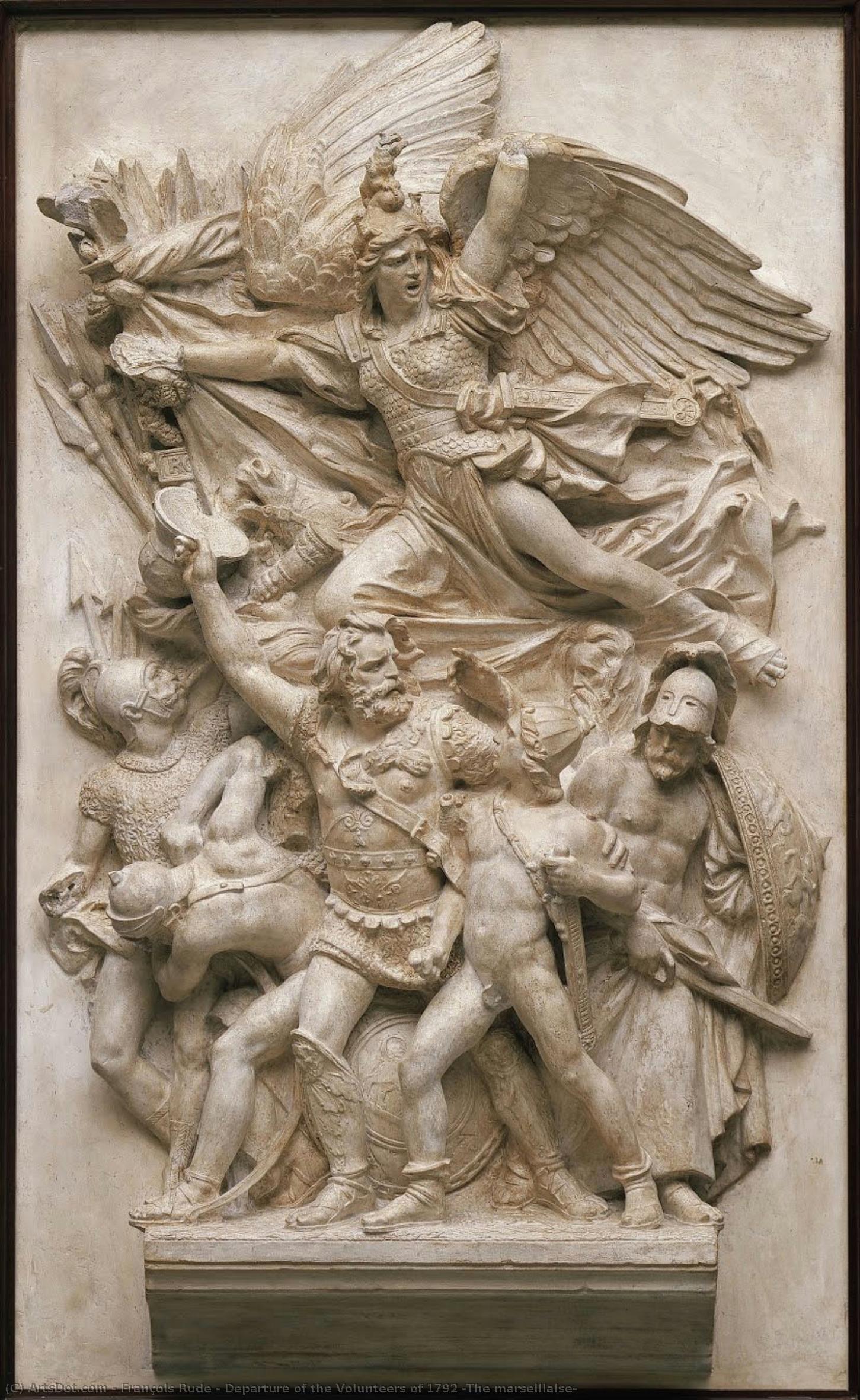
Departure of the Volunteers of 1792 (The Marseillaise)
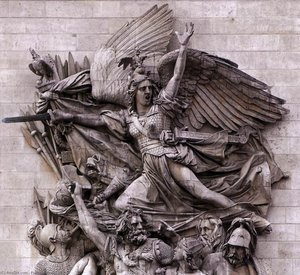
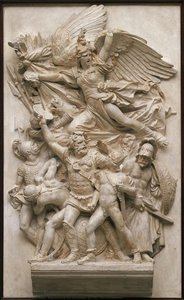
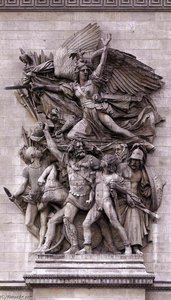
François Rude’s monumental sculpture *La Marseillaise*, commemorating France's first citizen army, stands as an enduring emblem of revolutionary fervor and artistic triumph. Created in 1835-36 during Louis-Philippe’s reign—a period marked by cautious optimism after Napoleon’s downfall—the artwork embodies the spirit of Romantic idealism while firmly rooted in Classical allegory. Its impact on Parisian public space remains palpable, serving as a powerful reminder of France's struggle for liberty and self-determination.- Subject Matter: The sculpture depicts a dramatic scene capturing the departure of volunteers from Paris to defend the Republic against Prussian aggression. It portrays a diverse group of men—ranging from youthful idealists to seasoned veterans—united under the banner of Liberty, personified as a formidable warrior woman.
- Style & Technique: Rude’s masterful execution demonstrates his command of terracotta sculpture, utilizing a technique that blends realism with idealized form. The sculptor meticulously crafted each figure, capturing nuanced expressions and poses that convey both determination and vulnerability. The monumental scale of the piece—approximately 27 ½ × 19 × 4 ¾ inches—further amplifies its visual impact.
- Historical Context: *La Marseillaise* emerged from a pivotal moment in French history, coinciding with the completion of the Arc de Triomphe and Louis-Philippe’s ascension to the throne. The sculpture reflects the anxieties surrounding Napoleon's return and the desire for stability amidst turbulent political currents.
- Symbolism: Rude skillfully employed Classical symbolism to convey profound ideas about liberty and patriotism. The warrior woman embodies courage and resilience, while her wings symbolize divine support and aspiration. The Phrygian cap—a symbol of freed slaves in ancient Rome—represents the triumph of republican ideals over tyranny.
- Emotional Impact: Viewing *La Marseillaise* evokes a visceral response to its depiction of heroic struggle and unwavering conviction. Its grandeur inspires contemplation on themes of courage, sacrifice, and the enduring pursuit of freedom—themes that continue to resonate with audiences today.
- Smarthistory: https://smarthistory.org/rude-la-marseillaise/
- Detroit Institute of Arts: https://dia.org/collection/departure-volunteers-of-1792-the-marseillaise-93527
- Wikipedia: https://en.wikipedia.org/wiki/Fran%C3%A7ois_Rude
Related Artworks
Artist Biography
Early Life and Training
- François Rude was born in Dijon, France, on January 4, 1784, the son of a coppersmith/locksmith.
- His early life involved assisting his father's trade before demonstrating artistic talent.
- He attended François Devosges’s École de Dessin in Dijon, showcasing his burgeoning skills.
- Under the patronage of Louis Frémiet, he began studying with Pierre Cartellier in Paris at the studio of Edme Gaulle in 1805.
- In 1809, his work started gaining recognition, earning him several awards.
- He won the Prix de Rome in 1812 but was unable to travel due to political conditions.
Brussels Period and Marriage
- In 1815, Rude left Paris for Rome but ended up in Brussels with the Frémiets due to political circumstances.
- He married Sophie Frémiet, an accomplished painter, forming a formidable artistic partnership.
- While in Brussels, he executed his first bust of Louis David, gaining significant notice.
Return to Paris and Major Works
- Rude and his wife returned to Paris in 1827, where they remained until his death.
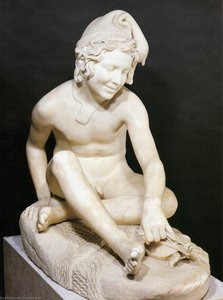
- His notable works include the statue of a Neapolitan Fisherboy Playing with a Tortoise (1831-33), displayed at the Louvre.
- He was commissioned for the Arc de Triomphe, creating the iconic sculpture "La Marseillaise" (Departure of the Volunteers of 1792) completed in 1836. This is arguably his most famous and significant work.
- Other important sculptures include:
- Bust of Jacques-Louis David
- Statue of Maurice, Count of Saxony
- Head of Christ (plaster cast)
- Bust of James de Montry
- Towards the end of his career, Dijon commissioned a marble sculpture depicting Hebe, the Greek goddess of youth. Rude created the model in 1852 but died before its completion; his nephew finished it.
Style and Influences
- Rude's style bridged Neoclassicism and Romanticism.
- While initially influenced by Neoclassical principles, he increasingly embraced a dynamic and emotional style.
- His work often expressed patriotic themes, reflecting the political climate of his time.
- He was influenced by earlier sculptors like Pierre Cartellier and Edme Gaulle.
- The patronage of Louis Frémiet played a crucial role in his early development.
Later Life and Legacy
- François Rude died on November 3, 1855, in Paris.
- He is remembered for his powerful and expressive sculptures, particularly "La Marseillaise," which remains a symbol of French national identity.
- His work represents a transition from the rigid formality of Neoclassicism to the more emotive and dramatic style of Romanticism.
- Numerous busts and casts of his works are housed in museums such as Musée Rude, Musée des Beaux-Arts de Dijon, and the Louvre.
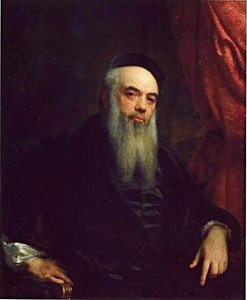
françois rude
1784 - 1855 , France
Quick Facts
- Artistic Movement Or Style: Neoclassicism & Romanticism
- Artists Who Influenced This Artist:
- Edme Gaulle
- Pierre Cartellier
- Date Of Birth: January 4, 1784
- Date Of Death: November 3, 1855
- Full Name: François Rude
- Nationality: French
- Notable Artworks:
- La Marseillaise
- Napoleon Rising to Immortality
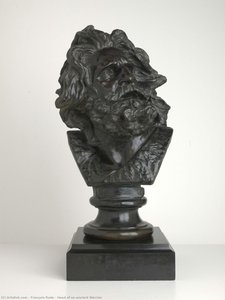
- Head of an Ancient Warrior
- Place Of Birth: Dijon, France
Related Articles

Bronze Sculptures That Defined Art History | ArtsDot
Journey through art history with our Top 10 bronze sculptures! Explore masterpieces by Rodin, Michelangelo & more. Discover stories behind iconic statues and find museum-quality reproductions for your home decor at ArtsDot.com.
The Enduring Form: Sculpture Across History, Technique & Emotional Resonance
Explore the rich history of sculpture with ArtsDot. Discover key techniques, influential artists & investment potential for discerning collectors. Expert insights into valuing and collecting timeless masterpieces.

The Enduring Form: Exploring Themes & Techniques in Sculpture Across Historical Periods
Explore the rich history of sculpture from ancient masterpieces to contemporary innovations. Discover key techniques, influential artists & investment potential for discerning art collectors.

Goya's Masterpieces: Explore 25 Iconic Paintings & Art Prints | ArtsDot
Delve into the world of Francisco Goya with ArtsDot. Explore 25 iconic paintings – from 'The Third of May' to his haunting Black Paintings. Discover the stories, techniques & emotions behind these Spanish masterpieces. Find museum-quality art reproductions for your home at ArtsDot.com!

Bronze Age to Modern Masters: 10 Sculptures That Redefined Art | ArtsDot
Journey through art history with 10 legendary bronze sculptures – from Michelangelo's David to Rodin’s Thinker. Explore the stories, techniques & timeless beauty of these masterpieces. Find museum-quality reproductions & elevate your home decor on ArtsDot.com.