 Send
Send Share
Share
 Details

 Download
 Similars
 Diaporama
 Stats
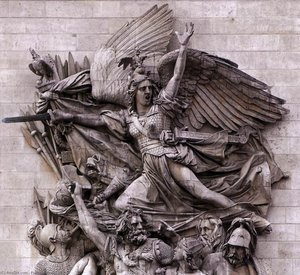
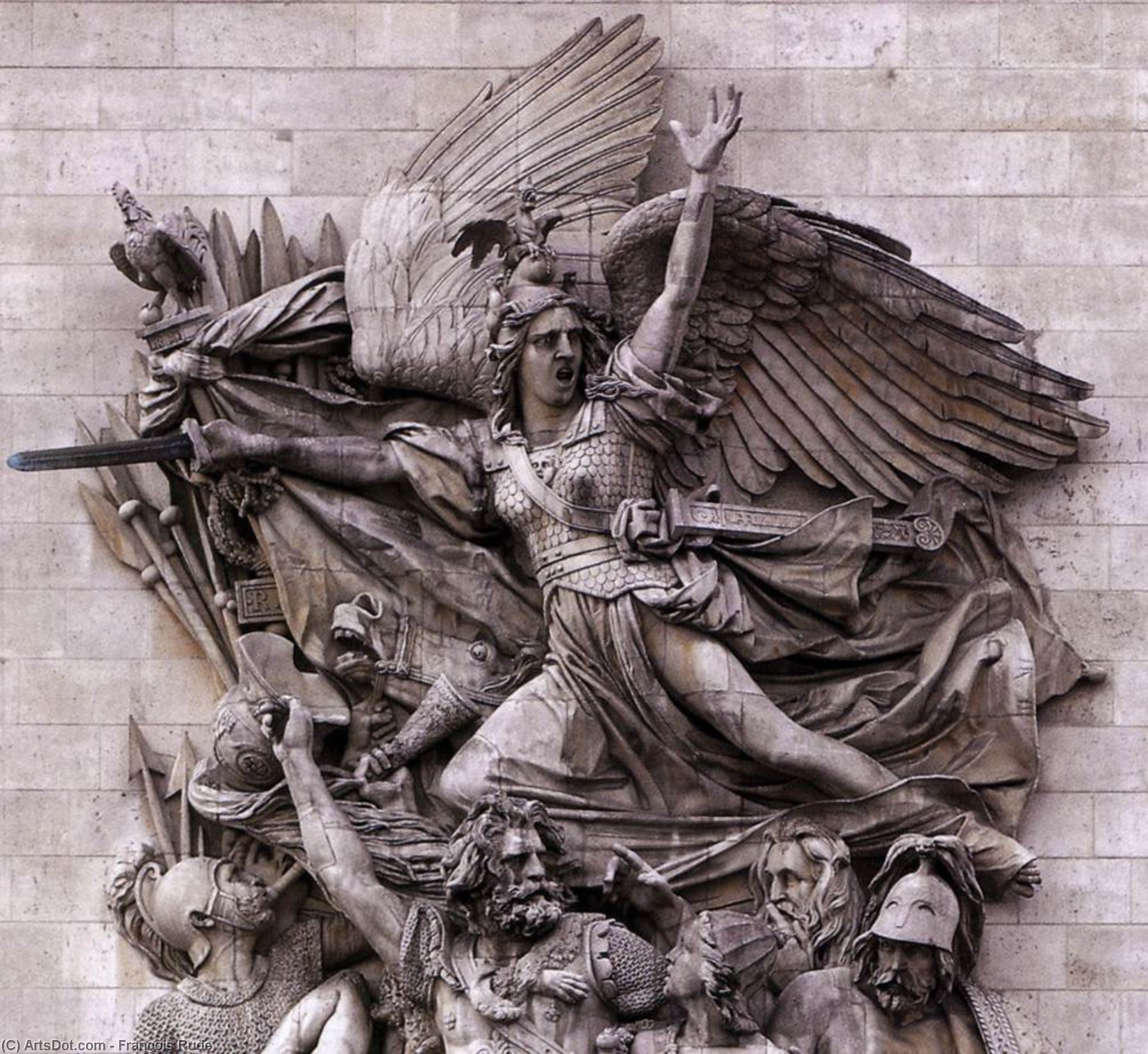
StatsMarch of the Volunteers of 1792 (detail)


 Read More
Hand Made Oil Reproduction
Hand-painted oil on canvas in your size and frame, made to order by our artists. ( Switch to Print Switch to Digital Image)




































Pick from our preset sizes that match the artwork's original proportions.

You may enter your own dimensions to fit a specific frame or space. If your selected size does not match the original image's proportions, we will either crop the artwork or extend the painting with additional hand-painted elements. A digital mockup will be sent for your approval before production begins.
Please note that the on-screen preview does not reflect the actual cropping or extension. Only the mockup will accurately show the final composition.
While custom sizes are available, we recommend selecting a dimension from the predefined list to preserve the original proportions.
After order, ArtsDot.com team will email client for instructions and provide a mockup preview
Worldwide Delivery () in 3/4 weeks instead of standard 5 weeks. (8 September). No compromise on quality.

Free Worldwide Express Shipping

High-Quality Linen Canvas

Full Shipping Insurance

Customs Tax Refund Guarantee

True Color Matching Guarantee

100-Day Return Policy (Defects Only)

100% Money-Back Guarantee

Bulk Discount Offer
 Glass option is only available in size under 110 CM

March of the Volunteers of 1792 (detail)
Reproduction Medium
Reproduction Size
-


Total Price
$ 263
The Echoes of Revolution: François Rude’s “March of the Volunteers”
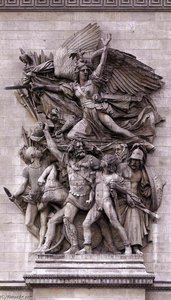
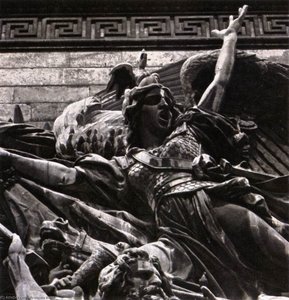
François Rude's "March of the Volunteers of 1792 (detail)," a remarkable salted paper print by Gustave Le Gray, isn’t merely a depiction of a historical moment; it’s a visceral embodiment of revolutionary fervor and enduring civic pride. Created in 1836 as part of the monumental sculpture adorning the Arc de Triomphe at the Étoile in Paris, this image captures a pivotal scene – the mobilization of Parisian citizens to defend their republic against foreign invasion. It's a work that transcends its immediate context, resonating with themes of liberty, sacrifice, and the collective spirit of a nation forging its identity.
The sculpture itself, a colossal relief carved in stone, depicts a winged woman – often interpreted as Liberty – leading a diverse throng of men towards battle. These aren’t idealized heroes; they are ordinary Parisians, ranging from youthful volunteers to seasoned veterans, united by a common purpose. Rude masterfully employs classical allegory, drawing upon the iconography of ancient Rome—the winged figure echoes Venus, representing not just victory but also the nurturing and protective force of freedom. The inclusion of Phrygian caps, symbols of liberation worn by freed slaves in antiquity, subtly underscores the revolutionary ideals at play.
A Technique of Dramatic Realism
Le Gray’s photograph offers a unique window into Rude's original vision. The process itself is crucial to understanding the image’s power. Salted paper printing, a technique pioneered by William Henry Fox Talbot, involved carefully controlling the exposure and manipulation of silver salts on paper to create tones ranging from white to black. This method produced a remarkably detailed and nuanced print, capable of capturing the textures of the sculpted figures – the folds of their uniforms, the gleam of their weapons, the determined expressions etched onto their faces. The subtle gradations of grey convey not just form but also light and shadow, lending an incredible sense of depth and realism to the scene.
Notably, Le Gray’s photographic process was relatively new at this time, and he meticulously documented his techniques in a series of publications. This demonstrates a commitment to scientific precision alongside artistic expression – a hallmark of the era's burgeoning interest in photography as both an art form and a tool for documentation.
Symbolism and the Spirit of 1792
The “March of the Volunteers” is deeply rooted in the tumultuous events of 1792, a year marked by political upheaval and revolutionary fervor. The Parisian populace, driven by ideals of liberty, equality, and fraternity, rose up against the monarchy to establish a republic. Rude’s sculpture served as a potent symbol of this uprising, celebrating the courage and selflessness of those who risked their lives for the cause of freedom. The dynamic composition—the surging figures, the upward thrust towards the sky—evokes a sense of unstoppable momentum, capturing the energy and passion of the revolutionary spirit.
Furthermore, the choice of depicting ordinary citizens rather than aristocratic heroes was deliberate. It emphasized that liberty wasn’t solely the domain of the elite; it belonged to all who embraced its values. The image thus became an enduring emblem of civic engagement and collective action – a reminder that revolution is often born from the participation of the people.
A Legacy in Stone and Silver
While the original sculpture remains a monumental landmark in Paris, Le Gray’s photograph provides invaluable insight into its creation and impact. It's more than just a technical reproduction; it’s a testament to Rude’s artistic genius and Le Gray’s photographic skill. The image captures not only the physical details of the scene but also the emotional intensity of the moment – the unwavering determination, the shared purpose, and the profound significance of this pivotal chapter in French history. Today, “March of the Volunteers” continues to inspire, reminding us of the enduring power of ideals and the importance of civic engagement.
Related Artworks


Artist Biography
Early Life and Training
- François Rude was born in Dijon, France, on January 4, 1784, the son of a coppersmith/locksmith.
- His early life involved assisting his father's trade before demonstrating artistic talent.
- He attended François Devosges’s École de Dessin in Dijon, showcasing his burgeoning skills.
- Under the patronage of Louis Frémiet, he began studying with Pierre Cartellier in Paris at the studio of Edme Gaulle in 1805.
- In 1809, his work started gaining recognition, earning him several awards.
- He won the Prix de Rome in 1812 but was unable to travel due to political conditions.
Brussels Period and Marriage
- In 1815, Rude left Paris for Rome but ended up in Brussels with the Frémiets due to political circumstances.
- He married Sophie Frémiet, an accomplished painter, forming a formidable artistic partnership.
- While in Brussels, he executed his first bust of Louis David, gaining significant notice.
Return to Paris and Major Works
- Rude and his wife returned to Paris in 1827, where they remained until his death.
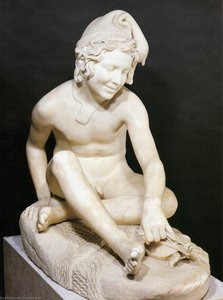
- His notable works include the statue of a Neapolitan Fisherboy Playing with a Tortoise (1831-33), displayed at the Louvre.
- He was commissioned for the Arc de Triomphe, creating the iconic sculpture "La Marseillaise" (Departure of the Volunteers of 1792) completed in 1836. This is arguably his most famous and significant work.
- Other important sculptures include:
- Bust of Jacques-Louis David
- Statue of Maurice, Count of Saxony
- Head of Christ (plaster cast)
- Bust of James de Montry
- Towards the end of his career, Dijon commissioned a marble sculpture depicting Hebe, the Greek goddess of youth. Rude created the model in 1852 but died before its completion; his nephew finished it.
Style and Influences
- Rude's style bridged Neoclassicism and Romanticism.
- While initially influenced by Neoclassical principles, he increasingly embraced a dynamic and emotional style.
- His work often expressed patriotic themes, reflecting the political climate of his time.
- He was influenced by earlier sculptors like Pierre Cartellier and Edme Gaulle.
- The patronage of Louis Frémiet played a crucial role in his early development.
Later Life and Legacy
- François Rude died on November 3, 1855, in Paris.
- He is remembered for his powerful and expressive sculptures, particularly "La Marseillaise," which remains a symbol of French national identity.
- His work represents a transition from the rigid formality of Neoclassicism to the more emotive and dramatic style of Romanticism.
- Numerous busts and casts of his works are housed in museums such as Musée Rude, Musée des Beaux-Arts de Dijon, and the Louvre.
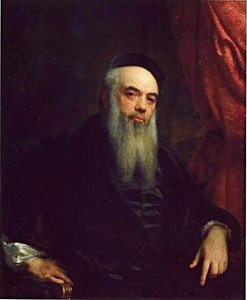
françois rude
1784 - 1855 , France
Quick Facts
- Artistic Movement Or Style: Neoclassicism & Romanticism
- Artists Who Influenced This Artist:
- Edme Gaulle
- Pierre Cartellier
- Date Of Birth: January 4, 1784
- Date Of Death: November 3, 1855
- Full Name: François Rude
- Nationality: French
- Notable Artworks:
- La Marseillaise
- Napoleon Rising to Immortality
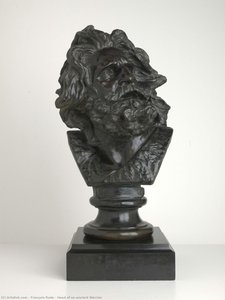
- Head of an Ancient Warrior
- Place Of Birth: Dijon, France
Related Articles

The Enduring Form: Exploring Themes & Techniques in Sculpture Across Historical Periods
Explore the rich history of sculpture from ancient masterpieces to contemporary innovations. Discover key techniques, influential artists & investment potential for discerning art collectors.

The Enduring Form: Sculpture Across History, Technique & Emotional Resonance
Explore the rich history of sculpture with ArtsDot. Discover key techniques, influential artists & investment potential for discerning collectors. Expert insights into valuing and collecting timeless masterpieces.
The Enduring Legacy of Bronze Sculpture: History, Techniques & Contemporary Interpretations
Explore the rich history & enduring appeal of bronze sculpture. Learn about casting techniques, iconic artists, collecting tips, & contemporary interpretations. Expert insights for discerning art collectors.

Bronze Age to Modern Masters: 10 Sculptures That Redefined Art | ArtsDot
Journey through art history with 10 legendary bronze sculptures – from Michelangelo's David to Rodin’s Thinker. Explore the stories, techniques & timeless beauty of these masterpieces. Find museum-quality reproductions & elevate your home decor on ArtsDot.com.

Bronze Sculptures That Defined Art History | ArtsDot
Journey through art history with our Top 10 bronze sculptures! Explore masterpieces by Rodin, Michelangelo & more. Discover stories behind iconic statues and find museum-quality reproductions for your home decor at ArtsDot.com.