 Preview
 Send
Send Share
Share
 Details

 Download
 Similars
 X-Ray
X-Ray Diaporama
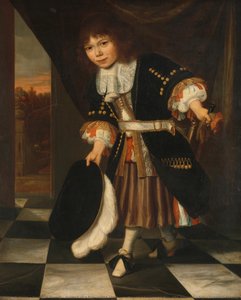
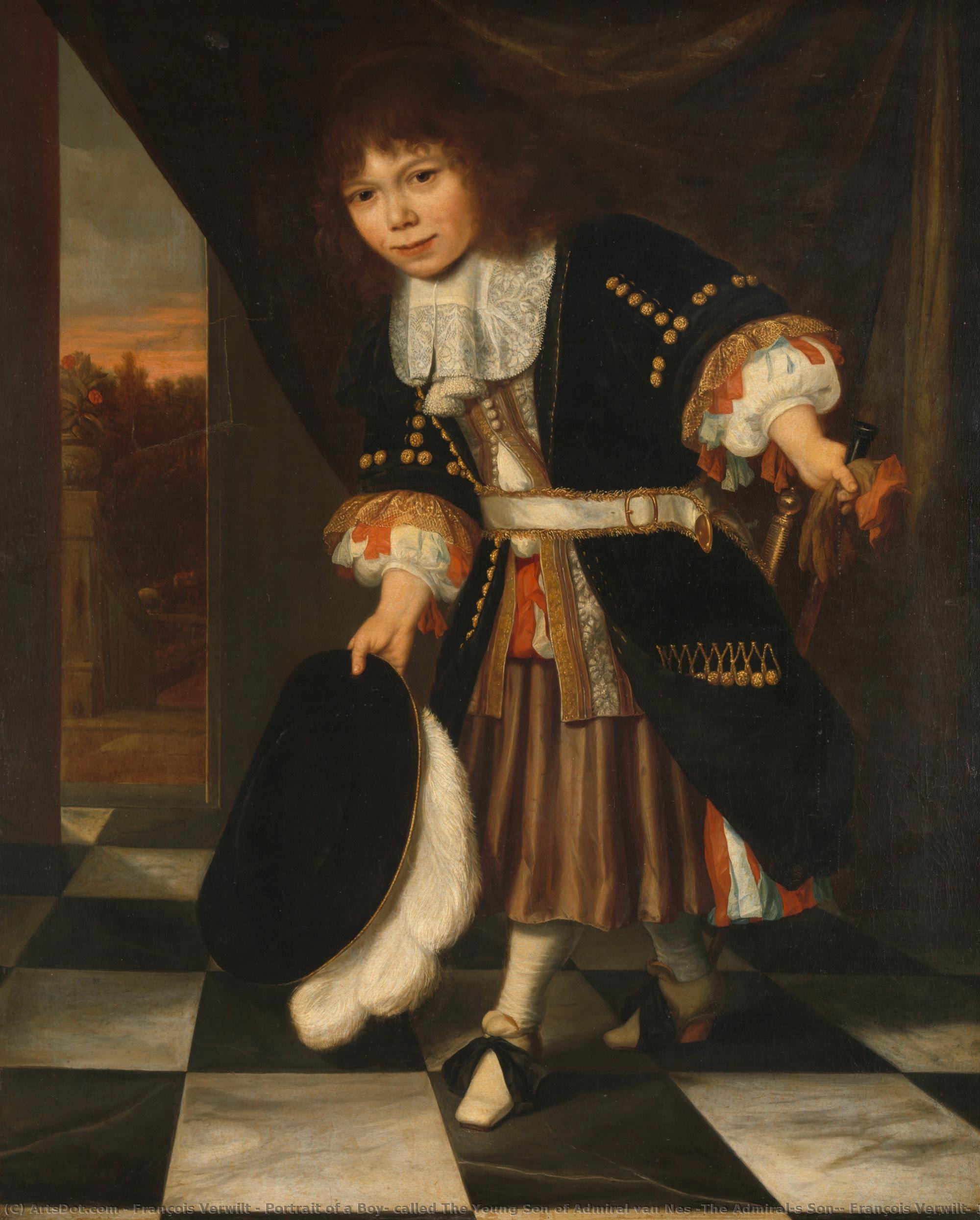
Portrait of a Boy, called The Young Son of Admiral van Nes (The Admiral"s Son), François Verwilt, 1669
 1669
1669 114.0 x 93.0 cm
 Read More
Giclée / Art Print
Museum-quality giclée or canvas print with fast production and flexible finish options. ( Buy Hand Made Painting Buy Image)




































Pick from our preset sizes that match the artwork's original proportions.

You may enter your own dimensions to fit a specific frame or space. If your selected size does not match the original image's proportions, we will either crop the artwork or extend the image with a mirrored or solid-fill edge. A digital mockup will be sent for your approval before production begins.
Please note that the on-screen preview does not reflect the actual cropping or extension. Only the mockup will accurately show the final composition.
While custom sizes are available, we recommend selecting a dimension from the predefined list to preserve the original proportions.
Worldwide Delivery () in 2 weeks instead of standard 4/5 weeks. (5 September)

Free Worldwide Express Shipping

High-Quality Linen Canvas

Full Shipping Insurance

Customs Tax Refund Guarantee

True Color Matching Guarantee

60-Day Return Policy (Defects Only)

100% Money-Back Guarantee

Bulk Discount Offer
 Glass option is only available in size under 110 CM

Portrait of a Boy, called The Young Son of Admiral van Nes (The Admiral"s Son), François Verwilt, 1669
Giclée / Art Print
Reproduction Size
-


Total Price
$ 63
Related Artworks



Artist Biography
The Serene Vision of François Verwilt
In the golden twilight of the seventeenth century, as the Dutch Republic flourished through maritime prowess and mercantile intellect, the artist François Verwilt emerged as a master of atmospheric tranquility. Born around 1623 in the bustling port of Rotterdam, Verwilt was destined for a life defined by the brush and the canvas. His lineage was one of artistic devotion; he was the son of Adriaan Verwilt, an established painter from Antwerp, which provided him with an early immersion into the rich Flemish traditions of color and form. This foundational heritage, blended with the burgeoning Dutch interest in naturalism, allowed him to develop a style that would eventually capture the very essence of the Low Countries' landscape.
The trajectory of Verwilt’s talent was significantly shaped by his formal apprenticeship in Utrecht. Under the tutelage of Cornelius van Poelenburgh, alongside contemporaries such as Jan van der Lijs, Verwilt absorbed the delicate nuances of the Poelenburch landscape school. This particular movement emphasized a refined approach to nature, utilizing subtle gradations of light and atmospheric perspective to create depth and a sense of infinite distance. Rather than embracing the heavy, dramatic shadows of the high Baroque, Verwilt leaned into a more contemplative aesthetic. He mastered the art of conveying grandeur through soft tonal variations, making the viewer feel as though they were breathing the crisp, salt-tinged air of a coastal morning.
A Versatile Mastery of Genre and Light
While many landscape painters of his era remained tethered to a single subject, Verwilt demonstrated an extraordinary versatility that mirrored the complexity of Dutch life. His repertoire expanded far beyond simple vistas to include historical, mythical, and biblical landscapes, as well as intimate genre scenes depicting the daily rhythms of village life. He possessed a rare ability to pivot between different emotional registers; in his landscapes, one might find the ethereal light of Poelenburgh, yet in his depictions of contemporary Dutch life, he could evoke the profound chiaroscuro reminiscent of Rembrandt. This duality allowed him to capture both the divine and the mundane with equal reverence.
His technical prowess was particularly noted in his treatment of human figures. Historical accounts, such as those by Houbraken, suggest that Verwilt even adopted specific techniques for rendering flesh tones, inspired by the Hague-based painter Daniel Vertangen. This meticulous attention to detail extended to his portraits, which remain some of his most poignant contributions to the art world. Whether painting a noble figure or a simple village scene, Verwilt’s work is characterized by a sense of stillness—a quietude that invites the observer into a state of peaceful meditation.
Legacy and the Spirit of Rotterdam
Throughout his career, Verwilt’s presence was felt across the vital trade hubs of the Netherlands. While Rotterdam remained his primary residence and the heart of his identity, his professional reach extended to Zeeland, where he worked in Vlissingen, Middelburg, and Veere. His membership in the Guild of St. Luke in Middelburg in 1661 and the guild in Veere in 1667 underscores his status as a respected professional navigating the economic currents of his time. He was not merely an observer of the landscape but a participant in the very prosperity that fueled the Dutch Golden Age.
Though no formal monographs exist to chronicle every stroke of his brush, the enduring significance of François Verwilt is preserved in the museums of Europe, from Amsterdam and Rotterdam to Paris and Vienna. His ability to synthesize the Flemish tradition with the Dutch passion for realism created a body of work that serves as a window into a vanished era of calm and prosperity. Today, we remember him not just as a painter of seascapes, but as an architect of atmosphere, whose canvases continue to offer a sanctuary of light and peace in an ever-changing world.
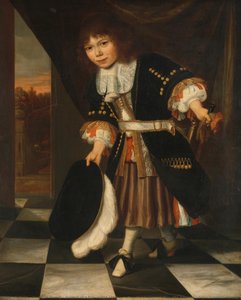
francois verwilt
1691 , Netherlands
Quick Facts
- Artistic Movement Or Style: Poelenburch Landscape School
- Artists Or Movements Influenced By This Artist: ['Dutch Golden Age']
- Artists Who Influenced This Artist: ['Cornelius van Poelenburgh']
- Date Of Birth: c.1623
- Date Of Death: 8 august 1691
- Full Name: François Verwilt
- Nationality: Dutch
- Notable Artworks:
- Seascape Views
- Portraits
- Place Of Birth: Rotterdam, Netherlands