 Preview
 Send
Send Share
Share
 Details

 Download
 Similars
 X-Ray
X-Ray Diaporama
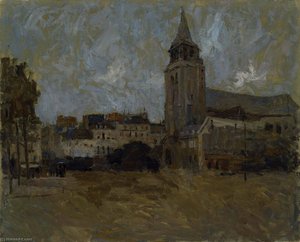
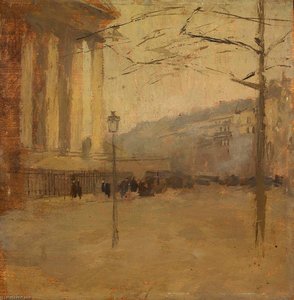
St. Gervais
 55.0 x 46.0 cm
 Read More
Hand Made Oil Reproduction
Hand-painted oil on canvas in your size and frame, made to order by our artists. ( Buy Print Buy Image)




































Pick from our preset sizes that match the artwork's original proportions.

You may enter your own dimensions to fit a specific frame or space. If your selected size does not match the original image's proportions, we will either crop the artwork or extend the painting with additional hand-painted elements. A digital mockup will be sent for your approval before production begins.
Please note that the on-screen preview does not reflect the actual cropping or extension. Only the mockup will accurately show the final composition.
While custom sizes are available, we recommend selecting a dimension from the predefined list to preserve the original proportions.
After order, ArtsDot.com team will email client for instructions and provide a mockup preview
Worldwide Delivery () in 3/4 weeks instead of standard 5 weeks. (18 August). No compromise on quality.

Free Worldwide Express Shipping

High-Quality Linen Canvas

Full Shipping Insurance

Customs Tax Refund Guarantee

True Color Matching Guarantee

60-Day Return Policy (Defects Only)

100% Money-Back Guarantee

Bulk Discount Offer
 Glass option is only available in size under 110 CM

St. Gervais
Reproduction Medium
Reproduction Size
-


Total Price
$ 263
Artwork Description
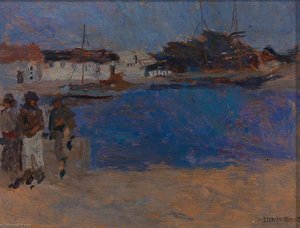
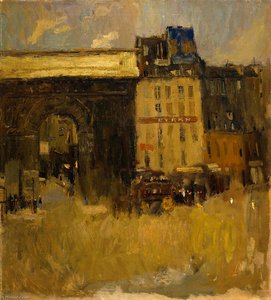
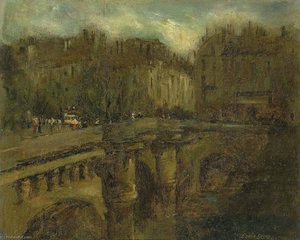
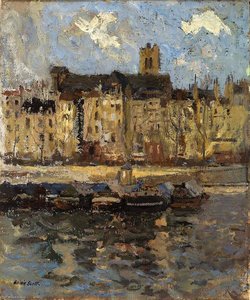
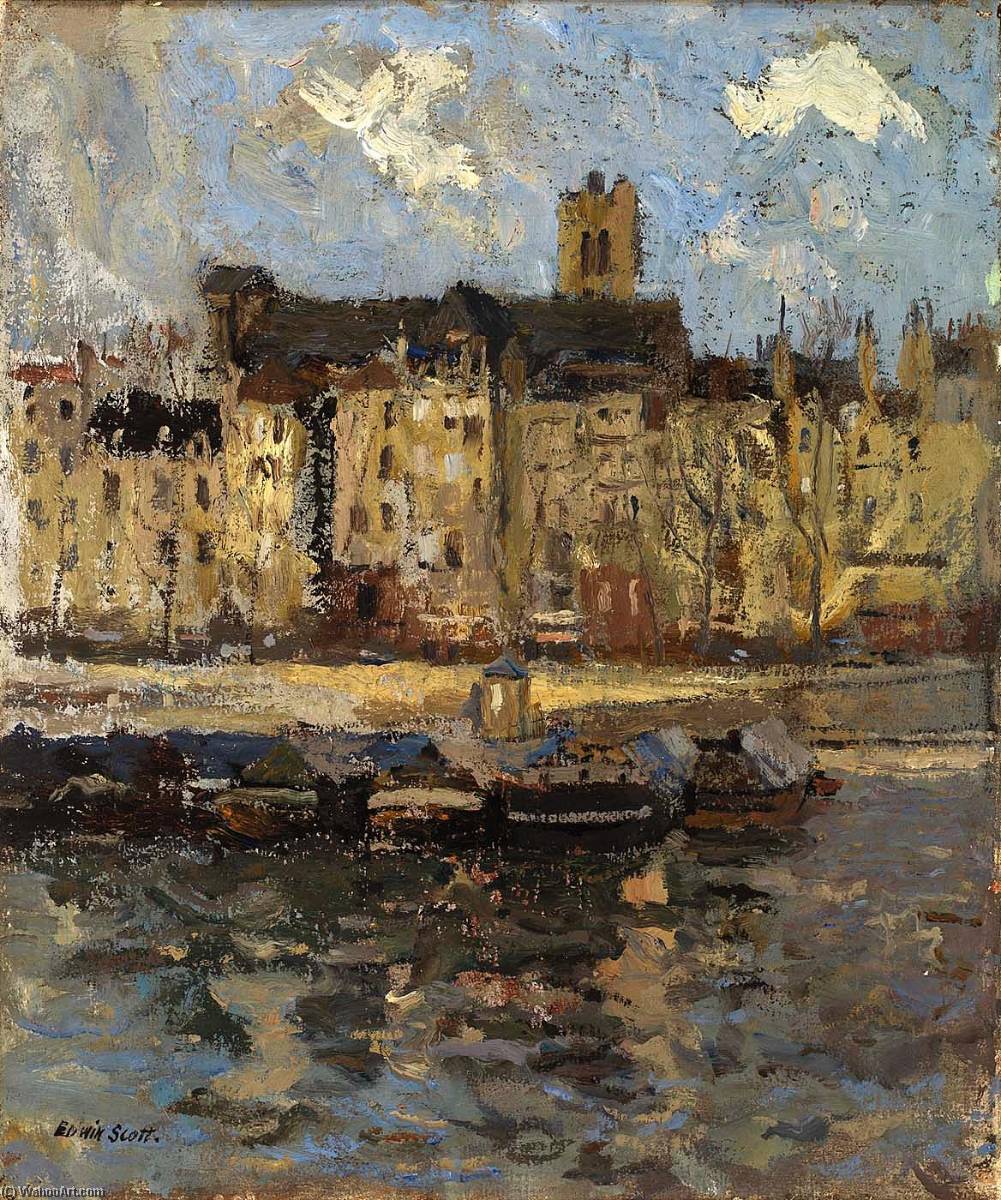
The painting is set against a backdrop of blue skies, adding depth and color to the scene. The overall atmosphere of the painting suggests a peaceful day by the water with the city's architecture as a prominent feature. Frank Edwin Scott was an American painter known for his landscapes and cityscapes, and St. Gervais is one of his notable works.
Artist Background
Frank Edwin Scott was born in 1863 and died in 1929. He was a prominent figure in the American art scene during his time, and his paintings are now part of the collections of several museums, including the Smithsonian American Art Museum.Some of his notable works include St. Gervais, which is available as a handmade oil painting reproduction on https://ArtsDot.com.
Painting Details
The painting St. Gervais measures 55 x 46 cm and is made of oil on canvas. It is currently housed at the Smithsonian American Art Museum in the United States.- The painting features a beautiful representation of the city of St. Gervais with its old buildings and boats on the water.
- The scene is set against a backdrop of blue skies, adding depth and color to the scene.
- The overall atmosphere of the painting suggests a peaceful day by the water with the city's architecture as a prominent feature.
For more information on Frank Edwin Scott and his paintings, visit https://ArtsDot.com or check out the Smithsonian American Art Museum website.
Related Artworks









Artist Biography
The Luminous Legacy of Frank Edwin Scott
Born into a lineage defined by the pursuit of discovery, Frank Edwin Scott entered the world on November 27, 1863, in Edinburgh, Scotland. His heritage was one of profound exploration; his father, Robert Falcon Scott, would become a legendary figure in Antarctic exploration, while his mother, Eleanor Falconer Scott, nurtured a deep devotion to the intricate wonders of botany. This unique upbringing, steeped in both the rigorous observation of science and the delicate beauty of the natural world, provided the foundational duality of Scott’s artistic soul. From his earliest years, he possessed an innate ability to translate the textures of life onto paper, a talent that would eventually lead him away from the rugged landscapes of his youth toward the vibrant, light-drenched streets of Paris.
Scott's formal journey into the realm of fine art began at the prestigious Slade School of Fine Art in London. Under the tutelage of masters such as Frederic Leighton and Joseph Hibbert, he mastered the disciplined techniques of the Beaux Arts aesthetic. Yet, the rigid confines of academic tradition could not contain his burgeoning spirit. Driven by a desire to capture the ephemeral, Scott found himself drawn to the revolutionary movement of Impressionism. He sought to move beyond static representation, instead chasing the fleeting dance of light and the atmospheric shifts that define a single moment in time. This transition marked his true emergence as an artist, as he began to prioritize the sensory experience of the eye over the structured dictates of the academy.
A Parisian Vision: Light, Color, and Movement
The heart of Scott’s creative evolution beat within the bustling studios of Montmartre. Immersing himself in the epicenter of the Impressionist movement, he found a kindred spirit in the works of Claude Monet, Pierre-Auguste Renoir, and Alfred Sisley. These encounters were more than mere social engagements; they were intellectual catalysts that fueled his experimentation with plein air painting. By venturing outdoors to directly observe the world, Scott learned to manipulate oil on canvas to replicate the shimmering reflections of the Seine and the soft, hazy glow of Parisian twilight. His brushwork became increasingly fluid, characterized by a luminous quality that breathed life into his subjects.
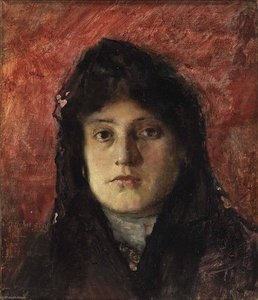
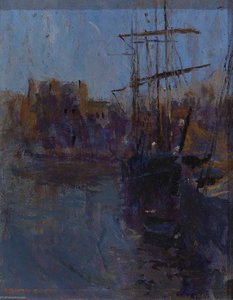
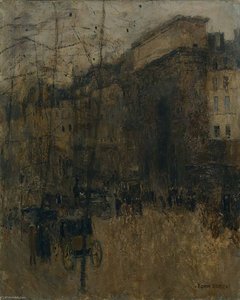
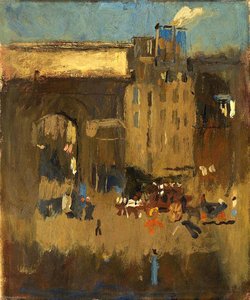
His repertoire serves as a visual love letter to Paris, capturing iconic landmarks with an intimacy that transcends mere topography. In works such as Place de la Concorde no. V, one can witness his mastery of depth and texture, where statues atop pillars and the distant silhouette of a clock tower are brought to life through energetic strokes and the inclusion of dynamic elements like scattered birds. Similarly, his depictions of Place St. Germain des Pres showcase his ability to render the bustling energy of city streets, balancing the grandeur of historic churches with the transient movement of pedestrians. Whether capturing the melancholic atmosphere of a twilight scene at Quai de la Seine or the somber realism of a Portrait de Jeune Homme, Scott’s work remains anchored in an acute sensitivity to tonal variation and the emotional weight of light.
Historical Significance and Artistic Endurance
Though his life was cut short in 1929, Frank Edwin Scott left behind a body of work that stands as a testament to the enduring charm of the Impressionist era. His ability to bridge the gap between the scientific precision inherited from his family and the emotive freedom of modernism allowed him to create scenes that feel both structurally sound and atmospherically ethereal. The presence of his works in esteemed institutions, such as the Smithsonian American Art Museum and the Hirshhorn Museum and Sculpture Garden, underscores his lasting contribution to the transatlantic art dialogue.
Today, Scott’s paintings continue to resonate with viewers who seek the nostalgic beauty of a bygone Paris. His legacy is found in:
- The mastery of light: His unique ability to render sunlight on water and foliage.
- Urban intimacy: His skill in transforming crowded cityscapes into poetic, atmospheric narratives.
- Technical evolution: The transition from academic rigor to the expressive freedom of Impressionistic brushstrokes.
Through his eyes, the streets of Paris were not merely locations, but living, breathing canvases of color and emotion, forever preserved in the soft, luminous glow of his enduring masterpieces.
frank edwin scott
1863 - 1929
Quick Facts
- Artistic Movement Or Style: Impressionism
- Artists Or Movements Influenced By This Artist: ['British Impressionism']
- Artists Who Influenced This Artist:
- Claude Monet
- Pierre Auguste Renoir
- Date Of Birth: 1863
- Date Of Death: 1929
- Full Name: Frank Edwin Scott
- Nationality: British
- Notable Artworks:
- La Madeleine no. I
- Place St. Germain des Pres
- Place de la Concorde no. V
- Place Of Birth: Lancaster, Pennsylvania