 Preview
 Send
Send Share
Share
 Details

 Download
 Similars
 X-Ray
X-Ray Diaporama
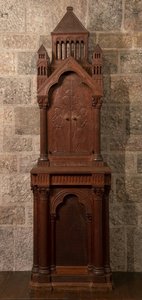
Bible cabinet in Glencairn’s chapel

 Read More
Giclée / Art Print
Museum-quality giclée or canvas print with fast production and flexible finish options. ( Buy Hand Made Painting Buy Image)




































Pick from our preset sizes that match the artwork's original proportions.

You may enter your own dimensions to fit a specific frame or space. If your selected size does not match the original image's proportions, we will either crop the artwork or extend the image with a mirrored or solid-fill edge. A digital mockup will be sent for your approval before production begins.
Please note that the on-screen preview does not reflect the actual cropping or extension. Only the mockup will accurately show the final composition.
While custom sizes are available, we recommend selecting a dimension from the predefined list to preserve the original proportions.
Worldwide Delivery () in 2 weeks instead of standard 4/5 weeks. (24 August)

Free Worldwide Express Shipping

High-Quality Linen Canvas

Full Shipping Insurance

Customs Tax Refund Guarantee

True Color Matching Guarantee

60-Day Return Policy (Defects Only)

100% Money-Back Guarantee

Bulk Discount Offer
 Glass option is only available in size under 110 CM

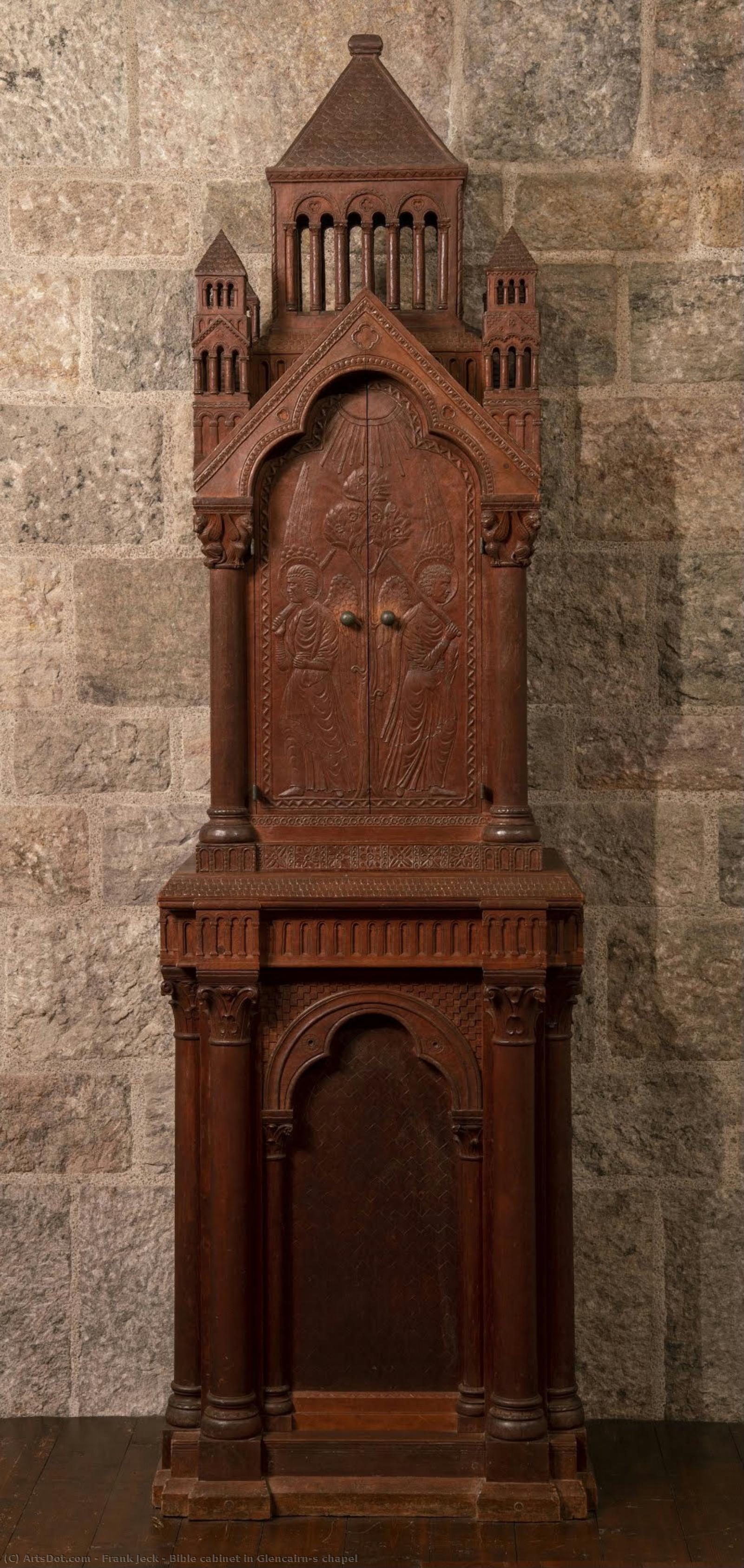
Bible cabinet in Glencairn’s chapel
Giclée / Art Print
Reproduction Size
-


Total Price
$ 63
Collectible Description
Related Artworks









Artist Biography
Frank Jeck: Sculptor of Faith and Form
Frank Jeck (1884 – 1965) was a Hungarian-American woodcarver whose distinctive style blended meticulous craftsmanship with profound spiritual contemplation, leaving an indelible mark on American decorative arts and particularly at Glencairn Museum. Born in Hungary, he emigrated to the United States in 1903 seeking artistic opportunity and establishing himself as a respected figure within Bryn Athyn Studios’ creative orbit during the interwar years. His legacy resides not merely in his technical prowess but also in his ability to imbue inanimate wood with evocative narratives rooted in biblical symbolism.
Little is known about Jeck's formative years beyond documented records of his education in Budapest, where he honed his skills in traditional Hungarian woodworking techniques. These foundational influences instilled a dedication to precision and an appreciation for the inherent beauty of natural materials—qualities that would characterize his entire artistic career. Although biographical details remain sparse, anecdotal evidence suggests a lifelong fascination with religious iconography and storytelling through visual mediums.
A Partnership of Vision and Devotion
Jeck’s professional trajectory gained significant momentum through his association with Raymond Pitcairn, a wealthy philanthropist and visionary architect who founded Bryn Athyn Studios in Pennsylvania. Pitcairn recognized Jeck's exceptional talent and entrusted him with numerous commissions, primarily focused on crafting monumental sculptures for Glencairn Museum—a breathtaking castle-like edifice conceived as both a private residence and a testament to Pitcairn’s devotion to Moravian Christianity. This partnership proved instrumental in elevating Jeck’s reputation and establishing his artistic vision within the broader context of American Modernism.
The collaboration between carver and patron was deeply rooted in shared spiritual values. Working with difficult hardwoods like cherry and teak, Jeck translated complex theological concepts into tangible, tactile art. His work often served as a bridge between the physical and the divine, where every notch and curve held a deeper meaning intended to inspire the viewer toward higher contemplation.
The Sacred Language of Wood
Jeck's contributions to Glencairn are perhaps best understood through his ability to weave biblical narratives into functional objects. His mastery is evident in several key works that remain highlights of American decorative craft:
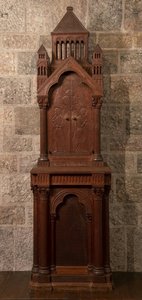
- The Bible Cabinet: Created around 1926 from cherry wood, this piece showcases Jeck's incredible skill with difficult materials. The cabinet features intricate carvings of angels from the Book of Genesis and the "living creatures" described in the Book of Revelation, mirroring the stone and glass mosaics found elsewhere in the Glencairn chapel.
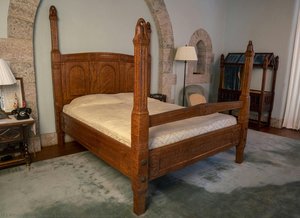
- The Teakwood Bed: Completed in 1931, this masterpiece incorporates profound symbolism chosen by the Pitcairns. A pair of doves is carved onto each bedpost, representing the eternal love between partners as understood through Swedenborgian Christian thought. The bed also bears an inscription of a wedding vow, uniting the physical comfort of the furniture with spiritual commitment.
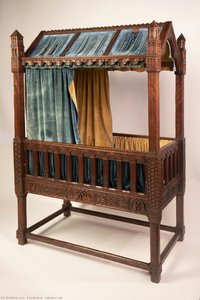
- The Infant’s Crib: A tender example of his work, this cherry wood crib was carved for the Pitcairn family in 1922. It stands as a testament to Jeck's ability to bring delicate, intimate beauty to the most personal aspects of domestic life.
Through these works, Jeck achieved a rare synthesis of artistry and liturgy. His ability to repeat motifs across different media—from wood to stone and glass—ensured that his carvings were not merely decorations, but integral components of a cohesive, sacred environment. Today, the work of Frank Jeck remains a profound example of how craftsmanship can serve as a vessel for enduring faith and historical memory.
frank jeck
1884 - 1965 , Hungary
Quick Facts
- Artistic Movement Or Style: Woodcarving
- Artists Or Movements Influenced By This Artist: ['Raymond Pitcairn']
- Date Of Birth: 1884
- Full Name: Frank Jeck
- Nationality: Hungarian American
- Notable Artworks:
- Bible cabinet in Glencairn’s chapel
- Glencairn teakwood bed
- Infant’s crib
- Place Of Birth: Hungary