

 Preview
 Send
Send Share
Share
 Details

 Download
 Similars
 X-Ray
X-Ray Diaporama
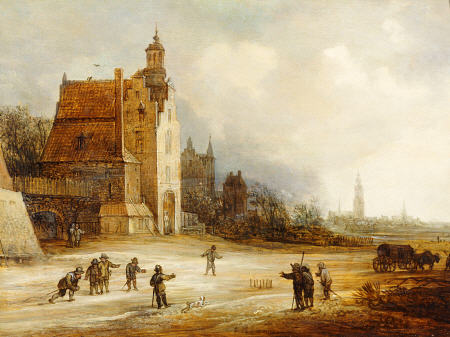
Soldiers Playing Skittles On A Road By A Manor House, Breda Beyond
 Read More
Purchase a high-resolution, enhanced digital image, far superior to the online preview.
Each file is meticulously prepared by our in-house specialists using advanced tools and expert manual retouching. We ensure every image has exceptional clarity, precise color accuracy, and fine detail.
The final file is delivered via email within 72 hours, optimized for immediate use in professional, editorial, and print environments. This is the same quality trusted by top-tier design studios, publishers, and galleries.
Digital Image
Download a high-resolution file for personal display, printing, and creative projects. ( Buy Print Buy Hand Made Painting)
Included in Every Digital Image Order
Expert Digital Delivery, Guaranteed
When you choose ArtsDot.com, you're not just getting an image - you're receiving a professionally enhanced digital artwork, crafted with precision and backed by a satisfaction guarantee. Here's everything that comes with your order, automatically:

Fast Email Delivery
Your high-resolution digital image file will be emailed to you within 72 hours of ordering - ready for immediate use.

AI-Enhanced Digital File
Your artwork is professionally optimized using advanced AI tools and manual editing, ensuring maximum detail, clarity, and color accuracy.

Free Lifetime Re-Delivery
Accidentally deleted or lost your file? No worries - we'll resend it to you anytime, free of charge.

No Import Fees - Ever
Enjoy your artwork instantly with zero customs, duties, or delivery fees - digital downloads are always tax-free.

Color Accuracy Guarantee
We ensure your digital image reflects the original colors as closely as possible using professional tools and color management.

60-Day Satisfaction Guarantee
If you're not satisfied with your digital image, we'll revise it or refund 100% within 60 days - no questions asked.

100% Money-Back Guarantee
Not satisfied? Get a full refund within 60 days of receiving your digital file - no questions asked.

Bulk Order Discounts
Buy 3 images, save 10% - Buy 5, save 15% - Buy 10+, save 20%. Great for creative projects, galleries, and agencies.
Related Artworks
Artist Biography
Santi di Tito: A Counterpoint to Mannerism
Santi di Tito, born in Sansepolcro in 1536 and passing away in 1603, stands as a pivotal figure bridging the late Renaissance and the burgeoning Baroque period. While often categorized within the broader framework of Mannerism, Santi’s work represents a crucial shift – a “Counter-Mannerism” that sought to temper the stylized elegance of his predecessors with a renewed emphasis on classical form and naturalistic representation. His life was marked by a fascinating journey through artistic centers like Rome and Florence, each experience profoundly shaping his distinctive style. Early documentation regarding Santi’s training is scarce, fueling speculation about potential influences from masters such as Bronzino and Baccio Bandinelli, though definitive proof remains elusive. What *is* clear is that he quickly established himself as a force within the Roman art scene, collaborating with prominent figures like Giovanni de' Vecchi and Niccolò Circignani on monumental frescoes in the Palazzo Salviati. These early works demonstrate his burgeoning skill in fresco technique and his nascent interest in classical ideals – a foundation upon which he would later build his unique vision.The Florentine Studio: A Return to Classical Roots
Returning to Florence in 1564, Santi embraced the city’s artistic landscape with renewed vigor. He joined the Accademia del Disegno, an institution dedicated to upholding and promoting classical principles within painting. This move signaled a deliberate rejection of the prevailing Mannerist style, which had become increasingly ornate and self-conscious in Rome. Santi sought instead to emulate the clarity, balance, and restraint of ancient Greek and Roman art. His most celebrated works from this period – the *Sisters of Fetonte* and *Hercules and Iole* within the Studiolo of Francesco I at the Palazzo Vecchio – exemplify this commitment. These paintings are characterized by a remarkable sense of spatial recession, carefully rendered drapery, and a deliberate avoidance of excessive detail or emotional exaggeration. They represent a conscious effort to move away from the crowded, theatrical compositions favored by his contemporaries like Bronzino and Vasari, instead prioritizing clarity of form and harmonious proportions. The *studiolo*, a private chamber for scholarly pursuits, became a testing ground for Santi’s new approach – a space where classical ideals could be subtly interwoven with contemporary artistic practice.A Revolutionary Style: Counterpoint to Mannerism
Santi's style can be described as a revolutionary counterpoint to the prevailing Mannerist trends of his time. While sharing some superficial similarities in terms of elongated figures and complex compositions, Santi’s paintings possess a distinct quality – a sense of quiet dignity, restrained emotion, and an unwavering focus on anatomical accuracy. He eschewed the elaborate ornamentation and artificial colors characteristic of Mannerism, opting instead for a more subdued palette and a preference for naturalistic lighting effects. This deliberate simplicity was not born of ignorance or lack of skill; rather, it reflected a profound understanding of classical principles and a desire to create works that were both aesthetically pleasing and intellectually stimulating. S.J. Freedberg noted his “Raphaelesque” style, highlighting the influence of Raphael’s clarity and grace while simultaneously forging an independent artistic identity.Later Works and Legacy
Following his success in Florence, Santi continued to produce significant works throughout his career, including altarpieces for Santa Croce and a *Resurrection of Lazarus* for Volterra Cathedral. His later paintings demonstrate a refinement of his style, characterized by an increased sense of serenity and a subtle mastery of color. Despite his artistic achievements, Santi faced considerable financial difficulties, ultimately declaring bankruptcy in 1662. He died in poverty in 1603, largely unrecognized during his lifetime. However, his legacy has been increasingly appreciated in recent decades, with scholars recognizing him as one of the most important figures in the transition from Mannerism to Baroque painting. Santi di Tito’s work serves as a powerful reminder that artistic innovation often arises not from slavish imitation but from a critical engagement with tradition and a courageous pursuit of individual expression. His “Counter-Mannerism” offered a vital alternative, paving the way for the dramatic and emotionally charged works that would define the Baroque era.Further Resources
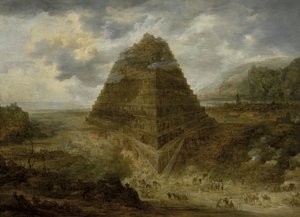
frans de momper
1603 - 1660 , Belgium
Quick Facts
- Artistic Movement Or Style: Dutch Landscape Painting
- Artists Or Movements Influenced By This Artist:
- Terborch
- Metsu
- Artists Who Influenced This Artist: ['Rafel and Jochem Camphuysen']
- Date Of Birth: 1603/1604
- Date Of Death: 1677
- Full Name: Aert van der Neer
- Nationality: Dutch
- Notable Artworks:
- Moonlit Landscape
- Winter in Holland
- Place Of Birth: Amsterdam, Netherlands

