

 Preview
 Send
Send Share
Share
 Details

 Download
 Similars
 X-Ray
X-Ray Diaporama
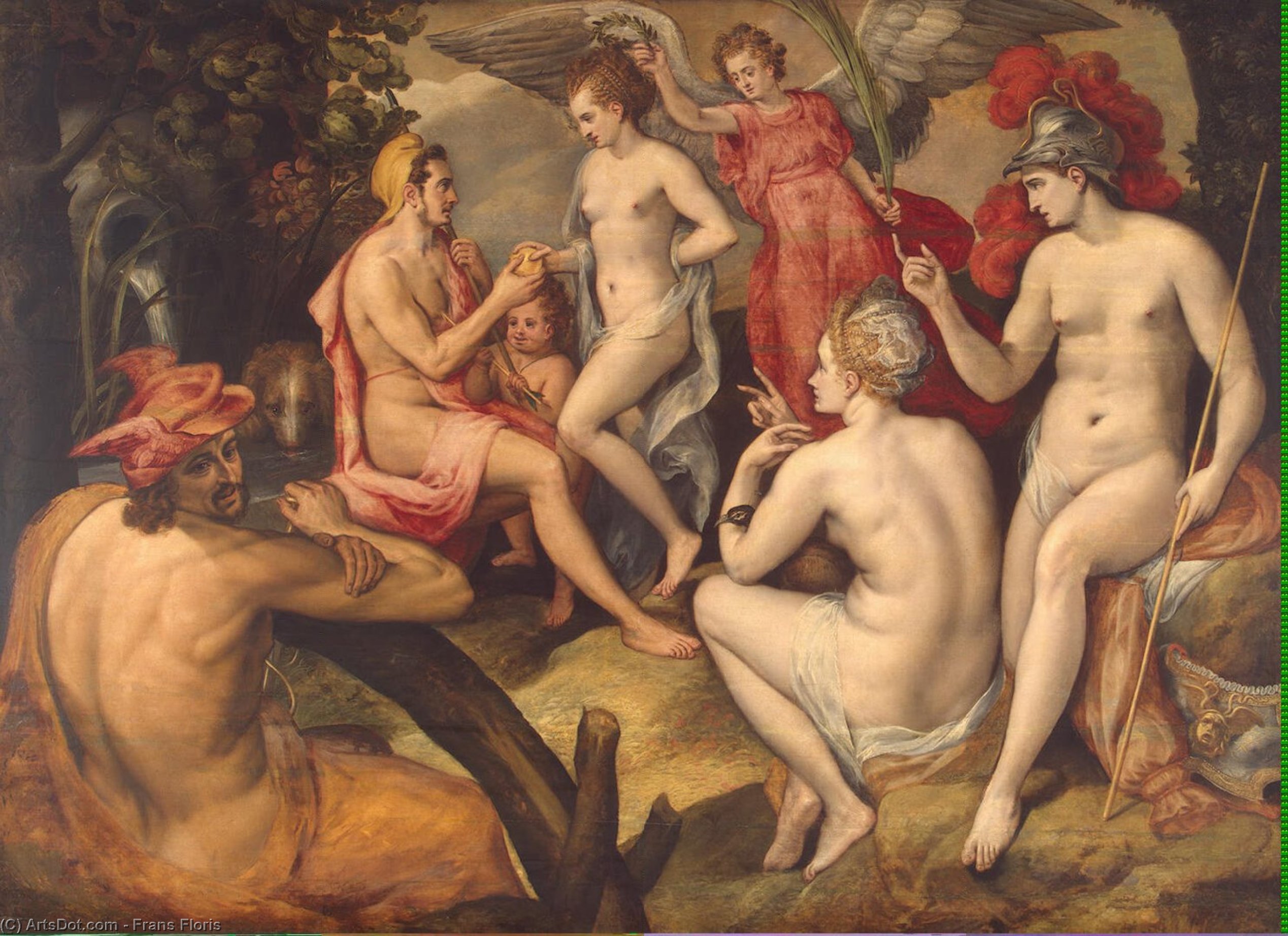
The Judgment of Paris
 Oil On Canvas
- WallArt
- Baroque
 1550
1550 135.0 x 188.0 cm
 Hermitage Museum
 Read More
Purchase a high-resolution, enhanced digital image, far superior to the online preview.
Each file is meticulously prepared by our in-house specialists using advanced tools and expert manual retouching. We ensure every image has exceptional clarity, precise color accuracy, and fine detail.
The final file is delivered via email within 72 hours, optimized for immediate use in professional, editorial, and print environments. This is the same quality trusted by top-tier design studios, publishers, and galleries.
Digital Image
Download a high-resolution file for personal display, printing, and creative projects. ( Buy Print Buy Hand Made Painting)
Included in Every Digital Image Order
Expert Digital Delivery, Guaranteed
When you choose ArtsDot.com, you're not just getting an image - you're receiving a professionally enhanced digital artwork, crafted with precision and backed by a satisfaction guarantee. Here's everything that comes with your order, automatically:

Fast Email Delivery
Your high-resolution digital image file will be emailed to you within 72 hours of ordering - ready for immediate use.

AI-Enhanced Digital File
Your artwork is professionally optimized using advanced AI tools and manual editing, ensuring maximum detail, clarity, and color accuracy.

Free Lifetime Re-Delivery
Accidentally deleted or lost your file? No worries - we'll resend it to you anytime, free of charge.

No Import Fees - Ever
Enjoy your artwork instantly with zero customs, duties, or delivery fees - digital downloads are always tax-free.

Color Accuracy Guarantee
We ensure your digital image reflects the original colors as closely as possible using professional tools and color management.

60-Day Satisfaction Guarantee
If you're not satisfied with your digital image, we'll revise it or refund 100% within 60 days - no questions asked.

100% Money-Back Guarantee
Not satisfied? Get a full refund within 60 days of receiving your digital file - no questions asked.

Bulk Order Discounts
Buy 3 images, save 10% - Buy 5, save 15% - Buy 10+, save 20%. Great for creative projects, galleries, and agencies.
Collectible Description
The Judgment of Paris: A Baroque Triumph
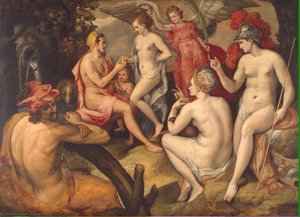
“The Judgment of Paris” by Frans Floris stands as a monumental achievement in Northern Renaissance art, embodying the fervor for classical ideals that characterized the Romanist movement. Painted around 1550, this opulent oil painting transcends mere visual representation; it’s a carefully crafted tableau brimming with narrative complexity and imbued with profound humanist thought.
- Subject Matter: The scene depicts the pivotal moment from Greek mythology – the contest between Hera, Athena and Aphrodite to determine who was the fairest among goddesses. Paris, the Trojan prince, is tasked with adjudicating their claims, ultimately awarding the golden apple to Aphrodite, securing Helen’s affections and triggering the legendary Trojan War.
- Style: Floris's work firmly establishes itself within the Baroque style, distinguished by dynamic movement, dramatic lighting, and theatrical composition. Unlike the serene elegance of earlier Renaissance art, “The Judgment of Paris” pulsates with energy, capturing the intensity of human emotion and divine intervention.
- Technique: Floris’s mastery is evident in his meticulous application of oil paint—a technique perfected during this period. He skillfully employs blending, glazing, and scumbling to achieve remarkable textural depth and luminosity. The artist's attention to detail extends to the depiction of skin tones, drapery folds, and stone surfaces, creating a palpable sense of realism.
The painting’s color palette dominates with warm hues—rich reds, golds, and browns—contrasting sharply against cooler blues and greens in the background. These colors amplify the dramatic atmosphere, highlighting key figures and emphasizing the opulent grandeur of the scene. Floris's use of perspective contributes to the theatrical effect, flattening space while suggesting depth through layering and atmospheric haze.
- Symbolism: Beyond its narrative core, “The Judgment of Paris” is laden with symbolic elements. The presence of Hermes guides the goddesses and Paris, representing divine authority and rational judgment. Nike, the winged goddess of victory, crowns Aphrodite, signifying triumph and fulfillment. Furthermore, the depiction of fruits and foliage underscores themes of fertility and abundance.
- Historical Context: Floris’s painting reflects the intellectual currents of its time—the Romanist movement's passionate embrace of Italian High Renaissance masters like Michelangelo and Raphael. Artists traveled to Italy to study these masters and assimilate their stylistic innovations into Northern art traditions. This artwork embodies the humanist spirit prevalent in Antwerp during the mid-16th century.
Emotionally, “The Judgment of Paris” evokes a powerful blend of passion, drama, and transgression. Floris captures the psychological complexities of desire and ambition, presenting a scene that resonates with timeless themes of beauty, love, and divine influence. It remains an unforgettable testament to Baroque artistry and Northern Renaissance intellectual heritage.
Related Artworks





Artist Biography
The Flemish Master of Romanism: The Life and Legacy of Frans Floris
In the vibrant, intellectual landscape of the 16th-century Low Countries, few figures loomed as large or as influential as Frans Floris. Known to history as Frans Floris the Elder, this Flemish Renaissance pioneer acted as a vital bridge between the Northern traditions of his homeland and the monumental grandeur of the Italian High Renaissance. Born in Antwerp around 1519 into a lineage of skilled craftsmen, Floris carried the weight of a family tradition rooted in stonemasonry and artistry. This heritage of precision and structural understanding would later manifest in his ability to compose massive, complex scenes that commanded the attention of both royalty and the burgeoning merchant class of Antwerp.
The trajectory of Floris’s career was irrevocably altered by his immersion in Romanism, a stylistic movement that saw Northern artists traveling to Italy to absorb the lessons of masters like Michelangelo and Raphael. Under the guidance of mentors such as Lambert Lombard, Floris developed an acute sensitivity to anatomical accuracy and the dramatic use of light and shadow. His work became a profound dialogue between Flemish meticulousness and Italian muscularity. This synthesis allowed him to move beyond mere representation, creating works that embodied the humanist ideals of his era—where classical mythology and biblical narratives were reimagable through a lens of epic scale and emotional depth.
A Tapestry of Myth and Allegory
The breadth of Floris’s oeuvre is nothing short of extraordinary, spanning monumental history paintings, intimate portraits, and intricate designs for tapestries. His mastery lay in his ability to breathe life into the ancient myths, transforming static legends into dynamic, breathing dramas. In works such as The Judgment of Paris, one can witness the opulent textures and complex compositions that defined his mature style, utilizing classical mythology to explore themes of beauty, desire, and fate. Similarly, his Pomona serves as a stunning testament to his ability to depict mythological abundance, blending the grotesque with the sublime in a way that foreshadowed the dramatic energy of the Baroque era.
Beyond the grand scale of his mythological epics, Floris possessed a remarkable gift for capturing the human essence in portraiture and allegorical studies. His paintings often functioned as intellectual puzzles, rich with symbolic detail intended for a sophisticated audience:
- The Allegory of Music: A captivating scene where a lady with a lute is set against the backdrop of Roman soldiers, offering a profound glimpse into the era's use of musical symbolism.
- Head of a Woman: A masterclass in light and shadow, where pearl-adorned curls and lifelike skin tones demonstrate his command over the subtle nuances of portraiture.
- The Awakening of the Arts: A work that showcases his ability to utilize rich textures and dynamic movement to convey the very spirit of creative rebirth.
Historical Significance and Enduring Influence
Frans Floris was more than just a painter; he was an architect of a new Northern aesthetic. By integrating the anatomical rigor of the Italian Renaissance with the narrative richness of Flemish tradition, he helped establish Antwerp as a premier center for European art. His influence extended far beyond the canvas, as his designs for tapestries and prints disseminated his Romanist ideals across the continent, shaping the visual language of generations of Northern artists.
Though his life was cut short in 1570, the impact of his work remained a cornerstone of the Northern Renaissance. He successfully navigated the transition from the late Gothic sensibilities to the sophisticated humanism of the 16th century, leaving behind a legacy of monumental history paintings that continue to captivate viewers with their dramatic compositions and profound intellectual depth. To study the works of Frans Floris is to witness the very moment when the North truly embraced the light of the Renaissance.
Frans Floris
1519 - 1570
Quick Facts
- Artistic Movement Or Style: Romanism
- Artists Or Movements Influenced By This Artist: ['Lucas de Heere']
- Artists Who Influenced This Artist: ['Lambert Lombard']
- Date Of Birth: 1519
- Date Of Death: 1570
- Full Name: Frans Floris
- Nationality: Flemish
- Notable Artworks:
- The Awakening of the Arts
- Banquet of the Gods
- Head of a Woman
- Place Of Birth: Antwerp

