

 Preview
 Send
Send Share
Share
 Details

 Download
 Similars
 X-Ray
X-Ray Diaporama
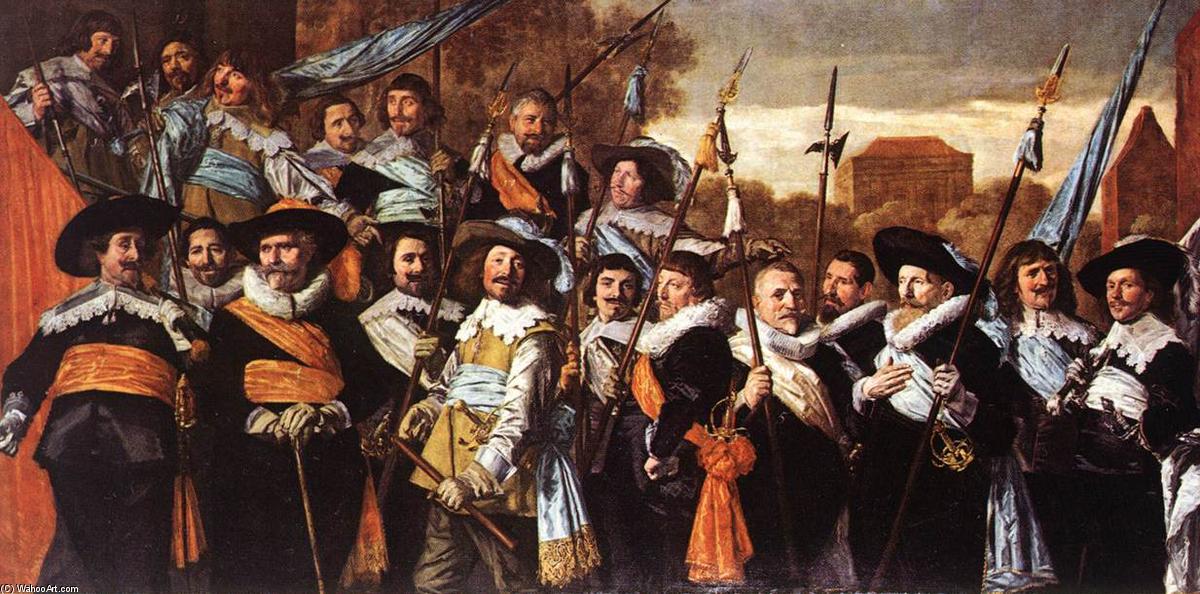
Officers and Sergeants of the St George Civic Guard Company
 Oil On Canvas
- WallArt
- Dutch Golden Age
 1639
1639- Early Modern
 218.0 x 421.0 cm
 Frans Halsmuseum
 Read More
Purchase a high-resolution, enhanced digital image, far superior to the online preview.
Each file is meticulously prepared by our in-house specialists using advanced tools and expert manual retouching. We ensure every image has exceptional clarity, precise color accuracy, and fine detail.
The final file is delivered via email within 72 hours, optimized for immediate use in professional, editorial, and print environments. This is the same quality trusted by top-tier design studios, publishers, and galleries.
Digital Image
Download a high-resolution file for personal display, printing, and creative projects. ( Buy Print Buy Hand Made Painting)
Included in Every Digital Image Order
Expert Digital Delivery, Guaranteed
When you choose ArtsDot.com, you're not just getting an image - you're receiving a professionally enhanced digital artwork, crafted with precision and backed by a satisfaction guarantee. Here's everything that comes with your order, automatically:

Fast Email Delivery
Your high-resolution digital image file will be emailed to you within 72 hours of ordering - ready for immediate use.

AI-Enhanced Digital File
Your artwork is professionally optimized using advanced AI tools and manual editing, ensuring maximum detail, clarity, and color accuracy.

Free Lifetime Re-Delivery
Accidentally deleted or lost your file? No worries - we'll resend it to you anytime, free of charge.

No Import Fees - Ever
Enjoy your artwork instantly with zero customs, duties, or delivery fees - digital downloads are always tax-free.

Color Accuracy Guarantee
We ensure your digital image reflects the original colors as closely as possible using professional tools and color management.

60-Day Satisfaction Guarantee
If you're not satisfied with your digital image, we'll revise it or refund 100% within 60 days - no questions asked.

100% Money-Back Guarantee
Not satisfied? Get a full refund within 60 days of receiving your digital file - no questions asked.

Bulk Order Discounts
Buy 3 images, save 10% - Buy 5, save 15% - Buy 10+, save 20%. Great for creative projects, galleries, and agencies.
A Moment Frozen in Time: Officers and Sergeants of the St George Civic Guard Company
Frans Hals’s “Officers and Sergeants of the St George Civic Guard Company,” painted in 1639, is more than just a group portrait; it's a vibrant snapshot of Dutch civic pride and burgeoning mercantile power during the Golden Age. The sheer scale of the canvas – over six meters wide – immediately commands attention, drawing the viewer into a bustling scene filled with nearly twenty men, each possessing a distinct personality captured with remarkable immediacy. This isn’t the stiff formality often associated with 17th-century group portraits; Hals eschews rigid poses and idealized representations in favor of a dynamic energy that feels remarkably modern even today.
The Spirit of Haarlem: Context and Civic Duty
To truly appreciate this masterpiece, one must understand its historical context. The Dutch Republic, having recently secured its independence from Spain, was experiencing an unprecedented period of economic growth and cultural flourishing. Civic guard companies like the St George Guild were vital institutions, responsible for maintaining order and defending Haarlem against potential threats. Commissioning a group portrait wasn't merely about commemorating their service; it was a public display of civic responsibility, wealth, and social standing. These portraits served as powerful symbols of communal identity and reinforced the importance of citizen participation in governance. Hals’s commission to paint this final civic guard piece reflects a shift – the era of these grand displays of military prowess was waning as Holland's position solidified on the European stage.
Hals’s Revolutionary Technique: Capturing Fleeting Moments
What truly sets Hals apart is his revolutionary painting technique. Unlike many of his contemporaries who meticulously layered paint to achieve a polished finish, Hals employed a loose, almost impressionistic brushstroke. He worked rapidly, capturing the fleeting expressions and gestures of his sitters with astonishing accuracy. Observe how the light dances across their faces, highlighting individual features while simultaneously creating a sense of movement and spontaneity. The use of warm, earthy tones – ochres, browns, and reds – contributes to the painting’s overall vibrancy and creates an atmosphere of convivial camaraderie. Hals's ability to suggest rather than define is key; he leaves brushstrokes visible, allowing the viewer to participate in the creation of the image, fostering a sense of immediacy rarely found in earlier portraiture.
Beyond Uniforms: Symbolism and Individual Character
While the uniforms – sashes denoting their rank within the company, feathered hats, and gleaming weaponry – are visually striking, Hals goes far beyond mere representation. He imbues each figure with a distinct personality. Some gaze confidently at the viewer, while others engage in animated conversation or display subtle expressions of amusement or contemplation. The inclusion of Frans Hals himself, subtly positioned in the background, adds another layer of intrigue and self-awareness to the composition. The flags held aloft are not just emblems of their company but also symbols of Dutch independence and prosperity. Even the seemingly minor details – a tilted head, a hand resting on a hip, the glint of light on a sword hilt – contribute to the painting’s rich tapestry of human interaction and civic pride. “Officers and Sergeants of the St George Civic Guard Company” is ultimately a celebration of Dutch society at its zenith—a testament to the power of collective identity and the enduring legacy of artistic innovation.
Related Artworks
Artist Biography
Frans Hals I: A Life in Paint
Frans Hals I was a Dutch painter born in Antwerp, Belgium, around 1580. Though his early life remains somewhat shrouded in mystery, he rose to become one of the most important figures of the Dutch Golden Age, celebrated for his innovative portraiture and genre scenes.
Early Life and Training
Details surrounding Hals’s formative years are scarce. It is believed he received initial artistic training in Antwerp, a prominent center for painting at the time. However, due to religious and political turmoil, his family relocated to Haarlem in the Netherlands. He became a member of the Haarlem Guild of St. Luke in 1610, marking the formal beginning of his professional career.
Artistic Style and Development
Hals distinguished himself through a remarkably fresh and spontaneous style. Unlike many of his contemporaries who favored meticulous detail, Hals employed a loose and expressive brushstroke. This technique imbued his paintings with a sense of immediacy and vitality, capturing the personality and character of his subjects in a way that was revolutionary for its time.
- His portraits weren’t simply likenesses; they were psychological studies.
- He excelled at depicting fleeting moments – laughter, conversation, or contemplation.
- Hals's use of light and shadow added depth and drama to his compositions.
Notable Works
While Hals produced a wide range of works, he is best known for his portraits. Some of his most celebrated paintings include:
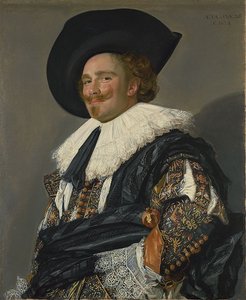
- The Laughing Cavalier (1624) – A quintessential example of his ability to capture character and movement.
- Malle Babbe (c. 1633-1635) – A striking portrayal of an elderly woman, showcasing Hals’s skill in depicting age and personality.
- Portraits of the Regents of the Old Men's Home in Haarlem (1664) - Demonstrating his mastery of group portraiture.
He also created compelling genre scenes – depictions of everyday life – that offered glimpses into Dutch society.
Influences and Legacy
Determining Hals’s direct influences is challenging, as he developed a highly individual style. However, it's likely he was aware of the work of earlier Flemish painters like Pieter Bruegel the Elder. His innovative approach to portraiture profoundly impacted subsequent generations of artists.
- He influenced artists such as Adriaen Brouwer and Johannes Vermeer.
- His emphasis on capturing personality paved the way for more intimate and psychological portraits.
- Later artists, including the Impressionists, admired his loose brushwork and focus on light.
Historical Significance
Frans Hals I played a crucial role in shaping Dutch painting during the Golden Age. His work reflects the burgeoning prosperity and individualism of the Netherlands at that time. He moved away from rigid formality towards a more naturalistic and expressive style, leaving an enduring legacy on the art world.
Today, his paintings are highly sought after and can be found in major museums worldwide, including the Frans Hals Museum in Haarlem, which houses the largest collection of his work. His contributions continue to inspire artists and captivate audiences centuries later.
frans hals i
1580 - 1585 , Belgium
Quick Facts
- Birth Date: 1580
- Birth Place: Antwerp, Belgium
- Death Date: 1585
- Movement: Dutch Golden Age
- Name: Frans Hals I
- Nationality: Dutch
- Notable Works: Portraits and genre scenes

