 Preview
 Send
Send Share
Share
 Details

 Download
 Similars
 X-Ray
X-Ray Diaporama
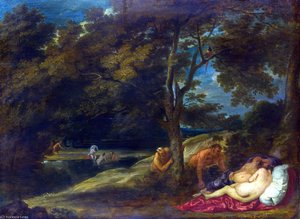
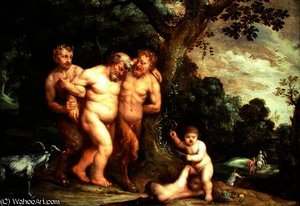
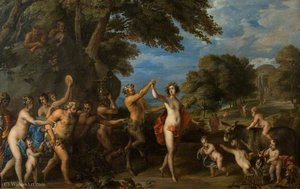
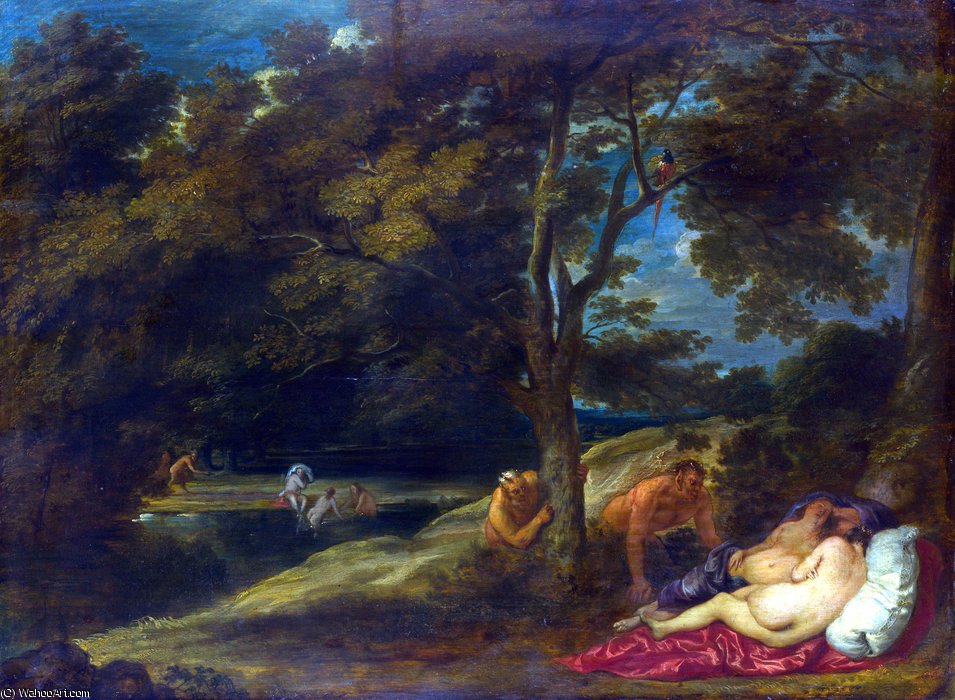
Nymphs surprised by Satyrs
 Read More
Hand Made Oil Reproduction
Hand-painted oil on canvas in your size and frame, made to order by our artists. ( Buy Print Buy Image)




































Pick from our preset sizes that match the artwork's original proportions.

You may enter your own dimensions to fit a specific frame or space. If your selected size does not match the original image's proportions, we will either crop the artwork or extend the painting with additional hand-painted elements. A digital mockup will be sent for your approval before production begins.
Please note that the on-screen preview does not reflect the actual cropping or extension. Only the mockup will accurately show the final composition.
While custom sizes are available, we recommend selecting a dimension from the predefined list to preserve the original proportions.
After order, ArtsDot.com team will email client for instructions and provide a mockup preview
Worldwide Delivery () in 3/4 weeks instead of standard 5 weeks. (19 August). No compromise on quality.

Free Worldwide Express Shipping

High-Quality Linen Canvas

Full Shipping Insurance

Customs Tax Refund Guarantee

True Color Matching Guarantee

60-Day Return Policy (Defects Only)

100% Money-Back Guarantee

Bulk Discount Offer
 Glass option is only available in size under 110 CM

Nymphs surprised by Satyrs
Reproduction Medium
Reproduction Size
-


Total Price
$ 263
Related Artworks

Artist Biography
Frans Wouters: Bridging Rubens and Royalty
Frans Wouters, a name perhaps less familiar than his mentor Peter Paul Rubens or his contemporary Anthony van Dyck, nevertheless stands as a significant figure in the vibrant tapestry of 17th-century Flemish Baroque art. Born in Lier, Belgium, around 1612, Wouters’s life was one of constant movement and engagement with the most influential artistic circles of his time – from Antwerp’s bustling workshop of Rubens to the courts of the Holy Roman Emperor and the Prince of Wales. His career wasn't defined by groundbreaking innovation but rather by a remarkable ability to translate the monumental scale and dramatic intensity of Rubens into the more intimate context of cabinet paintings, securing him a unique position as a master of refined elegance and allegorical storytelling.Early Apprenticeship and the Rubenesque Influence
Wouters’s artistic journey began in 1629 with an apprenticeship under Pieter van Avont in Antwerp. However, his ambition and desire to learn directly from Rubens led him to break this contract in 1634 and join the master painter's workshop. This decision proved pivotal, shaping Wouters’s style and artistic sensibilities profoundly. He quickly absorbed Rubens’s dynamic compositions, masterful use of color, and dramatic lighting – a hallmark of the Baroque period. Crucially, he participated in the lavish decoration of Antwerp’s city hall in 1635, an event orchestrated by Rubens himself to celebrate the arrival of Cardinal-Infante Ferdinand of Austria. This experience provided Wouters with invaluable insight into the complexities of large-scale collaborative projects and further solidified his understanding of Rubens's artistic principles. The meticulous attention to detail and dramatic flair evident in this work foreshadowed much of his later output.Courtly Patronage and Diplomatic Service
Following his apprenticeship, Wouters spent the 1630s as court painter to Holy Roman Emperor Ferdinand II in Vienna. This period marked a shift towards more formal portraiture and allegorical scenes, reflecting the emperor’s tastes and political ambitions. His diplomatic skills were equally valued; he was dispatched as an ambassador of Ferdinand II to England in 1637, demonstrating his versatility beyond purely artistic pursuits. The following year, he secured the prestigious role of court painter to the Prince of Wales – later King Charles II – a position that afforded him unparalleled access to the English royal court and its influential circle. England became a central hub for Wouters’s career, where he not only painted portraits but also engaged in art dealing and served as a trusted advisor to the future king. His connections with Van Dyck, who was already established as Charles I's court painter, likely fostered a stimulating exchange of ideas and techniques.A Master of Cabinet Paintings and Allegory
Wouters’s distinctive style lies primarily in his mastery of “cabinet paintings”—small-scale works designed for private display and intimate contemplation. He skillfully blended Rubensian dynamism with the refined elegance favored by aristocratic collectors. His subjects frequently revolved around mythological scenes, allegorical representations of virtues and vices, and depictions of classical themes. His landscapes, often incorporating elements of both Flemish realism and Italianate idealism, were particularly noteworthy. Collaborations with his former master, Pieter van Avont, saw him adding meticulously rendered landscapes to van Avont’s compositions, showcasing his growing expertise in this genre. The works produced during this period are characterized by a rich palette, intricate details, and a sense of theatrical drama—elements that cemented Wouters' reputation as a skilled interpreter of Rubensian aesthetics.Later Years and Legacy
In 1641, Wouters returned to Antwerp, where he continued his artistic practice and became involved in the art market, assisting in the valuation of paintings from Rubens’s estate following the painter’s death. A significant turning point in his life was his marriage to Maria Doncker in 1644, which brought him a considerable fortune. He rose to become dean of the Antwerp Guild of St. Luke in 1648, further solidifying his position within the artistic community. Even during the turbulent years of the English Civil War and the Commonwealth, he maintained contact with Charles II, described by one source as “Charles’s chamberlain.” His later work, influenced by Anthony van Dyck's style, incorporated elongated figures and emotionally expressive gestures. Frans Wouters died in Antwerp around 1659, leaving behind a legacy of refined elegance, masterful execution, and a crucial link between the monumental Baroque style of Rubens and the tastes of European royalty. His contributions to the art market and his diplomatic role alongside his artistic career make him a fascinating figure in the history of Flemish painting.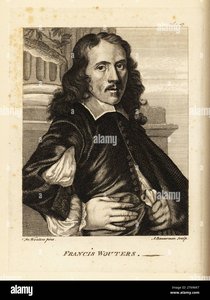
Frans Wouters
1612 - 1659 , Belgium
Quick Facts
- Artistic Movement Or Style: Baroque (Rubens follower)
- Artists Or Movements Influenced By This Artist: ['Anthony van Dyck']
- Artists Who Influenced This Artist: ['Peter Paul Rubens']
- Date Of Birth: 1612
- Date Of Death: 1659
- Full Name: Frans Wouters
- Nationality: Flemish
- Notable Artworks:
- Landscape with Diana Resting
- Nymphs surprised by Satyrs
- River Landscape...
- Place Of Birth: Lier, Belgium