

 Preview
 Send
Send Share
Share
 Details

 Download
 Similars
 X-Ray
X-Ray Diaporama
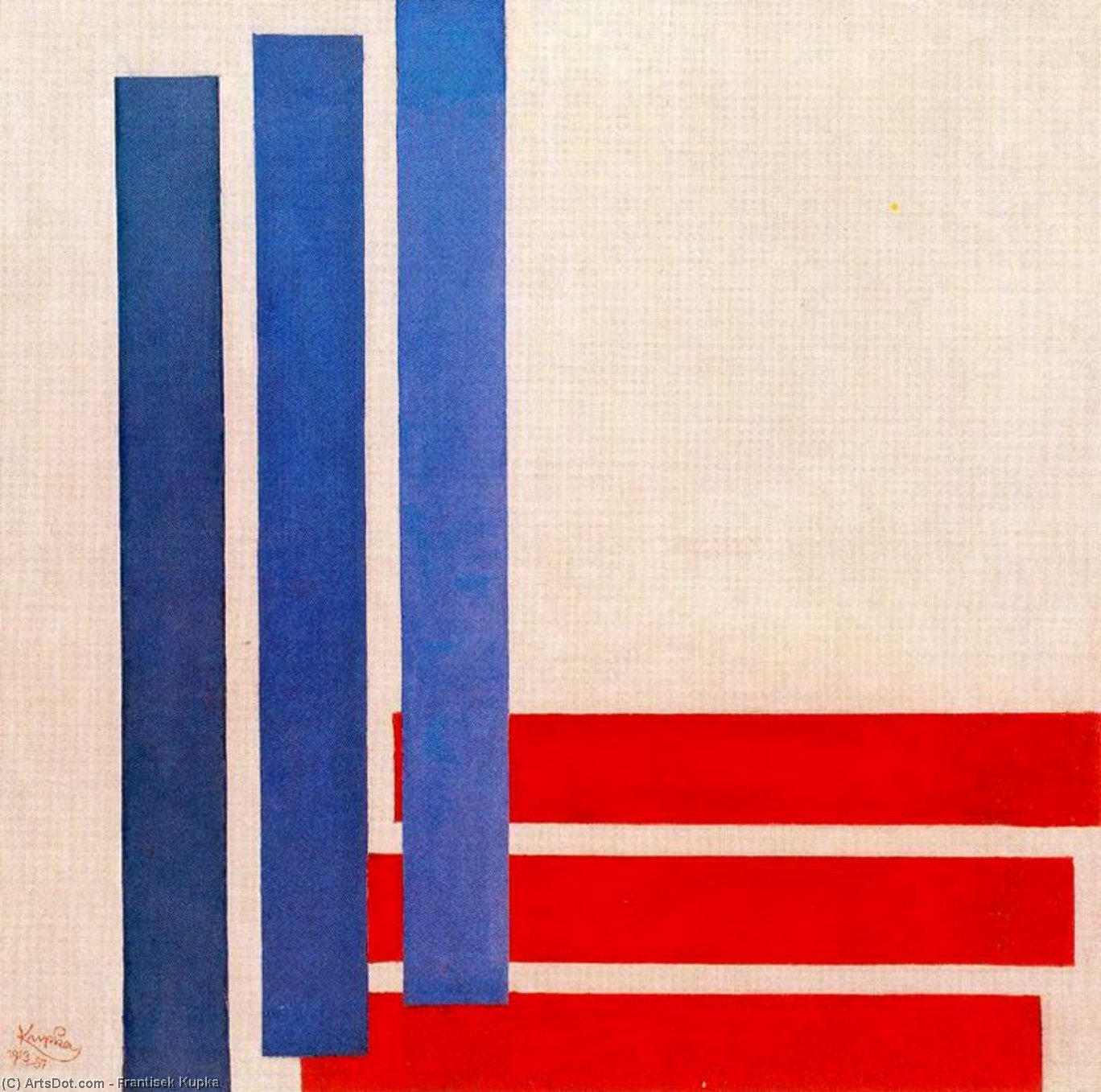
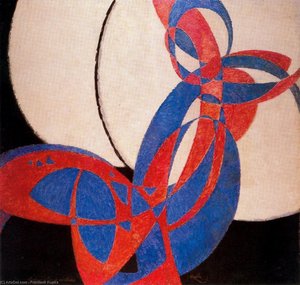
Three blue and three red


 Read More
Purchase a high-resolution, enhanced digital image, far superior to the online preview.
Each file is meticulously prepared by our in-house specialists using advanced tools and expert manual retouching. We ensure every image has exceptional clarity, precise color accuracy, and fine detail.
The final file is delivered via email within 72 hours, optimized for immediate use in professional, editorial, and print environments. This is the same quality trusted by top-tier design studios, publishers, and galleries.
Digital Image
Download a high-resolution file for personal display, printing, and creative projects. ( Buy Print Buy Hand Made Painting)
Included in Every Digital Image Order
Expert Digital Delivery, Guaranteed
When you choose ArtsDot.com, you're not just getting an image - you're receiving a professionally enhanced digital artwork, crafted with precision and backed by a satisfaction guarantee. Here's everything that comes with your order, automatically:

Fast Email Delivery
Your high-resolution digital image file will be emailed to you within 72 hours of ordering - ready for immediate use.

AI-Enhanced Digital File
Your artwork is professionally optimized using advanced AI tools and manual editing, ensuring maximum detail, clarity, and color accuracy.

Free Lifetime Re-Delivery
Accidentally deleted or lost your file? No worries - we'll resend it to you anytime, free of charge.

No Import Fees - Ever
Enjoy your artwork instantly with zero customs, duties, or delivery fees - digital downloads are always tax-free.

Color Accuracy Guarantee
We ensure your digital image reflects the original colors as closely as possible using professional tools and color management.

60-Day Satisfaction Guarantee
If you're not satisfied with your digital image, we'll revise it or refund 100% within 60 days - no questions asked.

100% Money-Back Guarantee
Not satisfied? Get a full refund within 60 days of receiving your digital file - no questions asked.

Bulk Order Discounts
Buy 3 images, save 10% - Buy 5, save 15% - Buy 10+, save 20%. Great for creative projects, galleries, and agencies.
Collectible Description
A Pioneering Echo: František Kupka’s “Three Blue and Three Red”
František Kupka's "Three Blue and Three Red" stands as a pivotal moment in the history of modern art, a bold declaration of abstraction born from a confluence of spiritual yearning and artistic experimentation. Painted around 1913, this deceptively simple composition – three rectangles of vibrant blue and red arranged in a row against a stark white background – embodies the radical shift Kupka undertook during his Parisian sojourn. It’s not merely a colorful arrangement; it's an exploration of pure form, color relationships, and the very essence of visual perception, anticipating the developments of abstract expressionism by decades.
- The Artist’s Journey: Kupka’s path to abstraction wasn’t immediate. Initially trained in traditional academic styles, he produced works steeped in historical and patriotic themes – a testament to his early influences. However, his time in Paris, particularly his studies with Laurens, exposed him to new ideas and challenged his established techniques.
- Fin-de-Siècle Spirit: The intellectual climate of late 19th and early 20th century Paris – a period characterized by philosophical questioning, spiritualism, and the rise of Symbolism – profoundly shaped Kupka’s artistic vision. He sought to transcend representational imagery, aiming for a more direct engagement with inner experience.
Chromatic Exploration: Technique and Composition
"Three Blue and Three Red" showcases Kupka's mastery of color theory and his innovative approach to composition. The deliberate variation in the rectangles’ widths introduces an element of dynamism, preventing the work from feeling static or overly symmetrical. The bold application of color – a vibrant, almost luminous blue contrasted against the assertive red – creates a powerful visual tension. The subtle inclusion of a yellow line adds another layer of complexity, perhaps suggesting a pathway or a point of convergence within the abstract space. Kupka’s technique involved layering thin washes of paint, building up the color gradually to achieve depth and luminosity. This meticulous approach is evident in the rich textures and subtle gradations within each rectangle.
Symbolic Resonance: Spiritual Undertones
While undeniably an abstraction, "Three Blue and Three Red" resonates with symbolic interpretations rooted in Kupka’s spiritual interests. The colors themselves – blue often associated with spirituality, intuition, and the heavens, while red representing passion, energy, and earthly forces – create a dynamic interplay of opposing yet complementary energies. Some scholars suggest that the arrangement could be interpreted as a visual representation of duality—the tension between the material and the spiritual, or perhaps the masculine and feminine principles. The white background serves not just as a contrast but also as a blank canvas, inviting the viewer to project their own interpretations onto the work.
A Legacy of Innovation
"Three Blue and Three Red" is more than just a beautiful painting; it’s a foundational piece in the development of abstract art. Kupka's willingness to dismantle traditional representational forms paved the way for artists like Kandinsky, Mondrian, and Malevich, who would further explore the possibilities of non-objective imagery. This hand-painted reproduction captures not only the visual impact of Kupka’s original but also the spirit of innovation that defined his career – a legacy that continues to inspire and challenge viewers today.
Related Artworks
Artist Biography
A Pioneer of Abstraction: The Life and Art of František Kupka
František Kupka, a name resonating with the dawn of abstract art, was born in 1871 in Opočno, Bohemia—a landscape that would subtly inform his later explorations of form and color. His journey from academic training to radical abstraction wasn’t a swift leap but rather a gradual unfolding, deeply influenced by spiritual currents and a relentless pursuit of visual truth. Initially steeped in historical and patriotic themes during his studies at the Academy of Fine Arts in Prague and then Vienna, Kupka's early work demonstrated technical skill yet lacked the distinctive voice that would soon define him. It was his move to Paris in 1894 that proved pivotal, immersing him in a vibrant artistic milieu where he briefly attended the Académie Julian and later studied with Jean-Pierre Laurens at the École des Beaux-Arts. However, it wasn’t merely formal training but the intellectual ferment of fin-de-siècle Paris—the burgeoning interest in symbolism, Neo-Impressionism, and Fauvism—that truly ignited his artistic evolution.The Path to Pure Abstraction: Influences and Innovations
Kupka’s artistic trajectory wasn't solely driven by aesthetic considerations; it was profoundly shaped by philosophical and spiritual inquiries. His engagement with Theosophy, a mystical system blending Eastern religions and Western esotericism, proved particularly influential. This belief system posited an underlying unity to all things and sought to reveal hidden realities beyond the visible world—a concept that resonated deeply with Kupka’s artistic aspirations. He began to believe that art could transcend mere representation and access these deeper truths through the manipulation of color, form, and line. This conviction led him away from depicting recognizable objects and towards a more subjective, internal exploration of visual experience. His early experiments involved blurring the boundaries between figuration and abstraction, as seen in works like *The Beginning of Life*, where symbolic imagery intertwined with emerging abstract elements. He wasn’t alone in this quest; Kupka engaged with contemporary scientific theories regarding color and light, seeking to understand their psychological effects on the viewer. This fusion of spiritual inquiry and scientific observation became a hallmark of his approach. He began to see color not as a descriptive element but as an independent force capable of evoking emotion and conveying meaning directly.Orphic Cubism and Beyond: A Unique Visual Language
By the early 1910s, Kupka had embarked on a path that would lead him to become one of the pioneers of abstract art. His paintings from this period, such as *Amorpha: Fugue in Two Colors* (1912), were among the first truly non-representational works exhibited publicly, challenging conventional notions of artistic representation. He wasn’t interested in simply dismantling form—as some Cubists were doing—but rather in creating a new visual language based on pure abstraction. This led to his association with Orphic Cubism (also known as Orphism), a movement spearheaded by Robert Delaunay that emphasized the dynamic interplay of color and light. However, Kupka’s approach differed from Delaunay's; while both explored abstract forms, Kupka often retained a sense of underlying structure and rhythm, evoking musical compositions in his paintings—hence the frequent use of terms like “fugue” and “disks.” His *Disks of Newton* series exemplifies this exploration, depicting circular forms that seem to vibrate with energy and suggest the forces governing the universe. He wasn’t merely creating aesthetically pleasing arrangements; he was attempting to visualize underlying cosmic principles.Legacy and Lasting Influence
František Kupka's contributions extended beyond his individual paintings. As a founding member of Abstraction-Création in 1931, an international group dedicated to promoting abstract art, he played a vital role in shaping the course of modernism. His work was recognized internationally, featured in landmark exhibitions like “Cubism and Abstract Art” at the Museum of Modern Art in New York in 1936. Though often overshadowed by more prominent figures like Kandinsky or Mondrian, Kupka’s pioneering spirit and unique visual language have secured his place as a crucial figure in the history of abstract art. His legacy continues to inspire artists today, reminding us that abstraction isn't merely about eliminating representation but about unlocking new possibilities for expression and revealing hidden dimensions of reality. He sought not to depict what he saw, but what he felt—and in doing so, he opened up a universe of visual experience. His dedication to exploring the fundamental elements of art – color, form, line – remains profoundly relevant, demonstrating that true innovation lies in questioning established norms and embracing the power of pure abstraction.Museums Featuring Kupka’s Work
- Solomon R. Guggenheim Museum (New York, United States)
- The Paris Museum of Modern Art (Paris, France)
- Galerie Manés (Prague, Czech Republic)
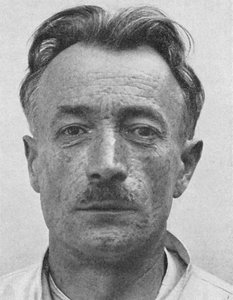
František Kupka
1871 - 1957 , Czech Republic
Quick Facts
- Artistic Movement Or Style: Abstract art, Orphic Cubism
- Artists Or Movements Influenced By This Artist: ['Orphism']
- Date Of Birth: September 23, 1871
- Date Of Death: 1957
- Full Name: František Kupka
- Nationality: Czech
- Notable Artworks:
- The Colored One
- Around a Point
- Place Of Birth: Opava, Czech Republic

