 Preview
 Send
Send Share
Share
 Details

 Download
 Similars
 X-Ray
X-Ray Diaporama
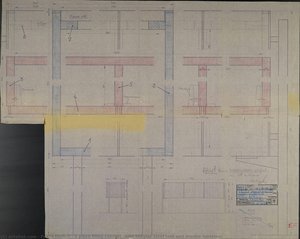
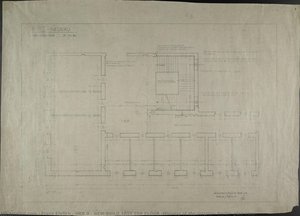
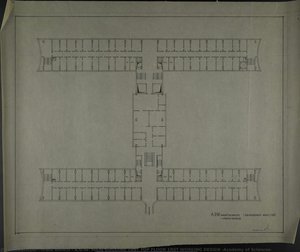
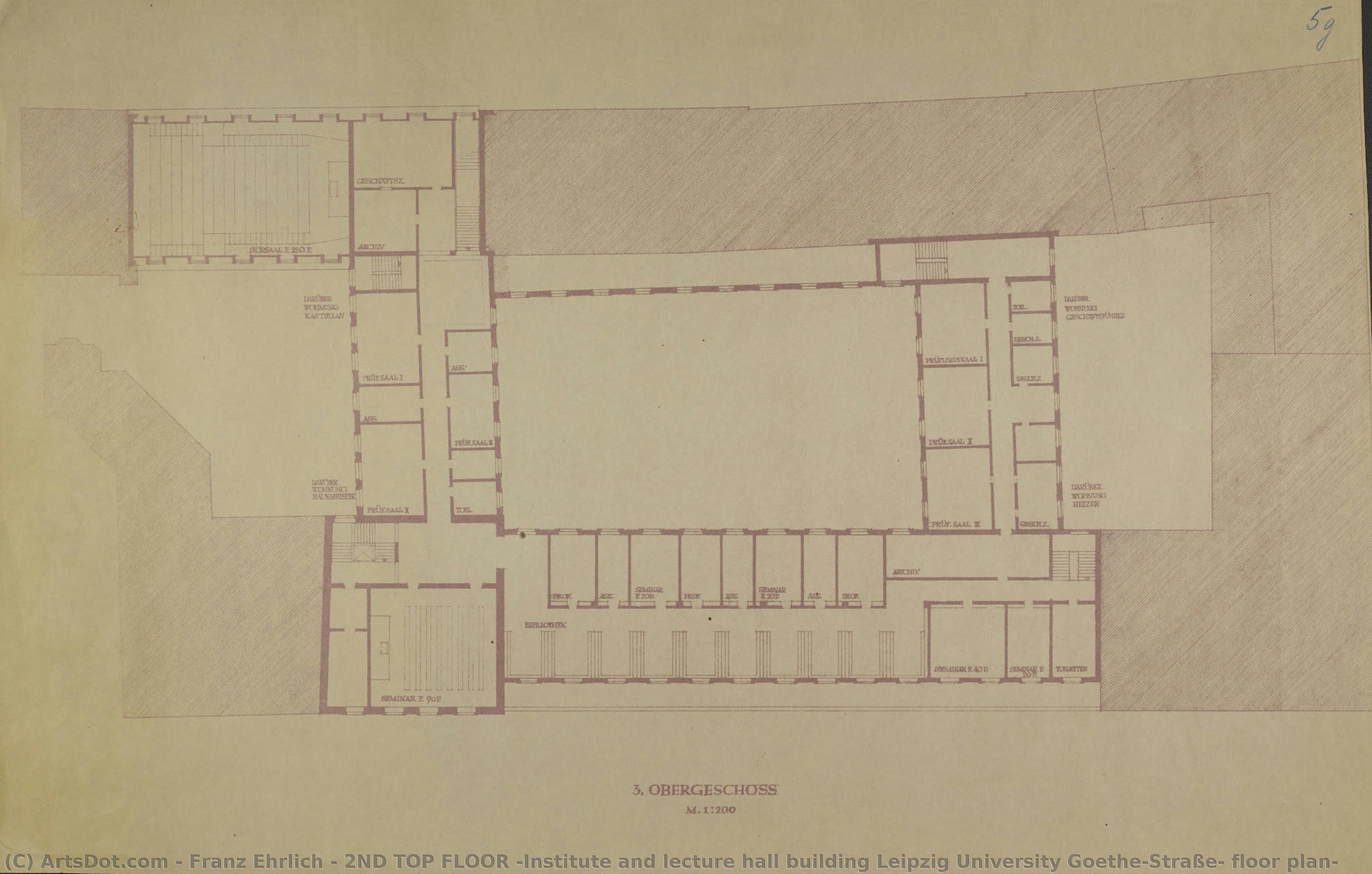
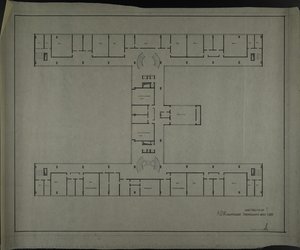
2ND TOP FLOOR (Institute and lecture hall building Leipzig University Goethe-Straße, floor plan)
 Drawing
- WallArt
- Bauhaus
 Modern
 42.0 x 65.0 cm
 Bauhaus Dessau Foundation
 Read More
Giclée / Art Print
Museum-quality giclée or canvas print with fast production and flexible finish options. ( Buy Hand Made Painting Buy Image)




P118B $10

P118H $10

P118W $10

P438Z $10

P508JH $12

P508YH $12

P805H $10

P805Z $10

P919BZ $10

P919G $10

P919XJ $10

P959ZH $10

P968JZ $12

W106C $8

W218G $10

W218JH $8

W218Y $10

W307PJ $10

W316G $10

W316PJ $8

W316Y $10

W398PJ $8

W4111J $10

W500HY $15

W500JH $15

W692G $12

W849H $8

W940BG $15

W953PJ $8




Pick from our preset sizes that match the artwork's original proportions.

You may enter your own dimensions to fit a specific frame or space. If your selected size does not match the original image's proportions, we will either crop the artwork or extend the image with a mirrored or solid-fill edge. A digital mockup will be sent for your approval before production begins.
Please note that the on-screen preview does not reflect the actual cropping or extension. Only the mockup will accurately show the final composition.
While custom sizes are available, we recommend selecting a dimension from the predefined list to preserve the original proportions.
Worldwide Delivery () in 2 weeks instead of standard 4/5 weeks. (16 August)

Free Worldwide Express Shipping

High-Quality Linen Canvas

Full Shipping Insurance

Customs Tax Refund Guarantee

True Color Matching Guarantee

60-Day Return Policy (Defects Only)

100% Money-Back Guarantee

Bulk Discount Offer
 Glass option is only available in size under 110 CM

2ND TOP FLOOR (Institute and lecture hall building Leipzig University Goethe-Straße, floor plan)
Giclée / Art Print
Reproduction Size
-


Total Price
$ 63
Collectible Description
The Blueprint of Intellect: A Journey Through Franz Ehrlich’s Architectural Vision
In the quiet precision of 2ND TOP FLOOR, we are invited into the structured mind of Franz Ehrlich, a master whose life was defined by the intersection of avant-garde design and political resilience. This architectural floor plan, detailing the Institute and lecture hall building at Leipzig University on Goethe-Straße, is far more than a mere technical document; it is a window into the soul of German modernism. Through the stark, monochromatic lines of this drawing, we witness the deliberate organization of space, where every door and corridor serves as a silent testament to the pursuit of knowledge. The piece captures a moment in time when architecture was not just about shelter, and construction, but about the rhythmic flow of human thought and academic discourse.
The aesthetic power of this work lies in its profound simplicity. Eschewing the decorative flourishes of previous eras, Ehrlich utilizes a clean, minimalist technique that echoes the principles he absorbed during his formative years at the Bauhaus in Dessau. The black and white medium strips away the distractions of color, forcing the viewer to focus on the essential geometry of the layout. There is a rhythmic quality to the placement of walls and entrances, creating a visual cadence that guides the eye through the labyrinthine corridors of the university building. For the collector or interior designer, this piece offers a sophisticated graphic element, providing a sense of structural order and intellectual depth that can anchor a contemporary space.
Beyond its technical execution, the floor plan carries an emotional weight rooted in historical context. As a designer whose career was shaped by the turbulent political landscape of 20th-century Germany—including his time under the shadow of the Nazi regime—Ehrlich’s work often reflects a search for clarity and truth amidst chaos. This specific rendering of the Leipzig University floor plan symbolizes stability and the enduring legacy of institutional learning. The way the lines intersect and define boundaries evokes a sense of sanctuary, a place where the architecture itself protects the sanctity of the lecture hall. It is a piece that resonates with anyone who finds beauty in logic, structure, and the quiet strength of well-planned design.
Integrating a high-quality reproduction of this work into an art collection or a curated interior allows for a dialogue between history and modernity. Whether placed in a study, a professional office, or a minimalist living area, 2ND TOP FLOOR acts as a conversation starter, inviting observers to contemplate the hidden geometries that shape our world. It is an exquisite choice for those who appreciate the intersection of graphic design, architectural history, and the profound elegance of the Bauhaus tradition.
Related Artworks
Artist Biography
early life and education
franz ehrlich, a renowned german architect, calligrapher, and graphic designer, was born in 1907. his formative years were marked by an innate inclination towards the arts, which led him to enroll at the bauhaus in dessau from 1927 to 1930. this prestigious institution played a pivotal role in shaping ehrlich's artistic perspective, introducing him to the avant-garde movements of the time.artistic career and communist affiliation
ehrlich's affiliation with the communist party had a profound impact on his life and career. in 1935, he was arrested and imprisoned by the nazi regime, an event that significantly altered the trajectory of his artistic pursuits. despite these challenges, ehrlich continued to contribute to the world of art, leaving behind a legacy that is both inspiring and thought-provoking.notable works
some of ehrlich's most notable works include:- 800 yrs. das buch [the book]. ground plan and views (exhibit display racks, leipzig trade fair), a testament to his innovative approach to design and architecture.
- prof. dr. baumann house execution (foundation plan), showcasing his expertise in architectural planning.
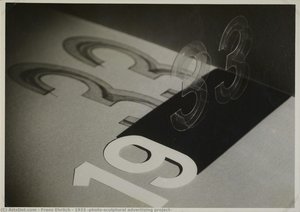
- 1933 (photo-sculptural advertising project), a unique blend of photography and sculpture, highlighting his experimental nature.
museums and collections featuring ehrlich's work
ArtsDot.com features an extensive collection of ehrlich's works, including those mentioned above. the bauhaus dessau foundation (dessau-roßlau, germany) is also a significant repository of his artistic endeavors.legacy and impact
franz ehrlich's contributions to the world of art are multifaceted, reflecting his broad range of interests and talents. his experiences, both creatively and personally, offer valuable insights into the intersection of art and politics during a pivotal moment in german history.- view more of ehrlich's works at https://ArtsDot.com/@/franz-ehrlich
- explore the bauhaus dessau foundation and its collection at bauhaus dessau foundation (dessau-roßlau, germany)
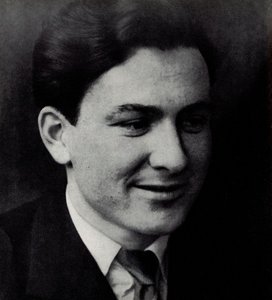
Franz Ehrlich
1907 - 1984 , Germany
Quick Facts
- Artistic Movement Or Style: Bauhaus, Expressionism
- Artists Or Movements Influenced By This Artist:
- Bauhaus
- Young Communist League
- Artists Who Influenced This Artist:
- Walter Gropius
- Moholy-Nagy
- Klee
- Joost Schmidt
- Date Of Birth: 1907
- Date Of Death: 1984
- Full Name: Franz Ehrlich
- Nationality: German
- Notable Artworks:
- 800 YRS. FRAMEWORK WALL 3
- Untitled (HKB I or II)
- Painting with Violin
- Place Of Birth: Reuth, Germany
Related Articles

White on Canvas: 10 Masterpieces & Timeless Elegance for Your Home Decor
Explore 10 iconic white paintings by Monet, Whistler & Rothko! Discover the stories behind these serene masterpieces and their impact on art history. Find museum-quality reproductions for your home decor at .

Dark Masterpieces: 10 Iconic Paintings Dominated by Black Tones |
Explore 10 iconic paintings dominated by black tones, from Rembrandt’s chiaroscuro to Goya's dark expressions. Discover the stories behind these masterpieces & find museum-quality art reproductions for your home at .

Monochrome Visions: Exploring the Aesthetic & Historical Significance of Black & White Photography
Explore the rich history & artistic power of black and white photography. From early techniques to iconic masters like Ansel Adams, discover why monochrome continues to captivate art lovers today. Expert insights for collectors.
Mars Black Masterpieces: 10 Iconic Paintings & Timeless Art Decor Ideas
Delve into the power of 'Mars Black' with 10 iconic paintings by masters like Rembrandt & Caravaggio. Explore dramatic chiaroscuro, gothic art, and timeless beauty. Find museum-quality reproductions & elevate your home decor on .
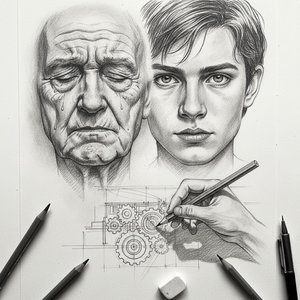
The Nuances of Graphite: Exploring Emotional Depth & Technical Mastery in Pencil Drawing
Explore the captivating world of graphite drawing! Discover its rich history, master essential techniques like chiaroscuro, and learn how artists evoke emotion through this timeless medium. Expert insights for art enthusiasts.