

 Preview
 Send
Send Share
Share
 Details

 Download
 Similars
 X-Ray
X-Ray Diaporama
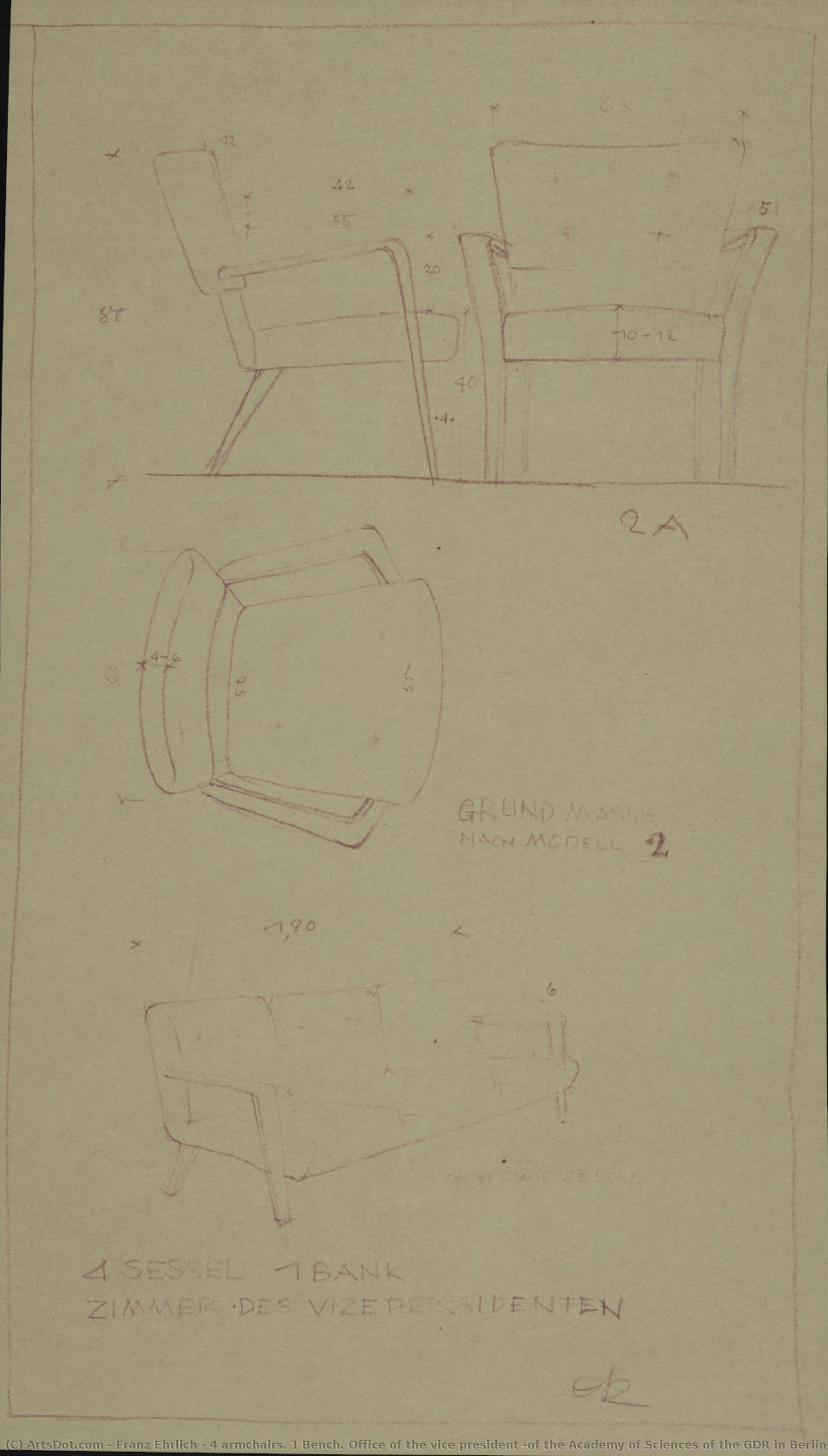
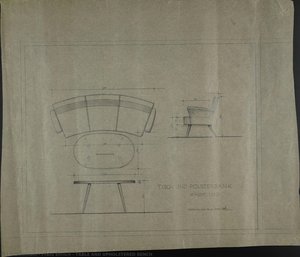
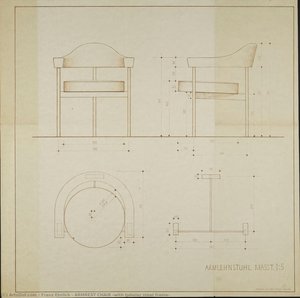
4 armchairs. 1 Bench. Office of the vice president (of the Academy of Sciences of the GDR in Berlin)
 Acrylic On Canvas
- WallArt
- Bauhaus Expressionism
 36.0 x 20.0 cm
 Bauhaus Dessau Foundation
 Read More
Purchase a high-resolution, enhanced digital image, far superior to the online preview.
Each file is meticulously prepared by our in-house specialists using advanced tools and expert manual retouching. We ensure every image has exceptional clarity, precise color accuracy, and fine detail.
The final file is delivered via email within 72 hours, optimized for immediate use in professional, editorial, and print environments. This is the same quality trusted by top-tier design studios, publishers, and galleries.
Digital Image
Download a high-resolution file for personal display, printing, and creative projects. ( Buy Print Buy Hand Made Painting)
Included in Every Digital Image Order
Expert Digital Delivery, Guaranteed
When you choose ArtsDot.com, you're not just getting an image - you're receiving a professionally enhanced digital artwork, crafted with precision and backed by a satisfaction guarantee. Here's everything that comes with your order, automatically:

Fast Email Delivery
Your high-resolution digital image file will be emailed to you within 72 hours of ordering - ready for immediate use.

AI-Enhanced Digital File
Your artwork is professionally optimized using advanced AI tools and manual editing, ensuring maximum detail, clarity, and color accuracy.

Free Lifetime Re-Delivery
Accidentally deleted or lost your file? No worries - we'll resend it to you anytime, free of charge.

No Import Fees - Ever
Enjoy your artwork instantly with zero customs, duties, or delivery fees - digital downloads are always tax-free.

Color Accuracy Guarantee
We ensure your digital image reflects the original colors as closely as possible using professional tools and color management.

60-Day Satisfaction Guarantee
If you're not satisfied with your digital image, we'll revise it or refund 100% within 60 days - no questions asked.

100% Money-Back Guarantee
Not satisfied? Get a full refund within 60 days of receiving your digital file - no questions asked.

Bulk Order Discounts
Buy 3 images, save 10% - Buy 5, save 15% - Buy 10+, save 20%. Great for creative projects, galleries, and agencies.
Collectible Description
Franz Ehrlich: Blueprint for Reflection – The Legacy of Four Armchairs
Franz Ehrlich (1907–1984), a German architect, calligrapher, and graphic designer whose work spanned Bauhaus principles to communist affiliation, remains an enigmatic figure in the annals of modernist design. While his name might not resonate with mainstream audiences today, Ehrlich’s contribution to architectural thought and artistic expression—particularly embodied in “4 Armchairs. 1 Bench,” a meticulously rendered drawing conceived for the Office of the Vice President of the Academy of Sciences of the GDR—offers a compelling glimpse into the intellectual currents shaping East German culture during its formative years.
- The Drawing’s Genesis: Created in 1935, shortly before Ehrlich's arrest by Nazi authorities, “4 Armchairs. 1 Bench” emerged from the Bauhaus workshop in Dessau, where Ehrlich honed his skills alongside luminaries like Walter Gropius and Josef Albers. This formative period instilled within him a profound appreciation for geometric abstraction and functional design—values that would define his subsequent artistic endeavors.
- Bauhaus Influence: The drawing’s stark monochrome palette—primarily black ink on white paper—immediately recalls the Bauhaus aesthetic, prioritizing clarity of form and minimizing ornamentation. Ehrlich skillfully employs orthogonal lines to delineate the chair frames and bench surface, reflecting the Bauhaus ethos of rational construction and uncompromising simplicity.
- Symbolism Within Functionality: Beyond its purely structural considerations, “4 Armchairs. 1 Bench” carries symbolic weight. The arrangement of the chairs—two rows mirroring each other—suggests balance and equilibrium, mirroring the pursuit of harmony between intellect and physicality inherent in Bauhaus philosophy. Furthermore, the bench positioned centrally symbolizes contemplation and dialogue – a deliberate choice reflecting the Academy’s mission as a hub for scholarly discourse.
The drawing itself is a testament to Ehrlich's meticulous technique—a blueprint or design sketch executed with unwavering precision. The artist’s attention to detail extends beyond mere geometric accuracy; subtle shading enhances the illusion of depth, conveying a sense of materiality and inviting viewers to imagine the tactile experience of sitting upon these chairs.
- Material Considerations: Although rendered in monochrome, Ehrlich's drawing anticipates the use of durable materials—likely beechwood—consistent with Bauhaus ideals. The careful depiction of joinery reinforces the structural integrity of the furniture design, demonstrating a commitment to both aesthetic beauty and practical efficacy.
"4 Armchairs. 1 Bench" transcends its role as mere architectural documentation; it serves as an emblem of intellectual optimism—a declaration that reason and artistry could coexist harmoniously in shaping the cultural landscape of postwar Germany. Today, reproductions of this seminal drawing continue to inspire designers and collectors alike, reminding us of the enduring power of minimalist design to provoke contemplation and convey profound emotional resonance.
Reproductions available at ArtsDot.comRelated Artworks
Artist Biography
early life and education
franz ehrlich, a renowned german architect, calligrapher, and graphic designer, was born in 1907. his formative years were marked by an innate inclination towards the arts, which led him to enroll at the bauhaus in dessau from 1927 to 1930. this prestigious institution played a pivotal role in shaping ehrlich's artistic perspective, introducing him to the avant-garde movements of the time.artistic career and communist affiliation
ehrlich's affiliation with the communist party had a profound impact on his life and career. in 1935, he was arrested and imprisoned by the nazi regime, an event that significantly altered the trajectory of his artistic pursuits. despite these challenges, ehrlich continued to contribute to the world of art, leaving behind a legacy that is both inspiring and thought-provoking.notable works
some of ehrlich's most notable works include:- 800 yrs. das buch [the book]. ground plan and views (exhibit display racks, leipzig trade fair), a testament to his innovative approach to design and architecture.
- prof. dr. baumann house execution (foundation plan), showcasing his expertise in architectural planning.
- 1933 (photo-sculptural advertising project), a unique blend of photography and sculpture, highlighting his experimental nature.
museums and collections featuring ehrlich's work
ArtsDot.com features an extensive collection of ehrlich's works, including those mentioned above. the bauhaus dessau foundation (dessau-roßlau, germany) is also a significant repository of his artistic endeavors.legacy and impact
franz ehrlich's contributions to the world of art are multifaceted, reflecting his broad range of interests and talents. his experiences, both creatively and personally, offer valuable insights into the intersection of art and politics during a pivotal moment in german history.- view more of ehrlich's works at https://ArtsDot.com/@/franz-ehrlich
- explore the bauhaus dessau foundation and its collection at bauhaus dessau foundation (dessau-roßlau, germany)
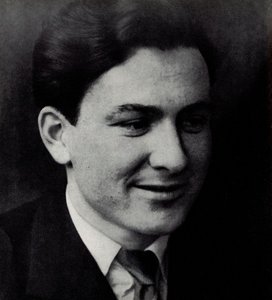
Franz Ehrlich
1907 - 1984 , Germany
Quick Facts
- Artistic Movement Or Style: Bauhaus, Expressionism
- Artists Or Movements Influenced By This Artist:
- Bauhaus
- Young Communist League
- Artists Who Influenced This Artist:
- Walter Gropius
- Moholy-Nagy
- Klee
- Joost Schmidt
- Date Of Birth: 1907
- Date Of Death: 1984
- Full Name: Franz Ehrlich
- Nationality: German
- Notable Artworks:
- 800 YRS. FRAMEWORK WALL 3
- Untitled (HKB I or II)
- Painting with Violin
- Place Of Birth: Reuth, Germany

