

 Preview
 Send
Send Share
Share
 Details

 Download
 Similars
 X-Ray
X-Ray Diaporama
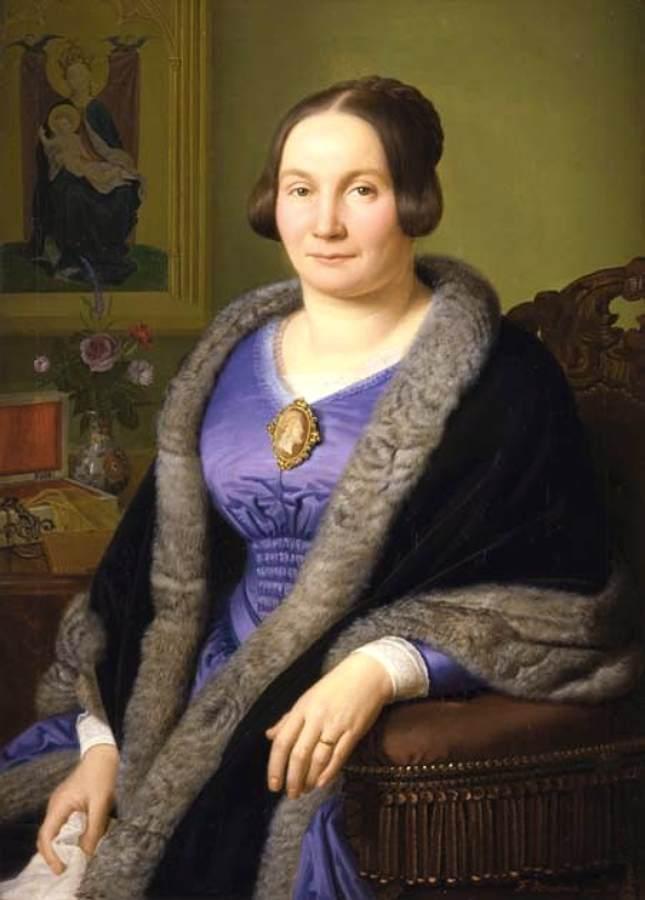
Portrait of Margarete von Soist
 1849
1849 76.0 x 66.0 cm
 Read More
Purchase a high-resolution, enhanced digital image, far superior to the online preview.
Each file is meticulously prepared by our in-house specialists using advanced tools and expert manual retouching. We ensure every image has exceptional clarity, precise color accuracy, and fine detail.
The final file is delivered via email within 72 hours, optimized for immediate use in professional, editorial, and print environments. This is the same quality trusted by top-tier design studios, publishers, and galleries.
Digital Image
Download a high-resolution file for personal display, printing, and creative projects. ( Buy Print Buy Hand Made Painting)
Included in Every Digital Image Order
Expert Digital Delivery, Guaranteed
When you choose ArtsDot.com, you're not just getting an image - you're receiving a professionally enhanced digital artwork, crafted with precision and backed by a satisfaction guarantee. Here's everything that comes with your order, automatically:

Fast Email Delivery
Your high-resolution digital image file will be emailed to you within 72 hours of ordering - ready for immediate use.

AI-Enhanced Digital File
Your artwork is professionally optimized using advanced AI tools and manual editing, ensuring maximum detail, clarity, and color accuracy.

Free Lifetime Re-Delivery
Accidentally deleted or lost your file? No worries - we'll resend it to you anytime, free of charge.

No Import Fees - Ever
Enjoy your artwork instantly with zero customs, duties, or delivery fees - digital downloads are always tax-free.

Color Accuracy Guarantee
We ensure your digital image reflects the original colors as closely as possible using professional tools and color management.

60-Day Satisfaction Guarantee
If you're not satisfied with your digital image, we'll revise it or refund 100% within 60 days - no questions asked.

100% Money-Back Guarantee
Not satisfied? Get a full refund within 60 days of receiving your digital file - no questions asked.

Bulk Order Discounts
Buy 3 images, save 10% - Buy 5, save 15% - Buy 10+, save 20%. Great for creative projects, galleries, and agencies.
Related Artworks










Artist Biography
The Spiritual Vision of Franz Ittenbach
In the heart of the nineteenth century, a period often defined by the rapid onset of industrialization and secularism, Franz Ittenbach emerged as a profound voice for spiritual continuity. Born in 1813 in the picturesque Königswinter, at the foot of the Drachenfels mountain range, Ittenbach’s early life was steeped in a reverence for faith that would later become the cornerstone of his artistic identity. The son of a modest wine shop owner, he grew up surrounded by the values of craftsmanship and religious conviction, a foundation that prepared him for a life dedicated to the pursuit of divine beauty through the medium of paint.
His journey into the upper echelons of European art began with rigorous formal training. After initial studies under Kaufmann, he moved to Cologne to refine his skills under Franz Katz, mastering the essential elements of draughtsmanship and technique. However, it was his arrival at the Düsseldorf Academy in 1832 that would irrevocably alter his destiny. Under the mentorship of Friedrich Wilhelm Schadow, the academy's president, Ittenbach found more than just technical instruction; he found a spiritual calling. This period marked his integration into the prestigious Düsseldorf school of painting, a movement renowned for its meticulous observation of nature and its deep commitment to emotional and spiritual contemplation.
The Nazarene Spirit and Italian Inspiration
Ittenbach was not merely a painter of scenes, but a member of a brotherhood. Alongside fellow students Karl Müller, Andreas Müller, and Ernst Deger, he formed a tight-knit quartet of artists who shared a common mission: to revive the purity of Christian art. This group became closely associated with the Nazarene movement, a group of German Romantic painters who sought to return to the sincerity and spiritual depth found in Late Medieval and Early Renaissance masterpieces. Their travels through Germany were characterized by a collective devotion to studying and replicating the great works of the past, fostering a style that rejected the superficial trends of their era in favor of timeless truth.
The years between 1839 and 1842 proved transformative as Ittenbach immersed himself in the artistic fervor of Italy. Living amidst the Roman art that had inspired the masters of old, he solidified a stylistic preference for academic realism blended with a profound sense of piety. This Italian sojourn infused his work with a classical grace and an appreciation for tonal harmonies. Upon his return to Germany, and eventually settling back in Düsseldorf in 1849, his work began to exhibit a unique ability to portray biblical narratives with an unwavering sincerity that resonated deeply with the Catholic faithful.
Mastery of Light and Sacred Narrative
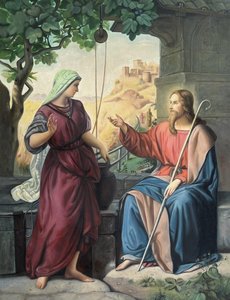
The true brilliance of Ittenbach’s oeuvre lies in his ability to transform theological concepts into palpable, human experiences. His technique often utilized a restrained palette, prioritizing soft, ethereal light and earthy tones—rich reds, deep blues, and warm ochres—to create an atmosphere of both earthly groundedness and spiritual transcendence. In masterpieces such as Christ and the Samaritan by the Well, painted in 1854, one can witness his mastery of the human element. He does not merely depict a biblical encounter; he captures the subtle shift from skepticism to dawning understanding through nuanced facial expressions and expressive gestures.
His dedication to church decoration and religious subject matter left an indelible mark on the nineteenth-century landscape. Whether portraying the tender intimacy of the Madonna and Child or the solemnity of the Holy Family, Ittenbach’s work serves as a bridge between the historical past and the spiritual present. His legacy is defined by several key artistic contributions:
- The Nazarene Ideal: A commitment to reviving the spiritual purity and technical precision of the Early Renaissance.
- Düsseldorf School Excellence: The integration of meticulous naturalism with profound religious narrative.
- Emotional Resonance: The use of light and color to convey complex theological themes like redemption, grace, and faith.
Though he passed away in Düsseldorf in 1879, the impact of Franz Ittenbach continues to be felt. He remains a pivotal figure for those who seek art that transcends the temporal, offering instead a window into the eternal through the delicate interplay of light, shadow, and sacred story.
franz ittenbach
1813 - 1879
Quick Facts
- Artistic Movement Or Style: Nazarene Painting
- Artists Or Movements Influenced By This Artist: ['Expressionism']
- Artists Who Influenced This Artist:
- Schadow
- Kaufmann
- Date Of Birth: April 18, 1813
- Date Of Death: December 1, 1879
- Full Name: Franz Ittenbach
- Nationality: German
- Notable Artworks:
- Holy Family
- St. Remigius
- Place Of Birth: Königswinter, Germany

