

 Preview
 Send
Send Share
Share
 Details

 Download
 Similars
 X-Ray
X-Ray Diaporama
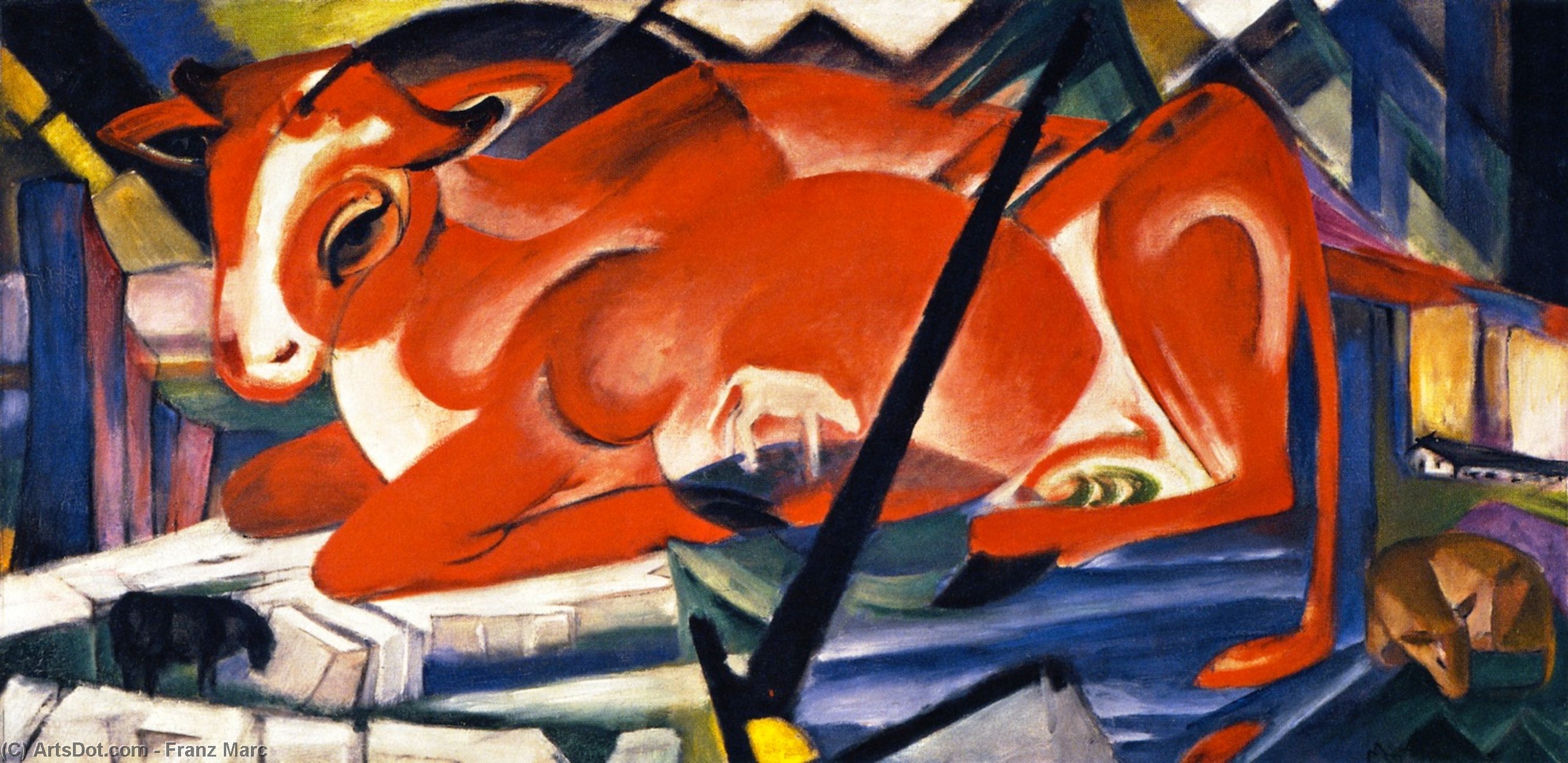
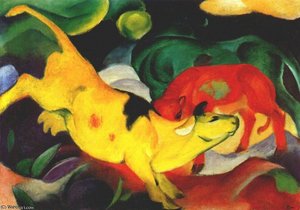
The World-Cow (also known as Bos Orbis Mundi)


 Read More
Purchase a high-resolution, enhanced digital image, far superior to the online preview.
Each file is meticulously prepared by our in-house specialists using advanced tools and expert manual retouching. We ensure every image has exceptional clarity, precise color accuracy, and fine detail.
The final file is delivered via email within 72 hours, optimized for immediate use in professional, editorial, and print environments. This is the same quality trusted by top-tier design studios, publishers, and galleries.
Digital Image
Download a high-resolution file for personal display, printing, and creative projects. ( Buy Print Buy Hand Made Painting)
Included in Every Digital Image Order
Expert Digital Delivery, Guaranteed
When you choose ArtsDot.com, you're not just getting an image - you're receiving a professionally enhanced digital artwork, crafted with precision and backed by a satisfaction guarantee. Here's everything that comes with your order, automatically:

Fast Email Delivery
Your high-resolution digital image file will be emailed to you within 72 hours of ordering - ready for immediate use.

AI-Enhanced Digital File
Your artwork is professionally optimized using advanced AI tools and manual editing, ensuring maximum detail, clarity, and color accuracy.

Free Lifetime Re-Delivery
Accidentally deleted or lost your file? No worries - we'll resend it to you anytime, free of charge.

No Import Fees - Ever
Enjoy your artwork instantly with zero customs, duties, or delivery fees - digital downloads are always tax-free.

Color Accuracy Guarantee
We ensure your digital image reflects the original colors as closely as possible using professional tools and color management.

60-Day Satisfaction Guarantee
If you're not satisfied with your digital image, we'll revise it or refund 100% within 60 days - no questions asked.

100% Money-Back Guarantee
Not satisfied? Get a full refund within 60 days of receiving your digital file - no questions asked.

Bulk Order Discounts
Buy 3 images, save 10% - Buy 5, save 15% - Buy 10+, save 20%. Great for creative projects, galleries, and agencies.
Collectible Description
A Vision of Earthly Harmony: Franz Marc’s *The World-Cow*
Franz Marc's 1913 painting, *The World-Cow (Bos Orbis Mundi)*, is not merely a depiction of an animal; it’s a profound meditation on the interconnectedness of all living things and a poignant expression of the artist’s deeply held spiritual beliefs. This arresting image, rendered in vibrant oil paints on canvas, immediately commands attention with its bold red bovine form dominating the composition. The sheer intensity of the color – a shade often associated with blood and sacrifice yet imbued here with life-giving energy – speaks to a primal connection to the earth and a yearning for something beyond the purely material.
Marc’s artistic journey was shaped by a complex interplay of influences, beginning with his father's landscape paintings and culminating in a fervent exploration of religious thought. He initially considered a career in theology, wrestling with questions of faith and existence before ultimately choosing art as his medium for conveying spiritual experience. This intellectual and emotional background is powerfully evident in *The World-Cow*. The painting’s genesis lies within Marc’s belief that animals possessed a deeper understanding of the world than humans, embodying a purity and instinct untouched by human anxieties and complexities. He sought to capture this essence through color and form, believing that art could serve as a bridge between the visible and invisible realms.
Decoding the Symbolism: Cows, Circles, and Cosmic Order
The central figure of *The World-Cow* is undeniably a cow, but Marc elevates it beyond a simple representation. The animal’s rounded form immediately evokes the image of the earth itself – a sphere teeming with life. Crucially, the cow is depicted within a large circle, a motif frequently employed by Marc and other artists of the Expressionist movement. This circle isn't merely decorative; it represents the cosmos, the totality of existence, and the cyclical nature of life and death. The two smaller cows flanking the central figure further reinforce this concept, suggesting a broader, interconnected web of being.
The horns of the primary cow are particularly significant. They can be interpreted as symbols of sacrifice – not necessarily in a violent sense, but rather as an offering to the earth, a recognition of our dependence on nature’s bounty. Furthermore, they subtly echo ancient depictions of deities and mythical creatures, grounding the painting within a rich tapestry of cultural symbolism. The blue sky behind the scene provides a striking contrast, representing the heavens and further emphasizing the painting's aspiration towards a higher spiritual plane.
A Masterclass in Expressionist Technique
Marc’s distinctive style is immediately recognizable in *The World-Cow*. He employed a technique characterized by flattened forms, simplified shapes, and an almost childlike quality. The brushstrokes are visible and energetic, contributing to the painting's raw emotional intensity. He utilized color not for realistic representation but rather as a vehicle for expressing inner feelings and spiritual truths. Marc’s deliberate use of red – a color often associated with passion, vitality, and even danger – creates a powerful visual impact, drawing the viewer into the heart of the scene.
The painting's composition is remarkably balanced despite its bold colors. The placement of the smaller cows adds depth and complexity to the image, preventing it from feeling static or overwhelming. Marc’s skillful manipulation of color and form creates a dynamic tension between earthly existence and spiritual aspiration – a visual embodiment of his core artistic philosophy.
Bringing *The World-Cow* Home: Reproduction Options
ArtsDot offers meticulously crafted hand-painted reproductions of Franz Marc's *The World-Cow*, allowing you to experience the power and beauty of this iconic artwork in your own space. Our skilled artisans replicate Marc’s distinctive style with exceptional attention to detail, ensuring that every reproduction captures the painting’s original vibrancy and emotional depth. Whether you are an art collector, a design enthusiast, or simply someone seeking a piece of profound artistic expression, our reproductions provide a stunning way to bring this remarkable vision into your home or office. Explore our range of sizes and canvas materials to find the perfect representation for your personal taste – a tangible connection to one of the most significant works of 20th-century art.
Related Artworks
Artist Biography
A Life Immersed in Color and Spirit
Franz Moritz Wilhelm Marc, born in Munich in 1880, was a painter whose brief but intensely focused career irrevocably altered the course of German Expressionism. His story is one of profound spiritual seeking translated into a vibrant visual language, a quest to understand the essence of life through the purity he found in the natural world—particularly within the animal kingdom. Initially influenced by his father, Wilhelm Marc, a landscape painter, young Franz’s artistic path wasn't immediately certain. He briefly considered theology, grappling with questions of faith and existence before ultimately dedicating himself to art at the Academy of Fine Arts in Munich. These early explorations into religious thought would remain deeply embedded within his work, shaping his belief that art could be a conduit for spiritual experience. His academic training provided him with technical foundations, but it was encounters with the works of Vincent van Gogh during visits to Paris that truly ignited his artistic vision. Van Gogh’s emotive use of color and raw expression resonated profoundly with Marc, liberating him from conventional techniques and setting him on a path toward a more subjective and emotionally charged style.The Blue Rider and a New Artistic Vision
Marc's artistic development wasn’t solitary; it flourished within the dynamic context of early 20th-century Munich. He experimented with various artist groups, including the Neue Künstlervereinigung München, before co-founding *Der Blaue Reiter* (The Blue Rider) in 1911 alongside Wassily Kandinsky. This wasn’t merely a group or an exhibition series; it was a philosophical and artistic revolution. *Der Blaue Reiter* sought to move beyond mere representation, aiming instead to express inner spiritual truths through abstraction and symbolic color. The journal of the same name became a platform for disseminating these ideas, showcasing not only their own work but also that of other forward-thinking artists and exploring diverse cultural influences from folk art to primitive sculpture. Marc’s contributions during this period were pivotal. He moved away from depicting landscapes as static scenes, instead focusing on animals—horses, deer, foxes—as vessels of spiritual energy. These weren't simply animal portraits; they were symbolic representations of innocence, harmony, and a connection to the natural world that he believed humanity had lost. The influence of Robert Delaunay’s exploration of abstract forms and vibrant colors further propelled Marc toward simplification and heightened emotional expression in his work. Paintings like *The Tiger* (1912) and *Red Deer* (1912) exemplify this shift, showcasing bold color choices and a growing focus on the inherent qualities of his subjects rather than realistic depiction.Symbolism, Color, and the Essence of Being
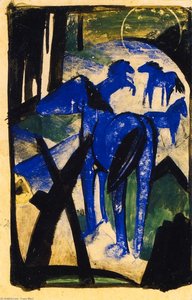
Marc’s artistic style is immediately recognizable for its distinctive use of color and form. He didn't employ color descriptively; instead, he imbued it with symbolic meaning. Blue represented spirituality and masculinity, yellow signified joy and femininity, and red embodied violence and materiality. These weren’t arbitrary choices but a carefully constructed system designed to convey specific emotional and philosophical ideas. His animals aren’t merely subjects; they are embodiments of these concepts. The simplification of forms—reducing figures to their essential shapes—further emphasized the underlying spiritual essence he sought to capture. *The Tower of Blue Horses* (1913), sadly lost during World War II, is perhaps the most iconic example of this approach, a powerful and evocative composition that encapsulates his artistic vision. He believed animals possessed an inherent purity and connection to nature that humans had forfeited through societal constraints and intellectualization. By portraying them with such reverence and symbolic weight, Marc sought to remind viewers of this lost harmony and inspire a deeper appreciation for the natural world. His work wasn’t about depicting *what* he saw but rather *how* he felt—a deeply personal and spiritual response to his surroundings.A Tragic End and Lasting Legacy
The outbreak of World War I in 1914 dramatically altered Marc's life and artistic trajectory. Despite seeking exemption due to his status as an artist, he was drafted into the German army, serving as a cavalryman. The horrors of war deeply affected him, yet even amidst the chaos, he continued to paint, finding solace and meaning in his art. Tragically, Franz Marc died on March 4, 1916, at the Battle of Verdun, a devastating loss for the art world. His untimely death cut short a career brimming with potential, but it also cemented his place as a pivotal figure in modern art history. His work continues to resonate today, influencing generations of artists and captivating audiences with its emotional depth and spiritual resonance. Marc’s paintings are exhibited in major museums worldwide, including the Lenbachhaus in Munich, which holds an extensive collection of his work. He is remembered not only as a pioneer of German Expressionism but also as a visionary artist who dared to explore the profound connection between art, spirituality, and the natural world—a legacy that continues to inspire awe and contemplation. His artistic vision remains a testament to the power of art to transcend the material realm and touch upon something deeper within the human spirit.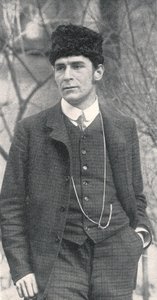
Franz Marc
1880 - 1916 , Germany
Quick Facts
- Artistic Movement Or Style: German Expressionism
- Artists Or Movements Influenced By This Artist:
- Abstract art
- Der Blaue Reiter
- Artists Who Influenced This Artist:
- Van Gogh
- Delaunay
- Date Of Birth: February 8, 1880
- Date Of Death: March 4, 1916
- Full Name: Franz Moritz Wilhelm Marc
- Nationality: German
- Notable Artworks:
- The Tiger
- Red Deer
- Tower of Blue Horses
- Place Of Birth: Munich, Germany

