

 Preview
 Send
Send Share
Share
 Details

 Download
 Similars
 X-Ray
X-Ray Diaporama
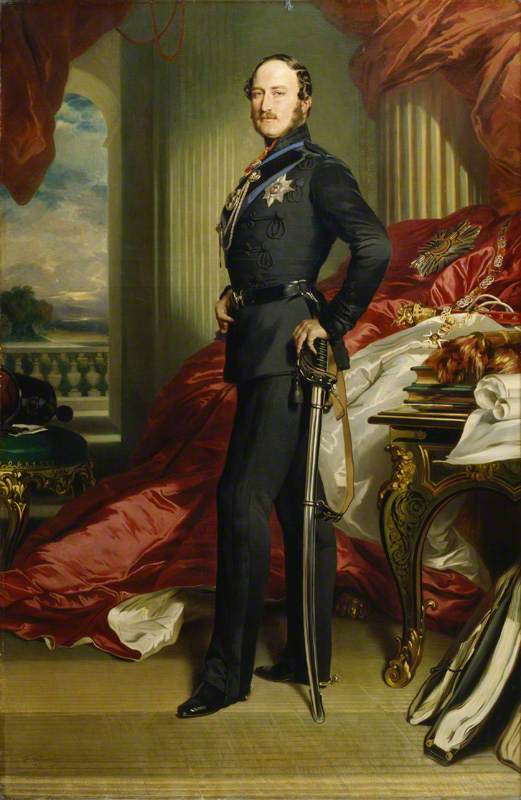
Prince Albert of Saxe Coburg Gotha (replica of an original of 1859 by the artist)
 Oil On Canvas
- WallArt
- Romanticism
 1867
1867- 19th Century
 241.0 x 157.0 cm
 Read More
Purchase a high-resolution, enhanced digital image, far superior to the online preview.
Each file is meticulously prepared by our in-house specialists using advanced tools and expert manual retouching. We ensure every image has exceptional clarity, precise color accuracy, and fine detail.
The final file is delivered via email within 72 hours, optimized for immediate use in professional, editorial, and print environments. This is the same quality trusted by top-tier design studios, publishers, and galleries.
Digital Image
Download a high-resolution file for personal display, printing, and creative projects. ( Buy Print Buy Hand Made Painting)
Included in Every Digital Image Order
Expert Digital Delivery, Guaranteed
When you choose ArtsDot.com, you're not just getting an image - you're receiving a professionally enhanced digital artwork, crafted with precision and backed by a satisfaction guarantee. Here's everything that comes with your order, automatically:

Fast Email Delivery
Your high-resolution digital image file will be emailed to you within 72 hours of ordering - ready for immediate use.

AI-Enhanced Digital File
Your artwork is professionally optimized using advanced AI tools and manual editing, ensuring maximum detail, clarity, and color accuracy.

Free Lifetime Re-Delivery
Accidentally deleted or lost your file? No worries - we'll resend it to you anytime, free of charge.

No Import Fees - Ever
Enjoy your artwork instantly with zero customs, duties, or delivery fees - digital downloads are always tax-free.

Color Accuracy Guarantee
We ensure your digital image reflects the original colors as closely as possible using professional tools and color management.

60-Day Satisfaction Guarantee
If you're not satisfied with your digital image, we'll revise it or refund 100% within 60 days - no questions asked.

100% Money-Back Guarantee
Not satisfied? Get a full refund within 60 days of receiving your digital file - no questions asked.

Bulk Order Discounts
Buy 3 images, save 10% - Buy 5, save 15% - Buy 10+, save 20%. Great for creative projects, galleries, and agencies.
A Glimpse into Imperial Grandeur: Prince Albert of Saxe Coburg Gotha
To stand before this magnificent portrait is to step directly into the gilded salons of mid-nineteenth-century European royalty. This depiction of Prince Albert of Saxe Coburg Gotha, executed in a style echoing Franz Xavier Winterhalter’s masterful hand from 1859, is far more than a mere likeness; it is a carefully constructed tableau of power, lineage, and aristocratic poise. The subject commands attention, clad in the formal trappings of his station—the rich fabric of his suit speaks of wealth, while the crown subtly asserts his elevated status. His posture, upright and deliberate, coupled with the authoritative way he holds the sword, suggests a man accustomed to command, a figure whose very presence was an event.
The Artistry of Winterhalter: Technique and Presence
Franz Xavier Winterhalter was renowned for capturing not just faces, but entire epochs. His technique, evident here, blends meticulous academic draftsmanship with the sweeping romanticism that defined the era. Observe the handling of light; it seems to emanate from an unseen source, catching the sheen on the sword and lending a luminous quality to the figures' garments. The composition is richly populated, suggesting this portrait was commissioned during a significant gathering or state occasion. The inclusion of surrounding figures—one visible to the left, another near the center, and a third toward the right—lends depth and narrative complexity. It transforms the painting from a simple portrait into a vibrant record of courtly life.
Symbolism Woven into Silk and Steel
Every element within this canvas carries symbolic weight. The sword is perhaps the most potent symbol, representing martial prowess, duty, and the defense of his house or realm. Paired with the regal bearing and the implied crown, it speaks to a dual identity: that of the cultured nobleman and the capable military figurehead. Furthermore, the setting, hinted at by the presence of what appears to be a bed structure, juxtaposes the public display of power with the private sphere of domestic life—a common thematic tension in portraits of this elevated class. These symbols invite contemplation on the responsibilities that accompany such grandeur.
A Timeless Echo for Modern Interiors
For the discerning collector or designer, this reproduction offers an unparalleled opportunity to infuse a space with historical gravitas and undeniable artistry. The scale of 241 x 157 cm ensures it functions as a monumental focal point in any grand hall, library, or formal reception room. While the subject matter is rooted in the Victorian age, the sheer opulence and masterful execution transcend time. Owning this piece means curating an atmosphere steeped in historical romance and undeniable sophistication, allowing the echoes of 19th-century courtly life to resonate beautifully within contemporary walls.
Related Artworks
Artist Biography
A Painter of Kings and Queens: The Life and Art of Franz Xaver Winterhalter
Born in the secluded Black Forest village of Menzenschwand in 1805, Franz Xaver Winterhalter ascended from humble beginnings to become one of Europe’s most sought-after portraitists. His story is not merely that of an artist achieving technical mastery, but of a man who captured an era – the age of burgeoning Romanticism giving way to Victorian propriety and imperial grandeur. The son of a farmer and resin producer, Winterhalter's early life was steeped in the rhythms of rural Germany, yet his artistic inclinations quickly set him apart. A strong family bond, particularly with his painter brother Hermann, nurtured his creative spirit, while formal training at a Benedictine monastery and later under Karl Ludwig Schüler in Freiburg provided foundational skills in drawing and engraving. This initial grounding proved crucial as he transitioned to Munich, securing support from Baron von Eichtal and eventually studying at the Academy of Arts, though finding its academic rigidity somewhat stifling. It was Joseph Karl Stieler, a master of fashionable portraiture, who truly guided his development during these formative years.
From Karlsruhe to Parisian Heights: Establishing a Royal Reputation
Winterhalter’s breakthrough arrived in 1828 when he became drawing master to Sophie Margravine of Baden at Karlsruhe. This appointment wasn't simply a job; it was an entry point into the intricate world of European royalty. His talent for capturing likeness and imbuing his subjects with an air of elegance quickly gained recognition, leading to commissions from Grand Duke Leopold of Baden and his wife. However, it was Paris that truly cemented Winterhalter’s fame. Arriving in the French capital in the 1830s, he skillfully navigated the artistic landscape, exhibiting genre scenes like *Il dolce Farniente* and *Il Decameron*, which showcased his academic training while hinting at a burgeoning Romantic sensibility. These works garnered critical attention, but it was his portraits that truly captivated the aristocracy. He became a favorite of King Louis-Philippe, executing over thirty commissions for the royal family and establishing himself as the go-to portraitist for those seeking to project an image of power, refinement, and dynastic legitimacy. His ability to blend realism with flattery – to present his sitters at their most idealized while remaining recognizably themselves – proved irresistible.
The Victorian Embrace: A Painter of Imperial Majesty
Winterhalter’s reputation extended beyond France, reaching the British Isles and capturing the attention of Queen Victoria. In 1841, he was summoned to England, initiating a prolific relationship that would see him create over one hundred portraits for the Royal Collection. These weren't merely official commissions; they were intimate glimpses into the lives of the royal family, often commissioned as personal gifts. His portrait of Queen Victoria in 1843, a small and exquisitely detailed work, exemplifies his ability to capture not just physical likeness but also a sense of personality and emotion. The painting, gifted by Victoria to Prince Albert, depicts the young queen with a vulnerable intimacy that belies her regal status. This success solidified Winterhalter’s position as *the* portraitist of European royalty, sought after by Empress Eugénie in France, Empress Elisabeth of Austria, and countless other noble figures. He became a master of dynastic image-making, shaping how these powerful families presented themselves to the world.
Style and Legacy: Beyond Likeness
While often criticized by artistic circles for prioritizing flattery over innovation, Winterhalter’s work holds a significant place in art history. His style is characterized by its meticulous detail, luminous color palette, and ability to capture the textures of fabrics and jewels with breathtaking realism. He skillfully blended Romantic sensibilities with Neoclassical precision, creating portraits that were both visually stunning and psychologically insightful. His paintings weren’t simply representations; they were carefully constructed narratives about power, status, and identity. Though he wasn't a revolutionary in the same vein as Delacroix or Courbet, his influence was pervasive. He established a standard for royal portraiture that endured for decades, and his works provide invaluable historical documentation of 19th-century European society. His legacy lies not just in the beauty of his paintings but also in their ability to transport us back to an era of opulent courts, intricate diplomacy, and unwavering social hierarchies. Today, his artworks continue to fascinate, offering a window into a world of elegance, ambition, and enduring artistic skill.
A Lasting Impression
Franz Xaver Winterhalter died in Frankfurt in 1873, leaving behind a vast body of work that continues to be celebrated for its technical brilliance and historical significance. His paintings can be found in prominent museums and royal collections around the world, including the National Portrait Gallery in London, the Musée d’Orsay in Paris, and Buckingham Palace.
- His ability to capture the essence of his sitters, combined with his mastery of technique, ensured his place as a leading portraitist of his time.
- He remains an important figure for understanding the visual culture of 19th-century Europe and the role of art in shaping perceptions of power and status.
- His works offer a captivating glimpse into the lives of royalty and aristocracy, providing invaluable insights into their world.
Winterhalter’s story is a testament to the enduring power of portraiture – its ability to not only capture likeness but also to tell stories, shape perceptions, and leave an indelible mark on history.
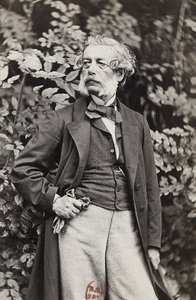
Franz Xavier Winterhalter
1805 - 1873 , Germany
Quick Facts
- Artistic Movement Or Style: Romanticism, portraiture
- Artists Who Influenced This Artist:
- Peter von Cornelius
- Joseph Karl Stieler
- Date Of Birth: April 20, 1805
- Date Of Death: July 8, 1873
- Full Name: Franz Xaver Winterhalter
- Nationality: German
- Notable Artworks:
- Empress Eugenie...
- Florinda
- Il dolce farniente
- Queen Victoria (1843)
- Place Of Birth: Menzenschwand, Germany

