

 Preview
 Send
Send Share
Share
 Details

 Download
 Similars
 X-Ray
X-Ray Diaporama
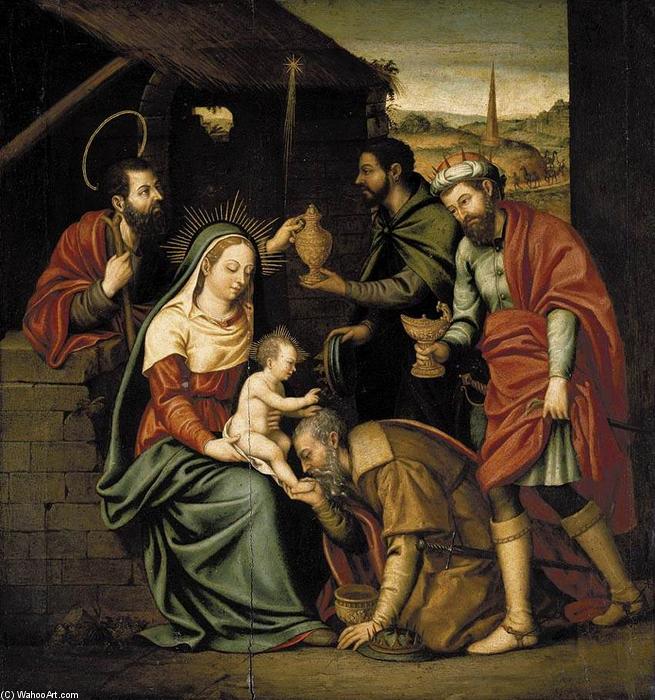
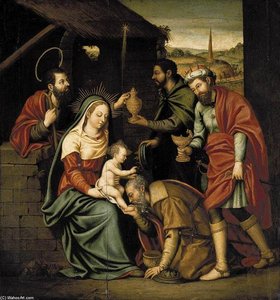
The Adoration of the Magi
 1570
1570 49.0 x 46.0 cm
 Read More
Purchase a high-resolution, enhanced digital image, far superior to the online preview.
Each file is meticulously prepared by our in-house specialists using advanced tools and expert manual retouching. We ensure every image has exceptional clarity, precise color accuracy, and fine detail.
The final file is delivered via email within 72 hours, optimized for immediate use in professional, editorial, and print environments. This is the same quality trusted by top-tier design studios, publishers, and galleries.
Digital Image
Download a high-resolution file for personal display, printing, and creative projects. ( Buy Print Buy Hand Made Painting)
Included in Every Digital Image Order
Expert Digital Delivery, Guaranteed
When you choose ArtsDot.com, you're not just getting an image - you're receiving a professionally enhanced digital artwork, crafted with precision and backed by a satisfaction guarantee. Here's everything that comes with your order, automatically:

Fast Email Delivery
Your high-resolution digital image file will be emailed to you within 72 hours of ordering - ready for immediate use.

AI-Enhanced Digital File
Your artwork is professionally optimized using advanced AI tools and manual editing, ensuring maximum detail, clarity, and color accuracy.

Free Lifetime Re-Delivery
Accidentally deleted or lost your file? No worries - we'll resend it to you anytime, free of charge.

No Import Fees - Ever
Enjoy your artwork instantly with zero customs, duties, or delivery fees - digital downloads are always tax-free.

Color Accuracy Guarantee
We ensure your digital image reflects the original colors as closely as possible using professional tools and color management.

60-Day Satisfaction Guarantee
If you're not satisfied with your digital image, we'll revise it or refund 100% within 60 days - no questions asked.

100% Money-Back Guarantee
Not satisfied? Get a full refund within 60 days of receiving your digital file - no questions asked.

Bulk Order Discounts
Buy 3 images, save 10% - Buy 5, save 15% - Buy 10+, save 20%. Great for creative projects, galleries, and agencies.
Collectible Description
The Composition
The central figure, the Virgin Mary, is seated on a throne-like structure with a red cushion, holding the baby Jesus in her arms. The three wise men, dressed in medieval clothing, kneel before her, each holding a gift: gold, frankincense, and myrrh. The background features a rustic setting with a thatched roof and a window, suggesting an outdoor or semi-outdoor environment. The colors used are predominantly earth tones, contributing to the overall somber yet reverent atmosphere of the scene.Artistic Style
The art style is characteristic of religious paintings from the Renaissance period, known for its attention to detail and realistic portrayal of figures and their surroundings. The use of light and shadow, as well as the meticulous rendering of the figures' clothing and facial expressions, are indicative of the artist's skill in capturing a moment of devotion and reverence. Similar works can be found at The Museum Cathedral of Segorbe, Spain, which houses an impressive collection of artworks from different periods and styles.Similar Works
Other notable works that showcase similar artistic styles include Virgin And Child With Saints by Palma Giovane, Virgin and Child with Saints Jerome, Bernardino of Siena, and Angels by Sano Di Pietro, and Virgin and Child by Hans Leinberger. These paintings can be found on ArtsDot.com, which offers handmade oil painting reproductions of famous artworks.- Artist: Fray Nicolás Borrás
- Painting Title: The Adoration of the Magi
- Museum: The Museum Cathedral of Segorbe, Spain
The The Adoration of the Magi by Fray Nicolás Borrás is a remarkable example of Renaissance art, showcasing the artist's skill in capturing a moment of devotion and reverence. Its attention to detail, realistic portrayal of figures, and use of light and shadow make it a masterpiece worth admiring.
Related Artworks
Artist Biography
Fray Nicolás Borrás: A Master of Faith and Fresco in the Heart of Chiapas
Fray Nicolás Borrás, a name perhaps less familiar than some of his contemporaries, stands as a remarkably prolific and influential figure within 16th-century Spanish art. Born in Cocentaina in 1530 and passing away in Gandía in 1610, Borrás’s legacy is primarily etched into the walls of churches and monasteries across Spain, most notably in the vibrant frescoes that transformed sacred spaces with a deeply personal and devotional style. His work represents a fascinating confluence of religious fervor, artistic skill, and a unique engagement with the indigenous cultures he encountered during his long ministry.
Borrás’s early life was steeped in piety and artistic training. He entered the priesthood at a young age and found himself assigned to Valencia, where he studied under Vicente Joanes, a master painter known for his detailed depictions of religious scenes. Joanes' influence is undeniably present in Borrás’s early work – a meticulous attention to detail, a balanced composition, and a restrained palette—though Borrás quickly developed a distinctive voice, characterized by an expressive use of color and a palpable sense of movement within the figures.
His most significant period of activity unfolded at the Monastery of San Jerónimo in Gandía. Here, he spent nearly four decades transforming the monastery’s interior into a breathtaking testament to faith. He wasn't merely decorating; he was reshaping the spiritual atmosphere through his art. The High Altar Chapel, for instance, is considered one of his masterpieces – a dramatic narrative of salvation rendered with astonishing dynamism and emotional intensity. The ‘Last Supper,’ a particularly arresting fresco, depicts Christ’s final meal not as a static event, but as a moment of profound human connection and impending sacrifice. Beyond the altar, Borrás adorned the chapter house, oratories, refectories, and cloisters, each space receiving a unique treatment reflecting its specific function and purpose. His work in Gandía demonstrates an extraordinary range – from serene depictions of the Virgin Mary to powerful scenes of judgment and divine wrath.
Borrás’s artistic style is often categorized as belonging to the late Gothic or early Baroque periods, though he transcends easy categorization. His frescoes are characterized by a remarkable luminosity achieved through his masterful manipulation of color and light. He employed a technique known as *buon fresco*, applying pigments directly onto wet plaster, ensuring their permanence and vibrancy. His figures possess a remarkable sense of volume and weight, rendered with subtle gradations of tone and shadow. Furthermore, Borrás’s work reveals an intriguing sensitivity to the indigenous cultures he encountered in Chiapas, incorporating elements of local iconography and artistic traditions into his designs – a testament to his openness and willingness to engage with the diverse spiritual landscape of Spain.
Beyond Gandía, Borrás continued to contribute significantly to religious art throughout Valencia and other regions. He worked on murals in the Cathedral of Valencia, the Hieronymite Monastery in San Miguel de los Reyes, and churches in Aldaya and Ontiniente. His paintings are found in the Museo de Valencia, offering a valuable glimpse into his artistic evolution and stylistic experimentation. His legacy extends beyond individual works; he served as an important teacher and mentor to other artists, shaping the course of religious painting in Spain for generations to come. Fray Nicolás Borrás’s art is not simply decoration; it's a profound expression of faith, a testament to his devotion, and a remarkable achievement of artistic skill.
Key Works & Notable Features
- The Last Supper (Gandía): A dynamic depiction of Christ’s final meal, showcasing Borrás’s mastery of composition and emotional intensity.
- Adoration of the Magi (Valencia): Demonstrates his early training under Joanes, highlighting meticulous detail and balanced design.
- Scenes from the Life of Christ (Various Locations): A series of frescoes depicting key moments in the life of Jesus, characterized by dramatic narratives and expressive figures.
- Frescoes in the Monastery of San Jerónimo (Gandía): Represent Borrás’s most extensive and influential body of work, transforming the monastery into a vibrant sanctuary.
Influences & Artistic Context
Borrás's artistic development was shaped by several key influences. His early training under Vicente Joanes instilled in him a strong foundation in traditional painting techniques. The works of Italian Renaissance masters, particularly those emphasizing dramatic narrative and emotional expression, undoubtedly informed his style. However, Borrás’s work is distinctively Spanish, reflecting the religious fervor and artistic traditions of his time. He operated within the context of the Counter-Reformation, a period marked by intense religious debate and a renewed emphasis on visual representations of faith.
Historical Significance & Legacy
Fray Nicolás Borrás’s contribution to Spanish art is often overlooked, yet his work holds significant historical importance. He represents a pivotal figure in the development of fresco painting during the 16th century, demonstrating an innovative approach to religious imagery and a remarkable ability to engage with both spiritual and cultural contexts. His frescoes continue to inspire awe and admiration, offering a powerful testament to the enduring power of faith and artistic expression. His dedication to his craft and his willingness to embrace diverse influences cemented his place as one of Spain’s most important, though often unsung, artists.
fray nicolás borrás
1530 - 1610
Quick Facts
- Artistic Movement Or Style: Religious frescoes & altarpieces
- Artists Who Influenced This Artist: ['Vicente Joanes']
- Date Of Birth: 1530
- Date Of Death: 1610
- Full Name: Fray Nicolás Borrás
- Nationality: Spanish
- Notable Artworks:
- The Last Supper
- Church decorations
- Place Of Birth: Cocentaina, Spain

