 Preview
 Send
Send Share
Share
 Details

 Download
 Similars
 X-Ray
X-Ray Diaporama
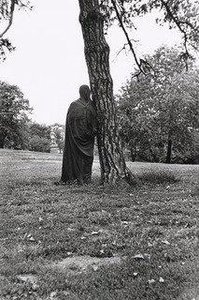
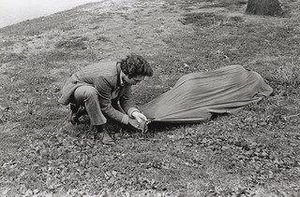
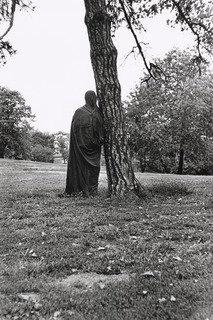
Figure standing in a black bag for Yoko Ono's Cut Piece, 4th Annual Avant Garde Festival, Central Park, New York, September 9th, 1966
 2014
2014 26.0 x 21.0 cm
 Read More
Hand Made Oil Reproduction
Hand-painted oil on canvas in your size and frame, made to order by our artists. ( Buy Print Buy Image)




































Pick from our preset sizes that match the artwork's original proportions.

You may enter your own dimensions to fit a specific frame or space. If your selected size does not match the original image's proportions, we will either crop the artwork or extend the painting with additional hand-painted elements. A digital mockup will be sent for your approval before production begins.
Please note that the on-screen preview does not reflect the actual cropping or extension. Only the mockup will accurately show the final composition.
While custom sizes are available, we recommend selecting a dimension from the predefined list to preserve the original proportions.
After order, ArtsDot.com team will email client for instructions and provide a mockup preview
Worldwide Delivery () in 3/4 weeks instead of standard 5 weeks. (25 August). No compromise on quality.

Free Worldwide Express Shipping

High-Quality Linen Canvas

Full Shipping Insurance

Customs Tax Refund Guarantee

True Color Matching Guarantee

60-Day Return Policy (Defects Only)

100% Money-Back Guarantee

Bulk Discount Offer
 Glass option is only available in size under 110 CM

Figure standing in a black bag for Yoko Ono's Cut Piece, 4th Annual Avant Garde Festival, Central Park, New York, September 9th, 1966
Reproduction Medium
Reproduction Size
-


Total Price
$ 263
Related Artworks





Artist Biography
A Lens Upon the Revolution: The Life and Legacy of Fred W. McDarrah
To look through the lens of Frederick William McDarrah was to witness the very pulse of a changing America. Born in Brooklyn in 1926, McDarrah’s early life was marked by a profound sense of observation, shaped by a childhood of humble means and the quiet, melancholic presence of his father. This early sensitivity to the world around him found its first outlet at the 1939 World's Fair, where he purchased his very first camera for a mere thirty-nine cents. However, it was the crucible of the Second World War that truly forged his artistic eye; serving as a paratrooper in occupied Japan, McDarrah learned to capture the raw, transformative power of conflict and the resilience of the human spirit, experiences that would later inform his unflinching documentary style.
As the mid-century approached, McDarrah became an essential chronicler of one of the most vibrant cultural shifts in modern history: the rise of the Beat Generation. Settling into the bohemian heart of Greenwich Village, he did not merely photograph subjects; he embedded himself within the movement. Through his work for The Village Voice, he captured the frenetic, rebellious energy of an era defined by a rejection of societal conformity. His collaboration with Thomas B. Hess on the seminal book The Artist's World in Pictures remains a cornerstone of photographic history, offering an intimate window into the New York School and the visceral world of Abstract Expressionism. In his frames, legends like Jackson Pollock and Willem de Kooning were stripped of their mythic distance, presented instead as living, breathing architects of a new aesthetic landscape.
Capturing the Icons of Change
McDarrah’s talent lay in his ability to find the extraordinary within the ephemeral. He possessed a rare instinct for identifying the precise moment when a cultural icon was on the precipately of transcendence. His early photographs of Bob Dylan, captured during the singer's formative performances, serve as a poignant time capsule of youthful idealism before the world knew the name. Yet, his gaze was never limited to the heights of fame; he was equally dedicated to documenting the underground and the avant-garde. From the experimental "Happenings" in New York galleries to the quiet, evocative moments of Yoko Ono’s performance art in Central Park, McDarrah’s work bridged the gap between high art and street-level reality.
Beyond the canvas and the stage, McDarrah’s camera became a vital tool for social justice. He stood at the front lines of history during the 1969 Stonewall Riots, documenting the sparks of a movement that would forever alter the landscape of LGBTQ+ activism. These images, characterized by their raw honesty and sense of urgency, solidified his reputation not just as an art photographer, but as a profound chronicler of social upheaval. His work reminds us that history is not merely a series of dates, but a collection of faces, movements, and the light that falls upon them in moments of great tension.
An Enduring Visual Archive
The significance of Fred W. McDarrah’s oeuvre extends far beyond the era in which it was captured. His body of work functions as a visual bridge between the post-war struggle and the modern cultural identity of New York City. Through his meticulous documentation, he preserved the ephemeral spirit of Greenwich Village—a place of intellectual exploration, musical innovation, and radical experimentation. His legacy is found in the way we understand the evolution of the American counterculture and the enduring impact of the New York art scene.
Reflecting on his life’s work, several key pillars emerge:
- The Beat Ethos: His ability to translate the literary and musical rebellion of the 1950s into a visual language.
- Documentary Precision: A commitment to capturing the raw, unvarnated truth of both famous figures and social movements.
- Cultural Preservation: The creation of an irreplaceable archive of New York’s most transformative decades.
When McDarrah passed away in 2007, shortly after his eighty-first birthday, he left behind more than just photographs; he left a testament to the power of the observant eye. His images continue to resonate, inviting every new generation to revisit the streets of the Village and witness the beautiful, chaotic revolution he so masterfully documented.
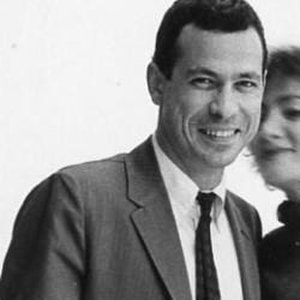
fred w mcdarrah
1926 - 2007
Quick Facts
- Artistic Movement Or Style: Beat Generation photography; Documentary
- Artists Or Movements Influenced By This Artist: ['Abstract Expressionism']
- Artists Who Influenced This Artist: ['']
- Date Of Birth: November 5, 1926
- Date Of Death: November 6, 2007
- Full Name: Frederick William McDarrah
- Nationality: American
- Notable Artworks:
- Cut Piece
- Eighteen Happenings in Six Parts
- Place Of Birth: Brooklyn, USA