

 Preview
 Send
Send Share
Share
 Details

 Download
 Similars
 X-Ray
X-Ray Diaporama
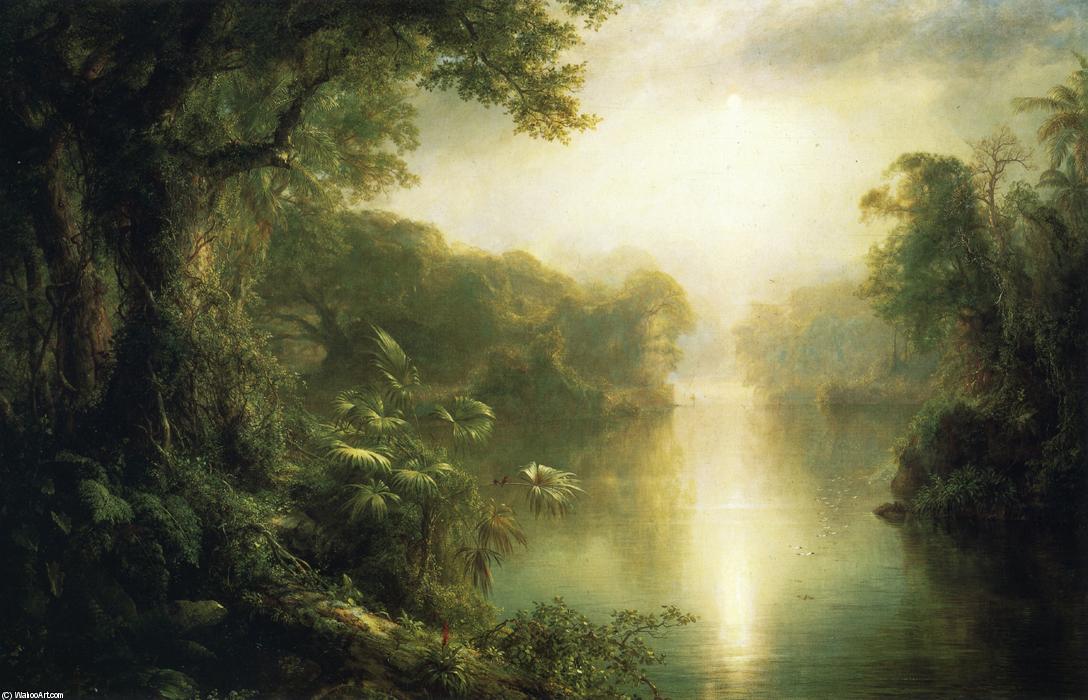
El Rio de Luz (also known as The River of Light)


 Read More
Purchase a high-resolution, enhanced digital image, far superior to the online preview.
Each file is meticulously prepared by our in-house specialists using advanced tools and expert manual retouching. We ensure every image has exceptional clarity, precise color accuracy, and fine detail.
The final file is delivered via email within 72 hours, optimized for immediate use in professional, editorial, and print environments. This is the same quality trusted by top-tier design studios, publishers, and galleries.
Digital Image
Download a high-resolution file for personal display, printing, and creative projects. ( Buy Print Buy Hand Made Painting)
Included in Every Digital Image Order
Expert Digital Delivery, Guaranteed
When you choose ArtsDot.com, you're not just getting an image - you're receiving a professionally enhanced digital artwork, crafted with precision and backed by a satisfaction guarantee. Here's everything that comes with your order, automatically:

Fast Email Delivery
Your high-resolution digital image file will be emailed to you within 72 hours of ordering - ready for immediate use.

AI-Enhanced Digital File
Your artwork is professionally optimized using advanced AI tools and manual editing, ensuring maximum detail, clarity, and color accuracy.

Free Lifetime Re-Delivery
Accidentally deleted or lost your file? No worries - we'll resend it to you anytime, free of charge.

No Import Fees - Ever
Enjoy your artwork instantly with zero customs, duties, or delivery fees - digital downloads are always tax-free.

Color Accuracy Guarantee
We ensure your digital image reflects the original colors as closely as possible using professional tools and color management.

60-Day Satisfaction Guarantee
If you're not satisfied with your digital image, we'll revise it or refund 100% within 60 days - no questions asked.

100% Money-Back Guarantee
Not satisfied? Get a full refund within 60 days of receiving your digital file - no questions asked.

Bulk Order Discounts
Buy 3 images, save 10% - Buy 5, save 15% - Buy 10+, save 20%. Great for creative projects, galleries, and agencies.
Collectible Description
The River of Light: A Journey into Frederic Church’s Soul
Frederic Edwin Church's *El Rio de Luz* – often referred to as *The River of Light* – isn’t merely a landscape painting; it’s an immersive experience, a portal into the heart of the Amazon rainforest and, perhaps surprisingly, into the artist’s own deeply felt spirituality. Completed in 1877, this monumental canvas transcends simple representation, becoming a vibrant testament to the interconnectedness of nature, humanity, and the divine – a core tenet of the Hudson River School movement to which Church belonged. The painting's genesis lies in sketches Church meticulously created during his extensive travels through South America decades earlier, a process that allowed him to distill the essence of these exotic locales and translate them onto canvas with breathtaking precision and emotional resonance. It’s a work that demands contemplation, inviting viewers to lose themselves within its luminous depths and ponder the profound beauty and mystery of the natural world.A Symphony of Light and Color
Church's mastery lies not just in his technical skill but in his ability to capture and manipulate light – a signature element of the Hudson River School. *El Rio de Luz* is dominated by an extraordinary, almost ethereal glow that seems to emanate from within the scene itself. The sunlight, fractured and diffused through the dense foliage, creates a dazzling interplay of color: vibrant greens, rich browns, and shimmering golds dance across the canvas, evoking the humid atmosphere and dappled light of the rainforest floor. Notice how Church employs a technique known as “lost-edge blending,” where colors are subtly layered to create an illusion of depth and softness, mimicking the way light filters through leaves and branches. The use of complementary colors – particularly the juxtaposition of blues and oranges – intensifies the visual impact, drawing the eye deeper into the painting’s intricate details. The composition is carefully balanced, guiding the viewer's gaze along the river’s course, punctuated by the subtle presence of two figures, likely enjoying a moment of quiet contemplation amidst this overwhelming beauty.Symbolism and Spiritual Resonance
Beyond its purely aesthetic qualities, *El Rio de Luz* is laden with symbolism, reflecting Church’s evolving spiritual beliefs and his fascination with the natural world as a reflection of God's creation. The painting can be interpreted as an allegory for humanity’s relationship with nature – a reminder of our place within a vast and interconnected ecosystem. The river itself represents the flow of life, while the dense vegetation symbolizes both the abundance and the challenges of the wilderness. Crucially, Church was deeply influenced by the writings of Alexander von Humboldt, whose theories emphasized the unity of science, nature, and spirituality. This influence is evident in the painting’s depiction of a vibrant, teeming ecosystem – a microcosm of the entire planet. The subtle cross formed by the sunlight filtering through the trees has been interpreted as a symbol of Christ's sacrifice and resurrection, adding another layer of meaning to this already complex work.Historical Context and Artistic Legacy
*El Rio de Luz* was created during a period of significant social and political upheaval in America – the aftermath of the Civil War and the rise of industrialization. Many artists, including Church, sought solace and inspiration in nature as a counterpoint to the rapid changes occurring in society. The Hudson River School’s emphasis on romantic landscapes reflected a desire to reconnect with the natural world and celebrate its beauty before it was irrevocably altered by progress. Despite initial mixed reviews – some critics found the painting overly detailed and melodramatic – *El Rio de Luz* eventually gained recognition as one of Church's most important works, solidifying his reputation as a leading figure in American landscape art. Today, it remains a powerful testament to the enduring appeal of nature’s beauty and the transformative power of artistic vision. Reproductions of this iconic painting continue to captivate audiences worldwide, offering a glimpse into a bygone era and reminding us of the profound connection between humanity and the natural world.Related Artworks
Artist Biography
A Pioneer of American Landscape: The Life and Art of Frederic Edwin Church
Frederic Edwin Church, born in Hartford, Connecticut, on May 4th, 1826, emerged as a pivotal figure in the blossoming landscape tradition of 19th-century America. His lineage was steeped in New England history—a direct descendant of Puritan pioneers—and his family’s prosperity afforded him opportunities rare for aspiring artists of the time. This financial stability allowed Church to dedicate himself wholeheartedly to his artistic pursuits, a path that would ultimately lead him to become one of the most celebrated and influential painters of the Hudson River School. His early training began at the age of eighteen under the tutelage of Thomas Cole, the very founder of this distinctly American art movement. These formative years spent in Catskill, New York, were crucial, instilling in Church a deep reverence for nature and a commitment to capturing its grandeur on canvas. The apprenticeship wasn’t merely technical; it was an immersion into a philosophy that saw landscape not just as scenery, but as a reflection of the divine and a symbol of national identity.The Rise of a Master: Style and Influences
Church quickly distinguished himself from his contemporaries through a remarkable ability to blend meticulous realism with a romantic sensibility. His paintings are characterized by an astonishing level of detail, capturing the textures of foliage, the play of light on water, and the imposing scale of mountains with breathtaking accuracy. However, this wasn’t simply photographic representation; Church infused his work with a dramatic flair, employing sweeping panoramic views, vibrant color palettes, and a masterful command of atmospheric perspective. He was deeply influenced by the scientific explorations of Alexander von Humboldt, whose writings on the interconnectedness of nature resonated profoundly with the artist. This influence is evident in Church’s later expeditions to South America and his attempts to convey not just the visual beauty of these landscapes but also their underlying geological and botanical complexities. The Oxbow, completed in 1836, stands as an early testament to this synthesis of observation and imagination—a romantic vision of the American wilderness that would become a hallmark of his style. His technique involved “hidden” brushstrokes, creating smooth surfaces that enhanced the realism and luminosity of his paintings.Ventures into the Wild: Travels and Major Works
Church’s ambition extended beyond the familiar landscapes of New England and New York. Driven by a thirst for firsthand experience and inspired by Humboldt's writings, he embarked on daring expeditions to remote corners of the world. These journeys—to South America in 1853 and 1857, and later to the Arctic regions—provided him with an unparalleled wealth of visual material. The Heart of the Andes, completed in 1859, is perhaps his most ambitious undertaking, a monumental canvas that sought to encapsulate the entire ecosystem of the Andean mountains. The painting was exhibited in a specially constructed gallery, illuminated by skylights, creating an immersive experience for viewers and solidifying Church’s reputation as a master showman as well as an artist. His subsequent series of paintings inspired by his Arctic travels, such as Icebergs: The North, demonstrated his versatility and willingness to tackle challenging subjects. These works weren't merely depictions of remote landscapes; they were statements about the power and fragility of nature, reflecting a growing environmental consciousness in the mid-19th century.Legacy and Impact on American Art
Frederic Edwin Church’s influence on American landscape painting is undeniable. He elevated the genre to new heights of artistic achievement and popular acclaim, inspiring generations of artists to explore the beauty and majesty of the natural world. His innovative exhibition practices—presenting single paintings in dramatic settings—set a precedent for future art displays and helped to cultivate a broader public appreciation for art. Beyond his painting, Church was also a dedicated conservationist, advocating for the preservation of Niagara Falls and playing a role in the establishment of national parks. He understood that art could be a powerful tool for raising awareness about environmental issues and inspiring action. His home, Olana, designed and built with his own hands overlooking the Hudson River, stands as a testament to his artistic vision and his deep connection to the landscape.- Church’s work bridged the gap between Romanticism and Realism.
- He pioneered immersive exhibition techniques that captivated audiences.
- His advocacy for conservation foreshadowed the modern environmental movement.
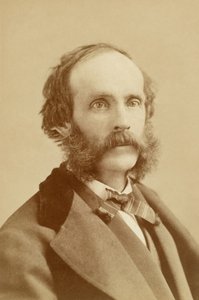
Frederic Edwin Church
1826 - 1900 , United States of America
Quick Facts
- Artistic Movement Or Style: Hudson River School
- Artists Or Movements Influenced By This Artist: American landscape painting
- Artists Who Influenced This Artist:
- Thomas Cole
- A. von Humboldt
- Date Of Birth: May 4, 1826
- Date Of Death: April 7, 1900
- Full Name: Frederic Edwin Church
- Nationality: American
- Notable Artworks:
- The Oxbow
- Mount Holyoke
- Heart of Andes
- Place Of Birth: Hartford, USA

