 Preview
 Send
Send Share
Share
 Details

 Download
 Similars
 X-Ray
X-Ray Diaporama
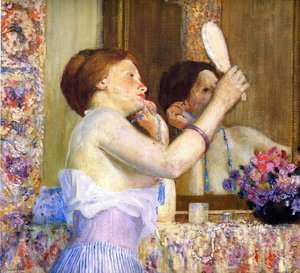
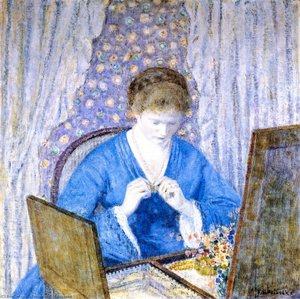
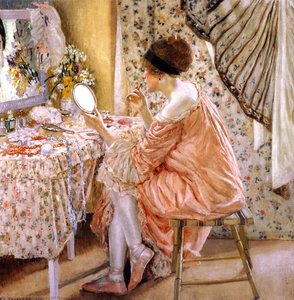
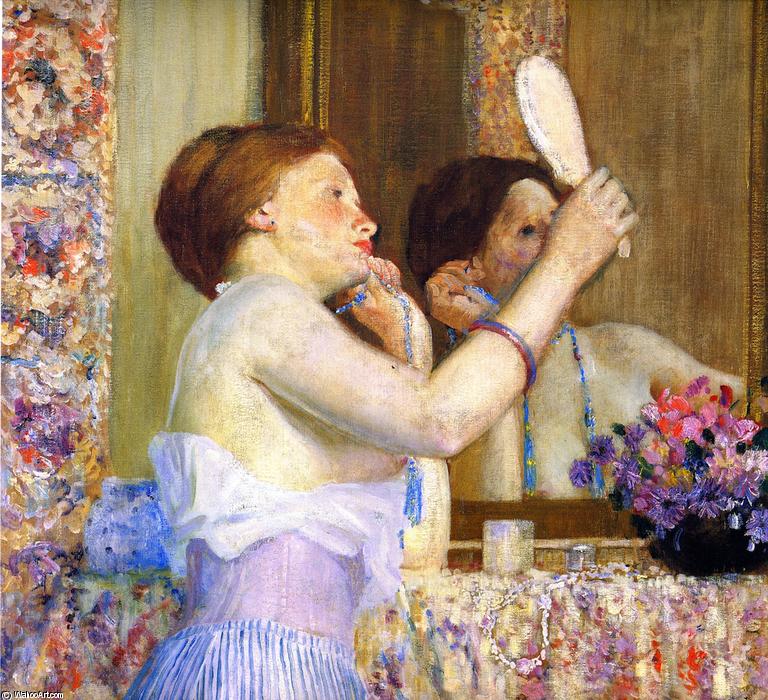
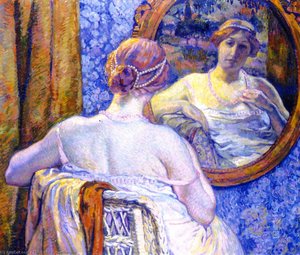
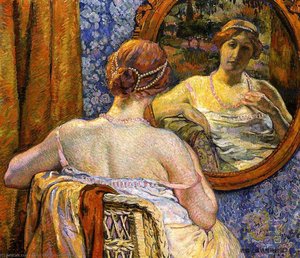
Woman with a Mirror


 Read More
Hand Made Oil Reproduction
Hand-painted oil on canvas in your size and frame, made to order by our artists. ( Buy Print Buy Image)




P118B $10

P118H $10

P118W $10

P438Z $10

P508JH $12

P508YH $12

P805H $10

P805Z $10

P919BZ $10

P919G $10

P919XJ $10

P959ZH $10

P968JZ $12

W106C $8

W218G $10

W218JH $8

W218Y $10

W307PJ $10

W316G $10

W316PJ $8

W316Y $10

W398PJ $8

W4111J $10

W500HY $15

W500JH $15

W692G $12

W849H $8

W940BG $15

W953PJ $8




Pick from our preset sizes that match the artwork's original proportions.

You may enter your own dimensions to fit a specific frame or space. If your selected size does not match the original image's proportions, we will either crop the artwork or extend the painting with additional hand-painted elements. A digital mockup will be sent for your approval before production begins.
Please note that the on-screen preview does not reflect the actual cropping or extension. Only the mockup will accurately show the final composition.
While custom sizes are available, we recommend selecting a dimension from the predefined list to preserve the original proportions.
After order, ArtsDot.com team will email client for instructions and provide a mockup preview
Worldwide Delivery () in 3/4 weeks instead of standard 5 weeks. (16 August). No compromise on quality.

Free Worldwide Express Shipping

High-Quality Linen Canvas

Full Shipping Insurance

Customs Tax Refund Guarantee

True Color Matching Guarantee

60-Day Return Policy (Defects Only)

100% Money-Back Guarantee

Bulk Discount Offer
 Glass option is only available in size under 110 CM

Woman with a Mirror
Reproduction Medium
Reproduction Size
-


Total Price
$ 263
Artwork Description
A Moment Frozen in Sunlight: Exploring Frederick Carl Frieseke’s Woman with a Mirror
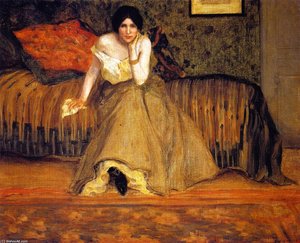
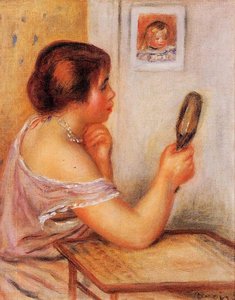
The painting “Woman with a Mirror” by Frederick Carl Frieseke stands as a testament to the serene beauty of Impressionism and its ability to capture fleeting moments of domestic life. Created in 1911, this oil on canvas masterpiece resides within the prestigious Metropolitan Museum of Art collection, offering visitors a glimpse into an era defined by artistic experimentation and a fascination with capturing natural light. Frieseke’s work isn't merely a depiction; it’s an invitation to contemplate stillness amidst activity—a profound observation of femininity and introspection.Style and Technique: Embracing Delicate Impressionism
Frieseke’s artistic style is unmistakably rooted in Impressionism, prioritizing the subjective experience of perception over precise representation. He eschews academic conventions favoring instead soft, luminous colors – predominantly warm yellows and peaches – that bathe the scene in a comforting glow. The artist employs loose brushstrokes, characteristic of the movement, creating an ethereal texture that mimics the dappled sunlight filtering through foliage. These delicate strokes convey not just visual information but also an emotional resonance, mirroring the quiet contemplation of the woman before her reflection. Frieseke’s meticulous attention to detail isn't about capturing every nuance; rather, it aims to evoke a feeling—a palpable sense of tranquility and intimacy.Historical Context: The Dawn of Modern Domestic Portraiture
“Woman with a Mirror” emerged during a pivotal period in art history – the early 20th century – coinciding with the burgeoning influence of Impressionism on European artistic sensibilities. Artists like Frieseke were actively rejecting the rigid formalism of Romanticism, seeking instead to portray everyday life with honesty and sensitivity. The painting reflects the broader cultural shift towards valuing domesticity and portraying women as subjects of artistic contemplation. Furthermore, it speaks to the fascination with psychological realism that was gaining traction during this time, delving into the inner world of its protagonist rather than simply presenting an external image.Symbolism: Reflection Beyond Appearance
Beyond its visual beauty, “Woman with a Mirror” is laden with symbolic significance. The mirror itself serves as a powerful motif—representing not just physical appearance but also self-awareness and introspection. As the woman gazes upon her reflection, she engages in a silent dialogue with herself, questioning her identity and contemplating her place in the world. The vase on the right side of the painting adds an element of decorative elegance, yet it also symbolizes nurturing and beauty—contrasting subtly with the quiet solitude of the scene. Frieseke skillfully utilizes these visual cues to elevate the artwork beyond mere representation, prompting viewers to consider deeper themes of femininity and contemplation.Emotional Impact: Capturing a Fleeting Moment
Ultimately, “Woman with a Mirror” succeeds in conveying an extraordinary emotional impact. The painting’s luminous palette and soft brushstrokes evoke feelings of peace and serenity—transporting the viewer back to a moment of quiet domesticity. Frieseke's masterful portrayal captures the essence of human experience: the desire for self-reflection and the appreciation of simple pleasures. It is this ability to resonate with viewers on an emotional level that ensures “Woman with a Mirror” remains a timeless masterpiece, continuing to inspire admiration and contemplation decades after its creation. For exquisite reproductions and more information about Frederick Carl Frieseke’s artistic legacy, visit https://ArtsDot.com.Related Artworks
Artist Biography
A Life Bathed in Sunlight: The Artistic Journey of Frederick Carl Frieseke
Born in the small Michigan town of Owosso on April 7, 1874, Frederick Carl Frieseke embarked on a path that would lead him to become a pivotal figure in American Impressionism. His early life, marked by a move to Florida following his mother’s passing and nurtured by an artistically inclined aunt, instilled within him a sensitivity to light and form that would define his oeuvre. Though initially involved in his family's brick manufacturing business, Frieseke’s true calling resonated with the artistic spirit of the age. A formative visit to the 1893 World’s Columbian Exposition ignited a passion that propelled him towards formal training at the Art Institute of Chicago and, crucially, a relocation to Paris in 1898 – a decision that irrevocably shaped his artistic destiny. It was in France that Frieseke truly found his voice, immersing himself in the vibrant art scene and absorbing the influences that would blossom into his signature style.The Allure of Giverny and the Development of “Decorative Impressionism”
Paris proved to be more than just a place of study; it became Frieseke’s adopted home, a sanctuary where he could refine his technique and explore his artistic vision. Early influences included James Abbott McNeill Whistler, whose tonal harmonies left an indelible mark on Frieseke's work. However, it was the allure of Giverny – Claude Monet’s idyllic haven – that truly unlocked his potential. In 1906, Frieseke rented a house adjacent to Monet’s, becoming part of a thriving artistic community and immersing himself in the very essence of Impressionism. This proximity fostered a unique style often described as “decorative impressionism.” Unlike the more spontaneous brushwork of some Impressionists, Frieseke's paintings exhibit a refined elegance, characterized by luminous colors, dappled sunlight filtering through foliage, and an emphasis on graceful female figures. He wasn’t merely capturing a fleeting moment; he was crafting scenes of serene beauty, imbued with a sense of intimate tranquility. His work began to showcase sensual, rounded forms reminiscent of Pierre-Auguste Renoir, blended with the bolder color palettes inspired by Post-Impressionists like Paul Gauguin and Pierre Bonnard.Themes and Techniques: Capturing Light and Femininity
Frieseke’s artistic focus consistently revolved around two central themes: the captivating effects of light and the portrayal of women. He was fascinated by how sunlight transformed ordinary scenes into moments of ethereal beauty, and he masterfully captured this interplay in his paintings. His female subjects, often depicted in gardens or interiors, are not merely portraits but embodiments of grace, sensuality, and quiet contemplation. Hélène, painted in 1901, exemplifies this approach – a captivating portrait showcasing Impressionistic beauty and intimate detail. Similarly, works like The Garden at Giverny demonstrate his ability to blend Impressionist techniques with Post-Impressionist color sensibilities. Frieseke’s technique involved layering delicate brushstrokes to create a shimmering effect, evoking the sensation of sunlight dancing on skin and foliage. He often incorporated geometric elements – parasols, patterned fabrics – to provide contrast and enhance the visual harmony of his compositions. His dedication to capturing these nuances earned him recognition; Before the Glass (1904) was purchased by the French Government and displayed at the Luxembourg Gallery, a testament to his growing reputation.Recognition and Legacy: A Lasting Impression on American Art
Throughout his career, Frieseke garnered numerous accolades, including silver medals at the St. Louis Exposition in 1904, the Temple Gold Medal from the Pennsylvania Academy of Fine Arts in 1913, and the Grand Prize at the Panama-Pacific International Exposition in 1915. His painting Torn Lingerie (1920) achieved particular acclaim, winning two gold medals and the popular prize at the Chicago Art Institute. Despite his success, Frieseke remained a committed expatriate, preferring the artistic freedom he found in France. He passed away on August 24, 1939, leaving behind a legacy of luminous paintings that continue to captivate audiences today. His contribution to American Impressionism is significant not only for his technical skill but also for his ability to create scenes of enduring beauty and tranquility. Frieseke’s work serves as a reminder of the power of art to transport us to idyllic realms, bathed in sunlight and filled with grace.Notable Works
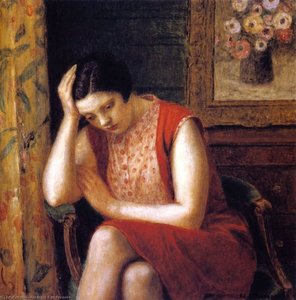
- Portrait of a Girl (also known as Pensive Model): A stunning blend of realism and beauty capturing quiet contemplation.
- Hélène: Showcasing Impressionistic beauty and intimate detail, painted in 1901.
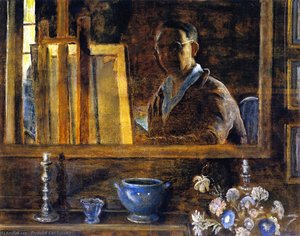
- Self-Portrait: Reveals the artist’s contemplative nature amidst his studio, showcasing masterful technique.
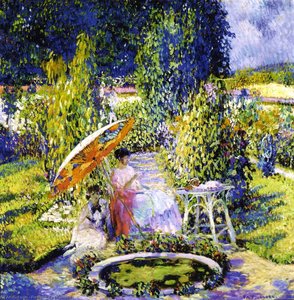
- The Garden at Giverny: A prime example of his blend of Impressionist and Post-Impressionist styles.
- Woman in a Garden: A quintessential representation of his decorative impressionism.
- Before the Glass (1904): Purchased by the French Government, displayed at the Luxembourg Gallery.
- Torn Lingerie (1920): Awarded two gold medals and the popular prize at the Chicago Art Institute.
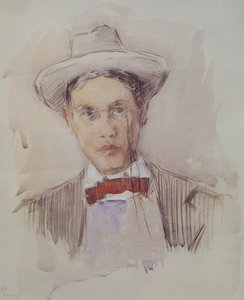
Frederick Carl Frieseke
1874 - 1939 , United States of America
Quick Facts
- Artistic Movement Or Style: American Impressionism
- Artists Or Movements Influenced By This Artist: American Impressionism
- Artists Who Influenced This Artist:
- Renoir
- Whistler
- Gauguin
- Bonnard
- Date Of Birth: April 7, 1874
- Date Of Death: August 24, 1939
- Full Name: Frederick Carl Frieseke
- Nationality: American
- Notable Artworks:
- The Garden at Giverny
- Woman in a Garden
- Before the Glass
- Torn Lingerie
- Hélène
- Self-Portrait
- Place Of Birth: Owosso, USA