 Preview
 Send
Send Share
Share
 Details

 Download
 Similars
 X-Ray
X-Ray Diaporama
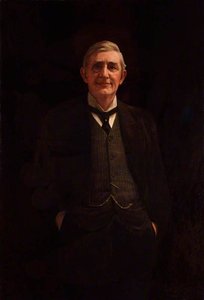
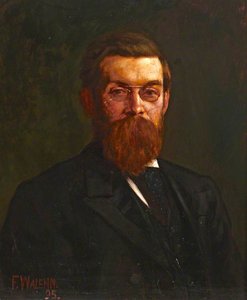
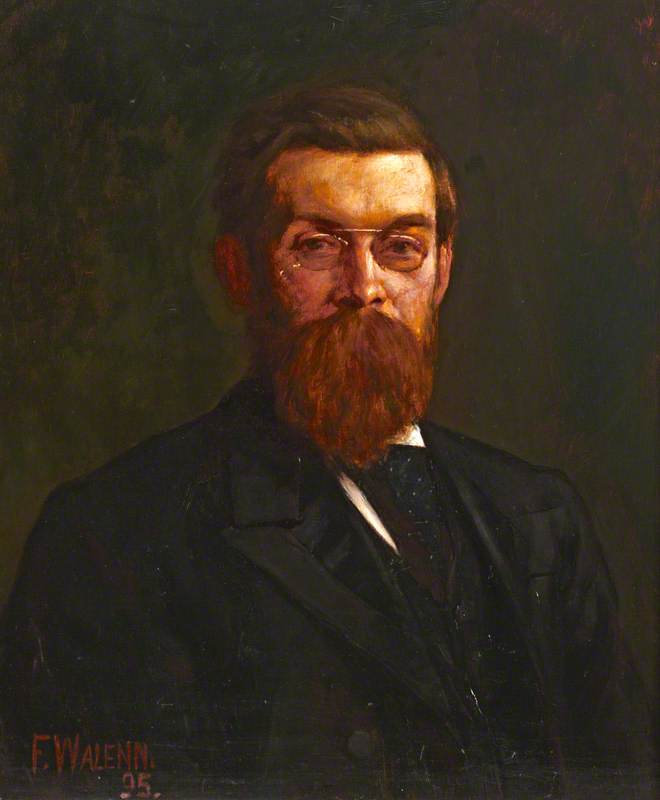
Frederick William Edridge Green (1863–1953)
 1895
1895 62.0 x 52.0 cm
 Read More
Giclée / Art Print
Museum-quality giclée or canvas print with fast production and flexible finish options. ( Buy Hand Made Painting Buy Image)




































Pick from our preset sizes that match the artwork's original proportions.

You may enter your own dimensions to fit a specific frame or space. If your selected size does not match the original image's proportions, we will either crop the artwork or extend the image with a mirrored or solid-fill edge. A digital mockup will be sent for your approval before production begins.
Please note that the on-screen preview does not reflect the actual cropping or extension. Only the mockup will accurately show the final composition.
While custom sizes are available, we recommend selecting a dimension from the predefined list to preserve the original proportions.
Worldwide Delivery () in 2 weeks instead of standard 4/5 weeks. (26 August)

Free Worldwide Express Shipping

High-Quality Linen Canvas

Full Shipping Insurance

Customs Tax Refund Guarantee

True Color Matching Guarantee

60-Day Return Policy (Defects Only)

100% Money-Back Guarantee

Bulk Discount Offer
 Glass option is only available in size under 110 CM

Frederick William Edridge Green (1863–1953)
Giclée / Art Print
Reproduction Size
-


Total Price
$ 63
Related Artworks








Artist Biography
The Luminous Legacy of Frederick Dudley Walenn
In the tapestry of late 19th and early 20th-century British art, certain threads shine with a quiet, enduring brilliance, capturing moments of serenity that transcend the passage of time. Frederick Dudley Walenn was one such artist, a painter whose work serves as a window into the atmospheric soul of the English landscape. Born in Islington, London, in 1869, Walenn emerged from a family rooted in the precision of engineering—his father being a civil engineer—yet his heart was drawn toward the ephemeral beauty of light and shadow. His artistic evolution was not a sudden burst of inspiration but a disciplined journey of refinement, shaped by the rigorous classical foundations of the Royal Academy Schools and the vibrant, impressionistic whispers of Paris, where he studied at the Académie Julian.
This unique duality of training allowed Walenn to bridge the gap between British structural discipline and French atmospheric experimentation. He possessed a rare ability to observe the world with the eye of a naturalist while painting it with the soul of a poet. His early career was deeply anchored in the rolling landscapes of Hertfordshire and Buckinghamshire, where he sought more than mere topographical accuracy. Instead, Walenn pursued the feeling of the countryside—the way sunlight filters through a canopy of leaves, the subtle textures of damp earth, and the quiet, dignified rhythm of rural life. His mastery lay in capturing the shifting moods of nature, turning a simple afternoon in the meadows into a profound meditation on tranquility.
A Mastery of Light and Atmosphere
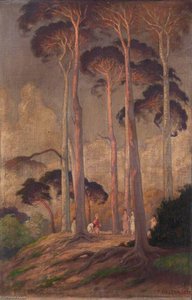
Walenn’s technique was characterized by a remarkable sensitivity to atmosphere, achieved through meticulous observation and a sophisticated use of color. He often employed a muted palette—rich greens, deep browns, and soft blues—to evoke a sense of timelessness. One can see this clearly in his celebrated 1926 work, “The Firs, Hampstead Heath,” where pine trees and figures are bathed in dapple sunlight. The painting does not merely show a scene; it invites the viewer to feel the warmth of a summer afternoon. His compositions were masterfully balanced, utilizing light and shadow to guide the eye through the landscape, much like the great Impressionists Monet or Pissarro, yet his work remained firmly rooted in a distinctly English sensibility.
His fascination with the local landscapes of London and its environs provided him with some of his most evocative subject matter. In works such as “View of East Heath,” created in 1926, Walenn captures the intimate social fabric of the park, depicting individuals gathered on benches amidst a lush, verdant setting. There is a profound sense of realism in his attention to detail—the placement of a handbag or the relaxed posture of a conversationalist—which lends an air of intimacy to his larger landscapes. Through these small, human moments, he elevated the landscape genre, imbuing it with a narrative depth that speaks to the shared human experience of finding peace within nature.
Historical Significance and Artistic Spirit
As the art world moved through the transformative decades of the early 20th century, Walenn’s work remained a steadfast tribute to the enduring beauty of the English countryside. While other movements pushed toward abstraction, Walenn stayed true to the evocative power of the visible world, blending elements of Pre-Raphaelite influence with an Impressionistic touch. His ability to capture the "quiet dignity" of his subjects ensured that his paintings functioned as more than just art; they became historical records of a way of life and a landscape that was slowly changing under the weight of modernity.
The enduring legacy of Frederick Dudley Walenn can be found in the way his paintings continue to resonate with contemporary viewers. His work offers a sanctuary of calm, reminding us of the beauty found in the subtle shifts of light and the stillness of a park at dusk. To study Walenn is to rediscover the magic of the English landscape through the eyes of a master who understood that true artistry lies in the ability to make the fleeting moment eternal.
- Key Artistic Influences: The Royal Academy Schools, Académie Julian, and the Impressionist masters Monet and Pissarro.
- Notable Subject Matter: The rolling hills of Hertfordshire, the waterways of Buckinghamshire, and the serene vistas of Hampstead Heath.
- Signature Style: Atmospheric landscapes, muted palettes, and a delicate interplay of light and shadow.
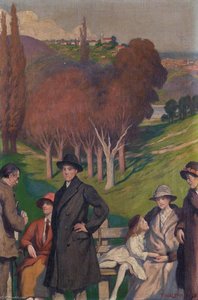
frederick dudley walenn
1869 - 1939
Quick Facts
- Artistic Movement Or Style: Early 20th Century Art
- Artists Or Movements Influenced By This Artist: ['Ralphelite']
- Artists Who Influenced This Artist: ['Raphael']
- Date Of Birth: 1869
- Date Of Death: 1939
- Full Name: Frederick Dudley Walenn
- Nationality: British
- Notable Artworks: ['The Firs, Hampstead Heath']
- Place Of Birth: Islington, London