

 Preview
 Send
Send Share
Share
 Details

 Download
 Similars
 X-Ray
X-Ray Diaporama
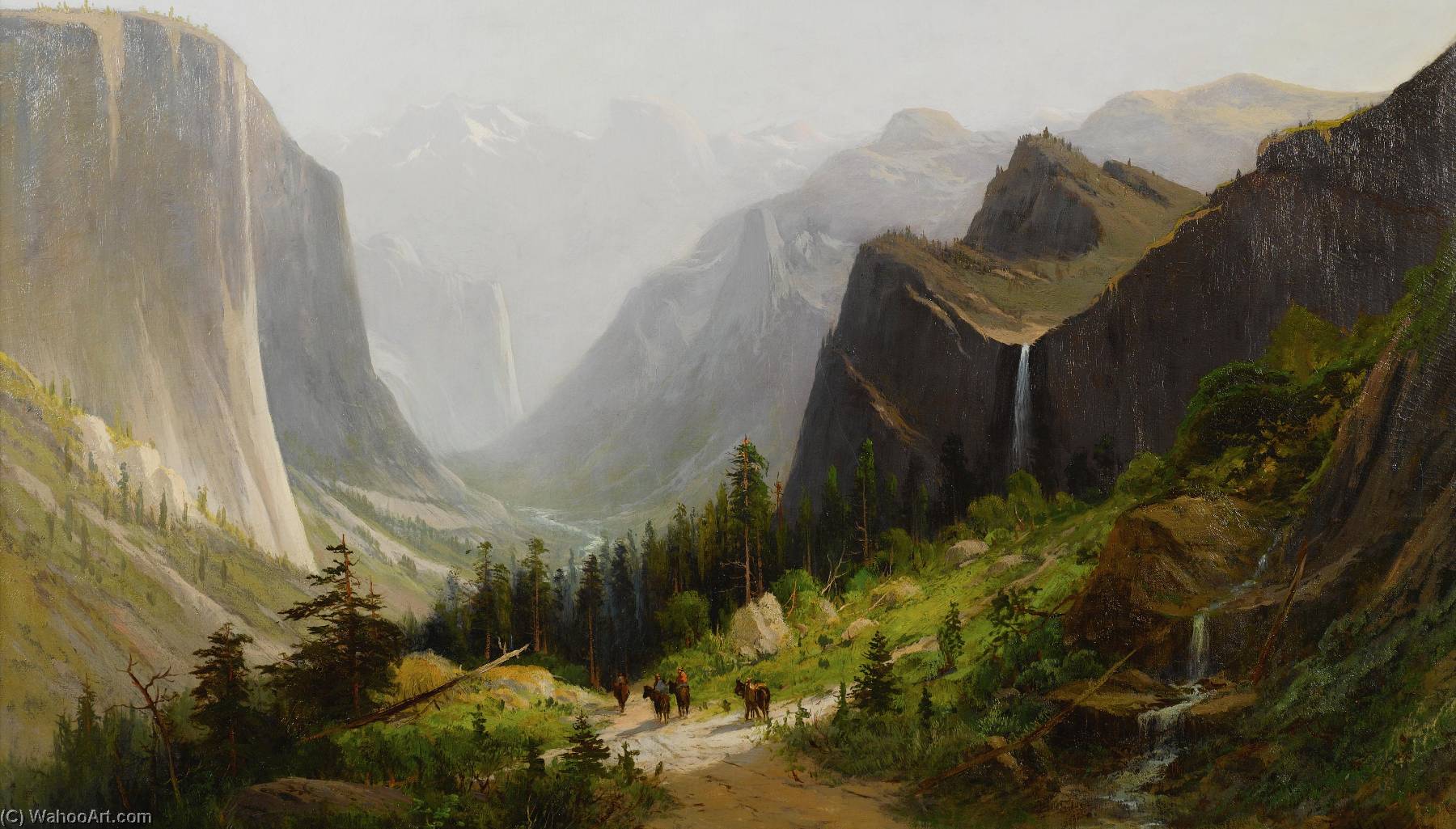
Yosemite Valley, California from Artist's Point
 107.0 x 178.0 cm
 Read More
Purchase a high-resolution, enhanced digital image, far superior to the online preview.
Each file is meticulously prepared by our in-house specialists using advanced tools and expert manual retouching. We ensure every image has exceptional clarity, precise color accuracy, and fine detail.
The final file is delivered via email within 72 hours, optimized for immediate use in professional, editorial, and print environments. This is the same quality trusted by top-tier design studios, publishers, and galleries.
Digital Image
Download a high-resolution file for personal display, printing, and creative projects. ( Buy Print Buy Hand Made Painting)
Included in Every Digital Image Order
Expert Digital Delivery, Guaranteed
When you choose ArtsDot.com, you're not just getting an image - you're receiving a professionally enhanced digital artwork, crafted with precision and backed by a satisfaction guarantee. Here's everything that comes with your order, automatically:

Fast Email Delivery
Your high-resolution digital image file will be emailed to you within 72 hours of ordering - ready for immediate use.

AI-Enhanced Digital File
Your artwork is professionally optimized using advanced AI tools and manual editing, ensuring maximum detail, clarity, and color accuracy.

Free Lifetime Re-Delivery
Accidentally deleted or lost your file? No worries - we'll resend it to you anytime, free of charge.

No Import Fees - Ever
Enjoy your artwork instantly with zero customs, duties, or delivery fees - digital downloads are always tax-free.

Color Accuracy Guarantee
We ensure your digital image reflects the original colors as closely as possible using professional tools and color management.

60-Day Satisfaction Guarantee
If you're not satisfied with your digital image, we'll revise it or refund 100% within 60 days - no questions asked.

100% Money-Back Guarantee
Not satisfied? Get a full refund within 60 days of receiving your digital file - no questions asked.

Bulk Order Discounts
Buy 3 images, save 10% - Buy 5, save 15% - Buy 10+, save 20%. Great for creative projects, galleries, and agencies.
Related Artworks






Artist Biography
Frederick Ferdinand Schaffer: A Pioneer of the American West
Frederick Ferdinand Schaffer, born in Braunschweig, Germany, on August 16, 1839, and passing away in Oakland, California, on July 18, 1927, stands as a pivotal figure in the development of American landscape painting. His journey from Europe to the burgeoning frontier of the United States marked not only a personal transformation but also a significant shift in artistic perspective – one that captured the grandeur and untamed spirit of the American West with remarkable sensitivity and skill. Schaffer’s career, spanning over five decades, witnessed the dramatic expansion of the nation and reflected the evolving relationship between humanity and the vast, awe-inspiring landscapes it encountered. Schaffer's early life remains somewhat shrouded in mystery, though he was formally trained as a painter in Germany. Details regarding his specific artistic education are scarce, yet his work reveals a clear understanding of academic techniques – particularly those associated with the Düsseldorf School, known for its emphasis on tonal modeling and meticulous observation. This foundation proved invaluable when he arrived in America in 1876 at the age of 37, establishing a studio in San Francisco and later relocating to Oakland. It was here, amidst the rapid growth and transformation of the West Coast, that Schaffer truly found his voice as an artist. His artistic development during this period is inextricably linked to the westward expansion itself. Initially, Schaffer’s paintings mirrored the prevailing romanticized vision of the frontier – a celebration of rugged individualism, heroic exploration, and the sublime beauty of untamed nature. Early works like “Indians on the Warpath” (1879) exemplify this phase, depicting Native American life with a blend of realism and dramatic storytelling. However, as Schaffer spent considerable time exploring Yosemite Valley, Mount Shasta, and other iconic locations throughout California and the Pacific Northwest, his style began to evolve. He moved beyond mere illustration, developing a more nuanced approach that captured not just the visual spectacle but also the emotional resonance of these landscapes. Schaffer’s mature style is characterized by a masterful command of light and color. His paintings are imbued with a sense of atmospheric depth, achieved through subtle gradations of tone and carefully considered use of complementary hues. He frequently employed a technique of layering washes to create luminous effects, particularly in his depictions of mountain ranges and vast open spaces. His compositions often feature small figures – Native Americans, trappers, or prospectors – strategically placed within the landscape to provide scale and context, inviting viewers to contemplate their own place within this immense wilderness. Recurring motifs include fallen trees, river snags, and glimpses of campfire light, elements that contribute to a sense of both drama and tranquility. His work is often described as embodying a blend of realism and romanticism, capturing the grandeur of nature while simultaneously conveying a deep appreciation for its power and beauty. Schaffer’s artistic legacy extends beyond his individual paintings. He played a crucial role in establishing Yosemite Valley as an iconic subject for American art. His “Yosemite Valley, California from Artist's Point” (1884) is considered one of the most important depictions of this natural wonder and helped to shape public perception of the valley’s unparalleled beauty. His work can be found in prominent collections across North America, including the Birmingham Museum of Art, the Fairfield University Art Museum, and the Northwest Museum of Arts and Culture, testament to his enduring influence on American landscape painting. Frederick Ferdinand Schaffer's paintings continue to resonate with viewers today, offering a poignant glimpse into a transformative era in American history and a profound appreciation for the timeless beauty of the West.Key Works
- Indians on the Warpath (1879): An early work that reflects the romanticized vision of the frontier.
- English North Heads on the Pacific Coast, California (c. 1880): A stunning depiction of coastal scenery showcasing Schaffer’s mastery of atmospheric perspective.
- Yosemite Valley, California from Artist's Point (1884): Arguably his most famous work, capturing the majesty and scale of Yosemite.
- Morning on Mount Shasta, 14,400 feet high from Shasta Lake, California (c. 1883): Demonstrates Schaffer’s ability to convey the sublime beauty of mountain landscapes.
Historical Context
The late 19th century witnessed a surge of interest in the American West – fueled by westward expansion, railroad construction, and burgeoning tourism. Artists like Schaffer played a vital role in documenting this era, capturing both its dramatic landscapes and its diverse inhabitants. His work coincided with a broader cultural shift towards celebrating the virtues of self-reliance, individualism, and connection to nature. The rise of photography also influenced painting styles, prompting artists to explore new ways of representing three-dimensional space and light. Schaffer’s artistic output reflects this dynamic period, evolving from romanticized depictions of the frontier to a more nuanced and evocative portrayal of the West's natural beauty.Influences
While Schaffer’s formal training in Düsseldorf suggests an influence from German academic painting, his work also reveals connections to other American artists of the time. The tonal modeling techniques employed by Albert Bierstadt, another prominent landscape painter, are evident in Schaffer’s compositions. Furthermore, Schaffer's depictions of Native Americans draw inspiration from earlier Western art traditions, but he imbues them with a greater sense of dignity and humanity than some of his contemporaries. His work also reflects the influence of Romanticism, particularly its emphasis on the sublime – the awe-inspiring power of nature to evoke feelings of both wonder and terror.Legacy
Frederick Ferdinand Schaffer’s contribution to American landscape painting is significant. He helped establish Yosemite Valley as a subject worthy of artistic representation and demonstrated a remarkable ability to capture the essence of the West's rugged beauty. His paintings continue to be exhibited in museums across North America, serving as reminders of a transformative era in American history. Schaffer’s legacy extends beyond his individual works; he represents a pivotal moment in the development of American art – a transition from romanticized depictions of the frontier to a more nuanced and sophisticated understanding of the West's natural environment.
frederick ferdinand schafer
1839 - 1927
Quick Facts
- Artistic Movement Or Style: American West landscape
- Artists Or Movements Influenced By This Artist: ['Albert Bierstadt']
- Artists Who Influenced This Artist: ['Düsseldorf school']
- Date Of Birth: August 16, 1839
- Date Of Death: July 18, 1927
- Full Name: Frederick Ferdinand Schafer
- Nationality: German-born American
- Notable Artworks:
- Indians on the Warpath
- English North Heads
- Yosemite Valley
- Place Of Birth: Braunschweig, Germany

