 Preview
 Send
Send Share
Share
 Details

 Download
 Similars
 X-Ray
X-Ray Diaporama
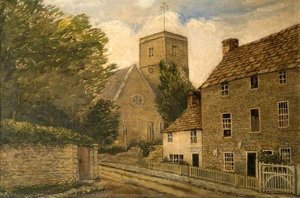
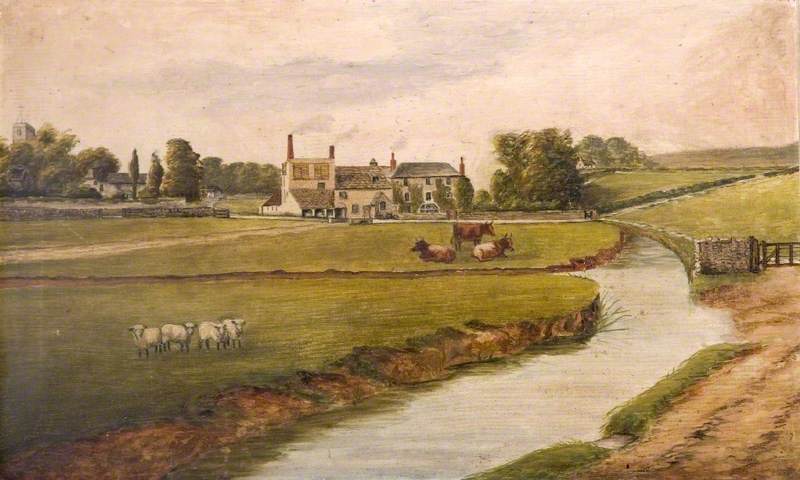
Brewery and Church, Swanage, Dorset
 1880
1880 40.0 x 65.0 cm
 Read More
Hand Made Oil Reproduction
Hand-painted oil on canvas in your size and frame, made to order by our artists. ( Buy Print Buy Image)




































Pick from our preset sizes that match the artwork's original proportions.

You may enter your own dimensions to fit a specific frame or space. If your selected size does not match the original image's proportions, we will either crop the artwork or extend the painting with additional hand-painted elements. A digital mockup will be sent for your approval before production begins.
Please note that the on-screen preview does not reflect the actual cropping or extension. Only the mockup will accurately show the final composition.
While custom sizes are available, we recommend selecting a dimension from the predefined list to preserve the original proportions.
After order, ArtsDot.com team will email client for instructions and provide a mockup preview
Worldwide Delivery () in 3/4 weeks instead of standard 5 weeks. (23 August). No compromise on quality.

Free Worldwide Express Shipping

High-Quality Linen Canvas

Full Shipping Insurance

Customs Tax Refund Guarantee

True Color Matching Guarantee

60-Day Return Policy (Defects Only)

100% Money-Back Guarantee

Bulk Discount Offer
 Glass option is only available in size under 110 CM

Brewery and Church, Swanage, Dorset
Reproduction Medium
Reproduction Size
-


Total Price
$ 263
Related Artworks



Artist Biography
Frederick John Cleall (1840–1924): Bridging Victorian Landscape and Dorset Charm
Frederick John Cleall, born in 1840, emerged as a prominent watercolorist during the late Victorian era, establishing himself as a celebrated artist known for capturing the serene beauty of Dorset landscapes—particularly Swanage—with remarkable sensitivity. His artistic journey unfolded against the backdrop of significant social and cultural transformations, reflecting both the prevailing Romantic ideals of his time and the burgeoning fascination with scientific observation that characterized the period.- Early Life & Education: Cleall’s formative years were spent in Worcestershire, where he received a robust education encompassing classical studies alongside artistic pursuits. He honed his skills under the tutelage of Marshall M. Fredericks, whose influence instilled in him a meticulous approach to watercolor technique and a profound appreciation for capturing atmospheric effects—a cornerstone of Victorian landscape painting.
- Swanage & Artistic Inspiration: Cleall’s relocation to Swanage in 1876 proved pivotal to his artistic development. Situated on Dorset's Jurassic Coast, Swanage offered an unparalleled visual stimulus—towering cliffs adorned with fossilized marine life and expansive sandy beaches bathed in golden sunlight. These elements profoundly impacted Cleall’s oeuvre, inspiring him to produce a prolific body of work that epitomized the Romantic spirit’s fascination with sublime grandeur.
- Technique & Style: Cleall's distinctive style was characterized by luminous washes—delicate layers of watercolor pigment applied in horizontal strokes—that skillfully conveyed the ethereal quality of coastal skies and the subtle nuances of foliage. He meticulously rendered details, capturing textures and tonal variations with precision, yet always prioritizing atmospheric perspective to create immersive landscapes that transported viewers into the heart of Dorset’s natural splendor.
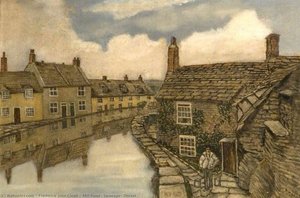
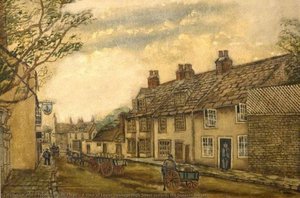
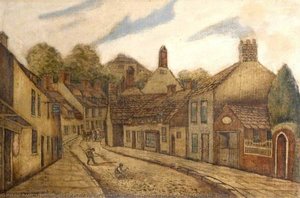
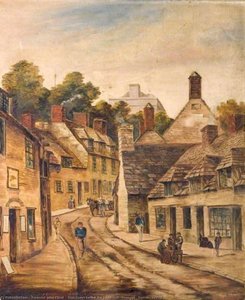
- Notable Works: Among Cleall's most celebrated paintings are “A View of Lower Swanage High Street towards the Square,” depicting a charming Victorian seaside townscape; "Brewery and Church, Swanage," showcasing a picturesque architectural ensemble harmoniously integrated into the coastal environment; and “Mill Pond, Swanage,” capturing the tranquil beauty of Dorset’s inland waterways. These artworks exemplify Cleall's mastery of watercolor technique and his ability to evoke profound emotional responses in viewers.
- Legacy & Influence: Frederick John Cleall’s contribution to British landscape painting endured beyond his lifetime. His meticulous observation, masterful brushwork, and evocative depictions of Dorset landscapes continue to inspire artists today—serving as a testament to the enduring power of Romantic idealism and the transformative influence of artistic vision. His work resides in collections across Britain and America, ensuring that Cleall’s legacy continues to resonate with audiences captivated by the sublime beauty of Victorian England.
Connections & Collaborations
Cleall's artistic endeavors intersected with broader movements within British art during his era. He was influenced by luminism—a style championed by John Frederick Kensett—which emphasized tonal harmony and atmospheric diffusion to convey the grandeur of natural landscapes. Furthermore, Cleall’s engagement with Marshall M. Fredericks Sculpture Museum fostered a shared appreciation for sculptural excellence and artistic craftsmanship.Further Exploration
To delve deeper into Frederick John Cleall's artistic world, consider visiting Marshall M. Fredericks Sculpture Museum in University Center, Michigan—where you can admire over 200 sculptures by Fredericks alongside Cleall’s watercolors—and exploring articles on John Frederick Kensett and his pioneering approach to landscape painting. Examining these connections illuminates the broader context of Victorian art and underscores Cleall's role as a pivotal figure within its artistic lineage.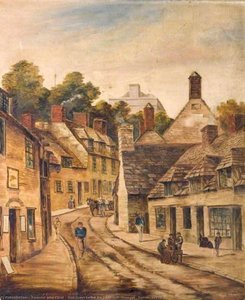
Quick Facts
- Artistic Movement Or Style: Landscape Painting
- Artists Or Movements Influenced By This Artist: ['Marshall M. Fredericks']
- Artists Who Influenced This Artist: ['John Frederick Kensett']
- Date Of Death: 1924
- Full Name: Frederick John Cleall
- Nationality: British
- Notable Artworks: ['A View of Lower Swanage High Street towards the Square']
- Place Of Birth: Swanage, Dorset