 Preview
 Send
Send Share
Share
 Details

 Download
 Similars
 X-Ray
X-Ray Diaporama
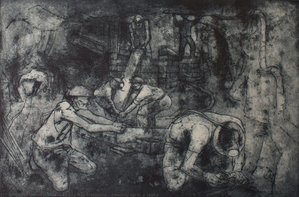
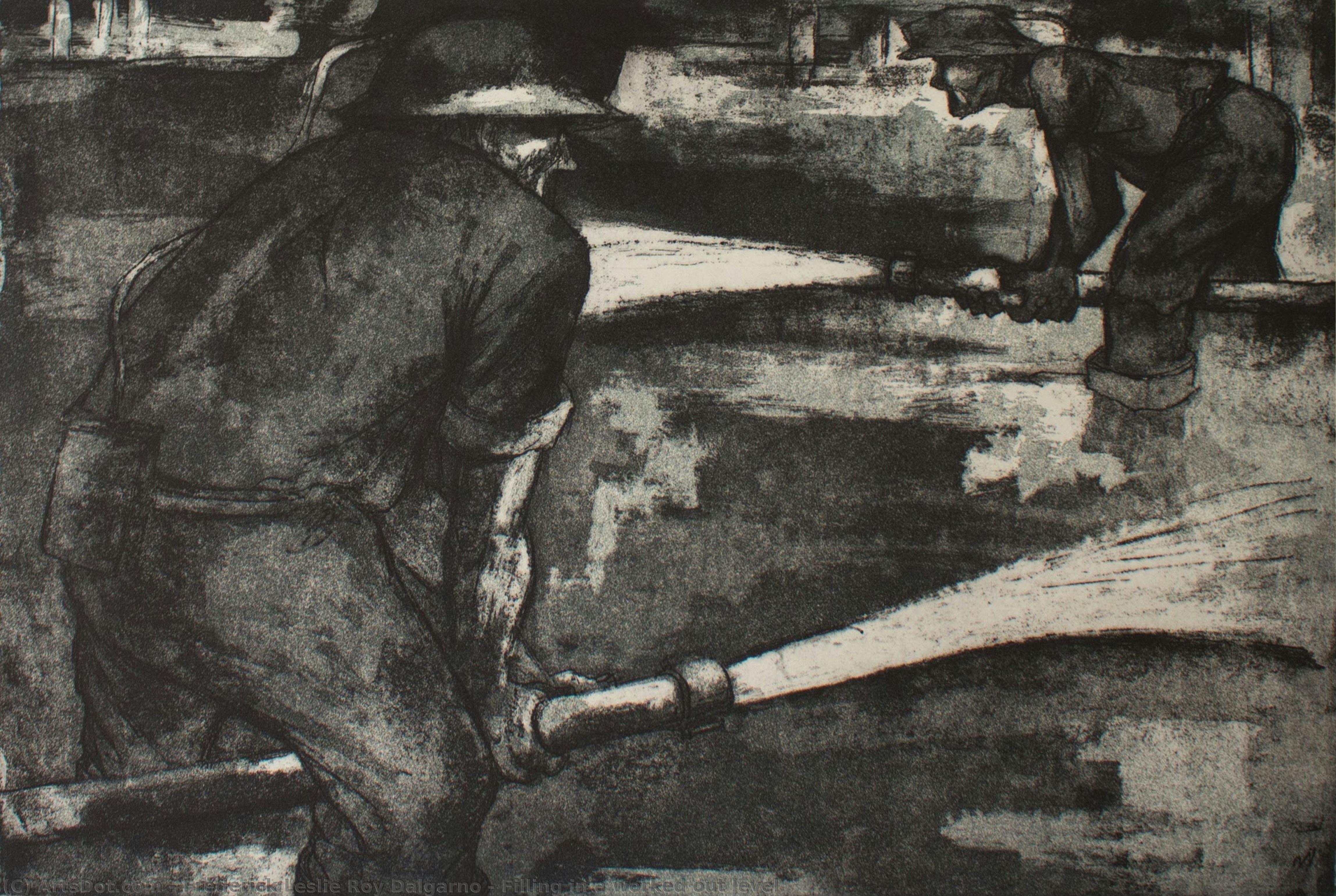
Filling in a worked out level
 1984
1984 33.0 x 49.0 cm
 Penrith Regional Gallery - Home of the Lewers Bequest
 Read More
Giclée / Art Print
Museum-quality giclée or canvas print with fast production and flexible finish options. ( Buy Hand Made Painting Buy Image)




































Pick from our preset sizes that match the artwork's original proportions.

You may enter your own dimensions to fit a specific frame or space. If your selected size does not match the original image's proportions, we will either crop the artwork or extend the image with a mirrored or solid-fill edge. A digital mockup will be sent for your approval before production begins.
Please note that the on-screen preview does not reflect the actual cropping or extension. Only the mockup will accurately show the final composition.
While custom sizes are available, we recommend selecting a dimension from the predefined list to preserve the original proportions.
Worldwide Delivery () in 2 weeks instead of standard 4/5 weeks. (19 August)

Free Worldwide Express Shipping

High-Quality Linen Canvas

Full Shipping Insurance

Customs Tax Refund Guarantee

True Color Matching Guarantee

60-Day Return Policy (Defects Only)

100% Money-Back Guarantee

Bulk Discount Offer
 Glass option is only available in size under 110 CM

Filling in a worked out level
Giclée / Art Print
Reproduction Size
-


Total Price
$ 63
Related Artworks
Artist Biography
Frederick Leslie Roy Dalgarno: A Chronicle of Australian Realism
Born in Melbourne, Australia, in 1910, Frederick Leslie Roy Dalgarno’s life and artistic journey were deeply intertwined with the social and political currents of his time. His early years at Ballarat Grammar instilled a disciplined approach to observation and representation – foundational skills that would later inform his distinctive style. Dalgarno's career unfolded against the backdrop of significant societal shifts, including the rise of communism in Australia and the burgeoning industrial landscape of the nation. This context profoundly shaped his artistic focus: he dedicated himself to portraying the lives of ordinary Australians, particularly those engaged in labor – miners, factory workers, and rural communities – offering a critical yet empathetic lens on their experiences.
Dalgarno’s formal training was extensive and diverse, reflecting a commitment to mastering various techniques. He began his artistic education at the National Gallery Art School in Melbourne, where he encountered the principles of realist social art championed by Noel Counihan and Herbert McClintock. This early exposure solidified his desire to depict the realities of working-class life with honesty and directness. Subsequent studies at the Academy of Art under Dattilo Rubbo further honed his skills in drawing and painting, while a period in Paris at the École des Beaux Arts, specifically within William Hayter’s Atelier 17, provided invaluable experience in printmaking techniques – particularly etching – which would become central to his oeuvre. Later, delving into graphic arts at Pratt Graphic Centre in New York broadened his technical repertoire, incorporating collographs and further refining his command of visual communication.
Thematic Focus: Labor, Industry, and Social Commentary
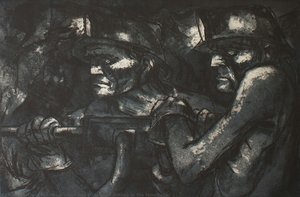
Dalgarno’s artistic output is overwhelmingly defined by its engagement with the themes of labor, industry, and social commentary. He wasn't interested in romanticizing or idealizing working life; instead, he sought to document it with unflinching realism. His subjects were often drawn from the harsh realities of mining and factory work, capturing the physical demands, the precarious conditions, and the sense of isolation experienced by these individuals. Works like “Drilling at the Mine Face” (1984) are not simply depictions of manual labor; they’re powerful statements about the human cost of industrial progress. Similarly, "Memory of Leonski" (1943), a woodcut, evokes a poignant sense of loss and resilience within a community grappling with hardship.
His commitment to social realism wasn't solely aesthetic; it was deeply rooted in his political beliefs. In the 1930s, Dalgarno joined the Communist Party of Australia, aligning himself with a movement advocating for workers’ rights and social justice. However, as art historian Bernard Smith noted, his bohemian temperament ultimately clashed with the party's rigid ideology. Despite this, his artistic practice remained consistently dedicated to representing the struggles and dignity of the working class – a testament to his unwavering commitment to social engagement.
Technique and Style: Printmaking as a Vehicle for Truth
Dalgarno’s mastery of printmaking techniques—etching, woodcut, and lithography—was crucial to his artistic vision. He recognized that these mediums offered a unique capacity to capture texture, detail, and the inherent drama of his subjects. His prints are characterized by meticulous observation, precise linework, and a skillful use of tonal values to convey depth and atmosphere. The process itself – the laborious layering of ink, the careful manipulation of pressure – mirrored his dedication to capturing truth with painstaking accuracy.
The influence of William Hayter’s Atelier 17 in Paris is particularly evident in Dalgarno's printmaking style. Hayter was a pioneer of drypoint etching, and Dalgarno adopted many of his techniques, including the use of a sharp needle to create rich, velvety textures. This approach allowed him to render the rough surfaces of mining equipment, the weathered faces of workers, and the desolate landscapes with remarkable realism. His prints aren’t simply reproductions; they are carefully constructed works of art that demand close attention from the viewer.
Recognition and Legacy
Throughout his career, Dalgarno received numerous accolades recognizing his artistic merit and social engagement. He won first prize at the École des Beaux Arts in Paris (1953) for his lithography students and first prize at the Mahasartra State Exhibition in India (1965). His work has been exhibited widely and is held in prominent collections, including the National Gallery of Victoria in Melbourne and the Penrith Regional Gallery.
Dalgarno’s legacy extends beyond his individual artworks. He played a significant role in fostering a tradition of realist social art in Australia, providing a powerful visual record of the nation's industrial past and its working-class communities. His work continues to resonate today, reminding us of the importance of documenting the lives of ordinary people and challenging us to confront the complexities of social justice. His dedication to portraying the realities of Australian life, particularly through the lens of labor and industry, ensures his place as a significant figure in Australian art history.
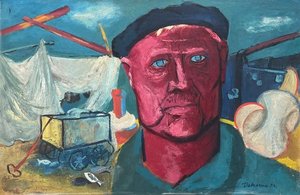
frederick leslie roy dalgarno
1910 - 2001 , Australia
Quick Facts
- Artistic Movement Or Style: Social realism
- Artists Or Movements Influenced By This Artist: ['William Hayter']
- Artists Who Influenced This Artist:
- Noel Counihan
- Herbert McClintock
- Dattilo Rubbo
- Date Of Birth: December 2, 1910
- Date Of Death: February 1, 2001
- Full Name: Frederick Leslie Roy Dalgarno
- Nationality: Australian
- Notable Artworks:
- Drilling at the mine face
- Memory of Leonski
- Place Of Birth: Melbourne, Australia