

 Preview
 Send
Send Share
Share
 Details

 Download
 Similars
 X-Ray
X-Ray Diaporama
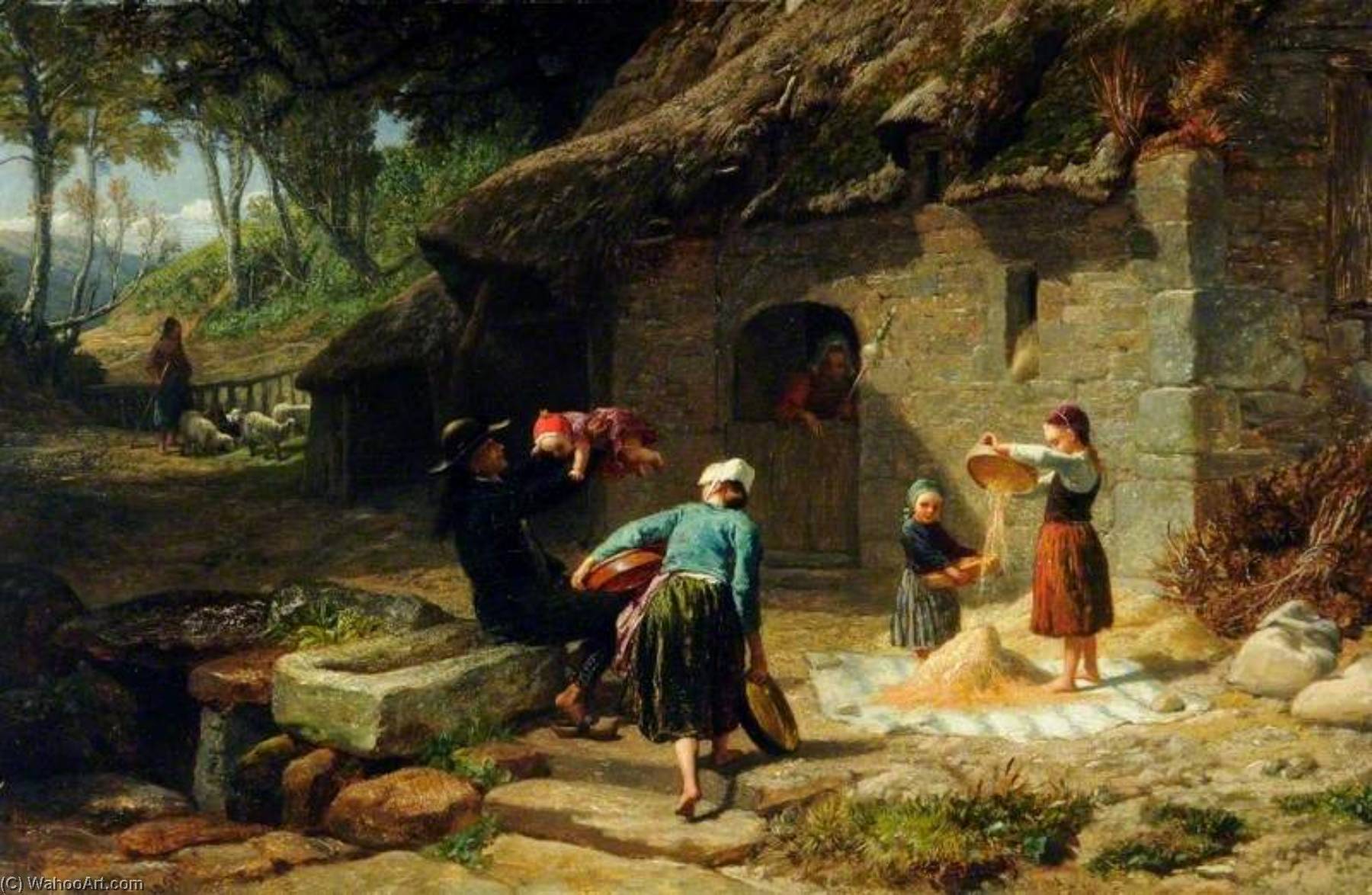
Winnowing Corn in Brittany, France
 1858
1858 35.0 x 52.0 cm
 Read More
Purchase a high-resolution, enhanced digital image, far superior to the online preview.
Each file is meticulously prepared by our in-house specialists using advanced tools and expert manual retouching. We ensure every image has exceptional clarity, precise color accuracy, and fine detail.
The final file is delivered via email within 72 hours, optimized for immediate use in professional, editorial, and print environments. This is the same quality trusted by top-tier design studios, publishers, and galleries.
Digital Image
Download a high-resolution file for personal display, printing, and creative projects. ( Buy Print Buy Hand Made Painting)
Included in Every Digital Image Order
Expert Digital Delivery, Guaranteed
When you choose ArtsDot.com, you're not just getting an image - you're receiving a professionally enhanced digital artwork, crafted with precision and backed by a satisfaction guarantee. Here's everything that comes with your order, automatically:

Fast Email Delivery
Your high-resolution digital image file will be emailed to you within 72 hours of ordering - ready for immediate use.

AI-Enhanced Digital File
Your artwork is professionally optimized using advanced AI tools and manual editing, ensuring maximum detail, clarity, and color accuracy.

Free Lifetime Re-Delivery
Accidentally deleted or lost your file? No worries - we'll resend it to you anytime, free of charge.

No Import Fees - Ever
Enjoy your artwork instantly with zero customs, duties, or delivery fees - digital downloads are always tax-free.

Color Accuracy Guarantee
We ensure your digital image reflects the original colors as closely as possible using professional tools and color management.

60-Day Satisfaction Guarantee
If you're not satisfied with your digital image, we'll revise it or refund 100% within 60 days - no questions asked.

100% Money-Back Guarantee
Not satisfied? Get a full refund within 60 days of receiving your digital file - no questions asked.

Bulk Order Discounts
Buy 3 images, save 10% - Buy 5, save 15% - Buy 10+, save 20%. Great for creative projects, galleries, and agencies.
Collectible Description
The Painting's Composition
The scene depicts a group of people gathered in front of a stone building, possibly a barn or a house. The individuals are engaged in various activities, such as holding baskets and carrying items like bowls and spoons. A dog is also present in the painting, adding a sense of warmth and companionship to the scene. The overall atmosphere suggests that this gathering could be related to food preparation or sharing.Artist's Style and Influences
Frederick Trevelyan Goodall was a British artist known for his genre paintings, which often featured scenes of everyday life. His style was influenced by the Japonism Art Movement, which emphasized the importance of Japanese art and design in Western European art. Goodall's work can be compared to that of other artists, such as John King, who also created oil on panel pieces like Ambrose Johns (1776-1858).Similar Works by the Artist
Some of Frederick Trevelyan Goodall's other notable works include The Pedlar and The Tired Gleaners, which can be found on ArtsDot.com. These paintings showcase the artist's ability to capture the beauty of everyday life and his attention to detail.- Oil on panel was a common medium used by Goodall, as seen in Winnowing Corn in Brittany, France and other works like The Pedlar, which is housed at the Victoria and Albert Museum.
- Rural life was a popular theme in Goodall's work, as evident in paintings like The Tired Gleaners, located at the Harris Museum - Art Gallery.
The painting Winnowing Corn in Brittany, France by Frederick Trevelyan Goodall is a beautiful representation of rural life in 19th-century France. With its attention to detail and captivating composition, this piece is a must-see for art enthusiasts. Visit ArtsDot.com to explore more of Goodall's works and discover the beauty of handmade oil painting reproductions.
Related Artworks









Artist Biography
Frederick Goodall RA: A Victorian Explorer of Eastern Worlds
Born in London in 1822, Frederick Trevelyan Goodall’s artistic journey was deeply intertwined with a lineage of creative talent and a fascination for the exotic. The son of Edward Goodall, a highly respected steel line engraver who had worked closely with William Turner, Frederick inherited not only a skilled hand but also an appreciation for meticulous detail and a connection to the world of art. His upbringing within a family steeped in artistic tradition – his father’s work alongside Turner, his brothers' own artistic pursuits – provided him with an unparalleled foundation for his future career.
Early education at the Wellington Road Academy instilled in him a solid grounding in technique, but it was his time sketching in Regent’s Park Zoo and along the banks of the Thames that truly ignited his passion. These early observations, capturing the nuances of everyday life and the beauty of the natural world, would later inform his distinctive style. He quickly developed an eye for composition and color, hallmarks that would become synonymous with his work.
The Early Years: Apprenticeship and Royal Recognition
Goodall’s artistic development was further shaped by a formal apprenticeship under his father, honing his skills in oil painting. Crucially, he also joined a life class at St. Martin's Lane, immersing himself in the competitive environment of the London art scene and learning from established artists like Etty. This early exposure to the academic tradition provided him with essential training while simultaneously allowing him to develop his own unique voice.
His talent was quickly recognized, culminating in his first exhibition at the Society of Arts in 1836, followed by a silver medal for his painting “The Drowning of the Miner” at the Society of Arts in 1839. This early success established him as a promising young artist and paved the way for future recognition within the Royal Academy.
Egyptian Encounters: A Transformative Journey
A pivotal moment in Goodall’s career arrived with his first visit to Egypt in 1858, undertaken in partnership with fellow artist Carl Haag. This journey proved transformative, profoundly influencing his artistic direction and subject matter. The experience of immersing himself in the vibrant culture of Cairo, the stark beauty of the desert, and the daily lives of the Bedouin tribes ignited a deep fascination that would dominate much of his later work.
He shared a house and studio with Haag, sketching together amidst the bustling streets of Cairo and the surrounding pyramids. His second visit in 1870 saw him living amongst the Bedouins near Saqqara, meticulously observing their customs and lifestyles. This dedication to authenticity is evident in his paintings, which are remarkably detailed and imbued with a sense of genuine understanding.
To further enhance the realism of his depictions, Goodall famously brought back live sheep and goats from Egypt, incorporating them into his studio as models for his paintings. This commitment to accuracy reflected his desire to capture not just the visual appearance but also the essence of the Eastern world he had come to admire.
Royal Academician and a Flourishing Career
Goodall’s artistic achievements culminated in his election as an Associate Royal Academician (ARA) in 1852 and, more significantly, as a full Royal Academician (RA) in 1863. He exhibited at the Royal Academy for over four decades, consistently producing works that garnered critical acclaim and substantial sales. His paintings were highly sought after by collectors and patrons alike.
His output during this period was vast, encompassing a wide range of subjects – from bustling street scenes in Cairo to intimate portraits of Bedouin figures, dramatic landscapes, and biblical narratives. He exhibited over 170 works at the Royal Academy, demonstrating his sustained dedication to his chosen subject matter.
Legacy and Artistic Style
Frederick Goodall’s artistic legacy lies primarily in his evocative depictions of Egypt and the Bedouin people. His paintings are characterized by their meticulous detail, vibrant colors, and a remarkable ability to capture the atmosphere and spirit of the Eastern world. He skillfully blended elements of Orientalism with a distinctly British sensibility, creating works that were both exotic and familiar.
His home at Grims Dyke in Harrow Weald became a gathering place for prominent figures of the era, including Prince Edward (later King Edward VII), further cementing his position as a respected artist and socialite. Despite facing financial difficulties towards the end of his life, Goodall’s artistic contributions remain significant, offering a unique window into Victorian perceptions of the East and showcasing the enduring power of observation and skillful execution.
frederick trevelyan goodall
1822 - 1904
Quick Facts
- Artistic Movement Or Style: Orientalism, Victorian Painting
- Artists Or Movements Influenced By This Artist:
- Carl Haag
- Orientalism
- Artists Who Influenced This Artist:
- Turner
- Wilkie
- Date Of Birth: 17 Sept 1822
- Date Of Death: 29 July 1904
- Full Name: Frederick Trevelyan Goodall
- Nationality: British
- Notable Artworks:
- Finding the Dead Body
- French Soldiers
- Cranmer at Gate
- Nubian Slave
- Morning in Shur
- Place Of Birth: London, England

