 Preview
 Send
Send Share
Share
 Details

 Download
 Similars
 X-Ray
X-Ray Diaporama
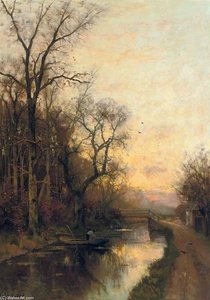
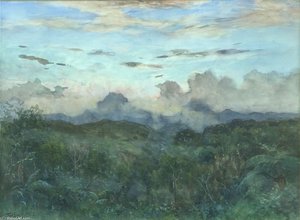
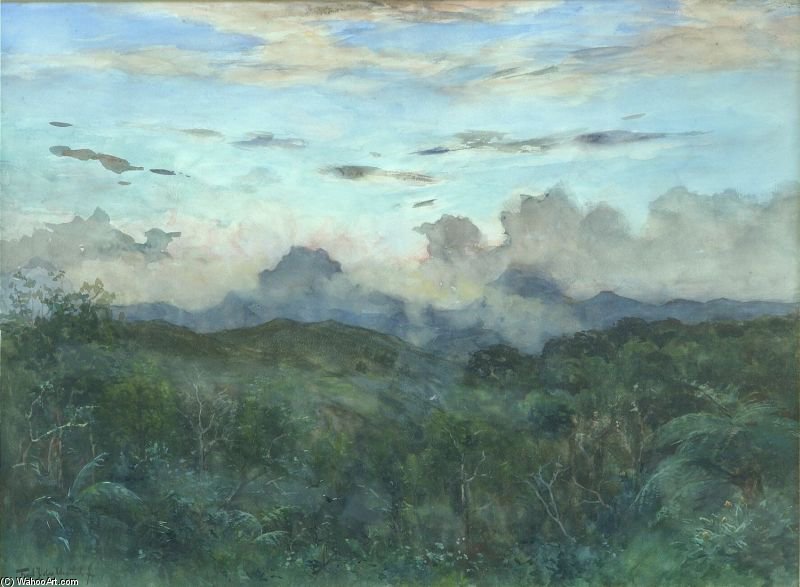
Aquarel. Landschap In De Mist
 Read More
Hand Made Oil Reproduction
Hand-painted oil on canvas in your size and frame, made to order by our artists. ( Buy Print Buy Image)




































Pick from our preset sizes that match the artwork's original proportions.

You may enter your own dimensions to fit a specific frame or space. If your selected size does not match the original image's proportions, we will either crop the artwork or extend the painting with additional hand-painted elements. A digital mockup will be sent for your approval before production begins.
Please note that the on-screen preview does not reflect the actual cropping or extension. Only the mockup will accurately show the final composition.
While custom sizes are available, we recommend selecting a dimension from the predefined list to preserve the original proportions.
After order, ArtsDot.com team will email client for instructions and provide a mockup preview
Worldwide Delivery () in 3/4 weeks instead of standard 5 weeks. (23 August). No compromise on quality.

Free Worldwide Express Shipping

High-Quality Linen Canvas

Full Shipping Insurance

Customs Tax Refund Guarantee

True Color Matching Guarantee

60-Day Return Policy (Defects Only)

100% Money-Back Guarantee

Bulk Discount Offer
 Glass option is only available in size under 110 CM

Aquarel. Landschap In De Mist
Reproduction Medium
Reproduction Size
-


Total Price
$ 263
Related Artworks









Artist Biography
A Life Painted by the Canals: Fredericus Jacobus van Rossum du Chattel
Fredericus Jacobus van Rossum du Chattel, a name perhaps unfamiliar to many, represents a captivating thread in the tapestry of 19th-century Dutch landscape painting. Born in Leiden in 1856, his life unfolded as a quiet dedication to capturing the serene beauty of the Low Countries, particularly the evocative scenes along the Vecht river and later, the landscapes surrounding Semarang in the Dutch East Indies (modern-day Indonesia). While not achieving widespread international fame during his lifetime, Van Rossum du Chattel cultivated a devoted following among collectors who appreciated his delicate watercolors and oil paintings imbued with atmospheric realism. His story is one of artistic evolution, shaped by familial influence, the burgeoning Impressionist movement, and ultimately, a geographical shift that broadened his palette and perspective.Early Influences and Artistic Formation
Van Rossum du Chattel’s initial foray into art was nurtured within the family circle. His father, Jan Hendrik van Rossum du Chattel, provided his first lessons, laying the foundation for a lifelong passion. This early guidance instilled not only technical skills but also an appreciation for the subtleties of light and form. He then formally studied at the Teekenschool in The Hague, a prominent art academy that exposed him to contemporary artistic trends. Crucially, he became associated with Willem Maris, a leading figure of the Hague School—a movement known for its realistic depictions of Dutch landscapes often rendered in muted tones and evocative atmospheres. This association proved pivotal; while Van Rossum du Chattel would ultimately forge his own distinct style, the influence of Maris’s emphasis on capturing the mood and character of nature is readily apparent in his early works. The Vecht river region near Utrecht became a primary source of inspiration during these formative years, earning him the affectionate moniker “the painter of the Vecht” from critics who recognized his consistent return to its picturesque banks.A Shift East: Semarang and a Broadened Vision
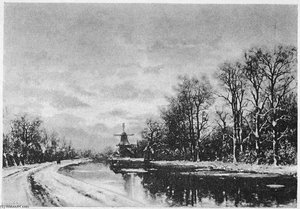
Around the turn of the century, Van Rossum du Chattel’s life took an unexpected turn with a move to Semarang, a major port city in Java (Indonesia). This relocation marked a significant departure from the familiar Dutch landscapes he had so diligently documented. The lush tropical scenery, vibrant light, and unique cultural atmosphere profoundly impacted his artistic vision. His palette expanded, embracing warmer hues and more dynamic compositions as he sought to capture the essence of this new environment. While maintaining his commitment to realism, his work in Semarang reveals a heightened sensitivity to color and texture, reflecting the exotic beauty of the East Indies. He painted canals, windmills—a nostalgic echo of his homeland—and winter scenes that offered a striking contrast between Dutch tradition and Indonesian reality.Technique and Style: Atmospheric Realism
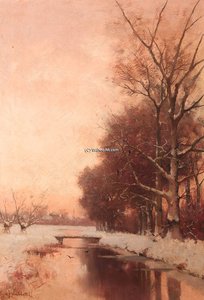
Van Rossum du Chattel’s artistic style is best described as atmospheric realism, blending meticulous observation with an evocative rendering of light and mood. He worked primarily in watercolor and oil paint, demonstrating a mastery of both mediums. His watercolors are particularly admired for their delicate washes, subtle gradations of color, and ability to capture the fleeting effects of light on water and foliage. His oil paintings, while often smaller in scale, exhibit a similar attention to detail and atmospheric sensitivity. He wasn’t interested in grand narratives or dramatic compositions; instead, he focused on capturing the quiet beauty of everyday scenes—a canal at sunset, a snow-covered windmill, a tranquil winter landscape. This dedication to portraying the subtle nuances of nature is what sets his work apart and resonates with viewers even today. He skillfully balanced precision with a sense of poetic atmosphere, creating paintings that are both visually appealing and emotionally engaging.Legacy and Historical Significance
Although Van Rossum du Chattel did not achieve widespread fame during his lifetime, his work continues to be appreciated by collectors and art enthusiasts who value his delicate technique and evocative depictions of Dutch and Indonesian landscapes. He died in Yokohama, Japan, in 1917. His paintings offer a valuable glimpse into the artistic sensibilities of the late 19th and early 20th centuries, bridging the gap between the traditions of the Hague School and the emerging Impressionist movement.- His consistent focus on capturing the mood and character of nature reflects a broader trend in landscape painting during this period.
- His work provides a unique perspective on the Dutch colonial experience, offering glimpses into the landscapes and cultural atmosphere of Semarang.
- The enduring appeal of his paintings lies in their quiet beauty, delicate technique, and ability to evoke a sense of tranquility and nostalgia.
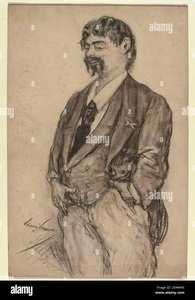
fredericus jacobus van rossum du chattel
1856 - 1917 , Netherlands
Quick Facts
- Artistic Movement Or Style: Impressionist Watercolorism
- Artists Or Movements Influenced By This Artist: ['Post-Impressionism']
- Artists Who Influenced This Artist: ['Vincent van Gogh']
- Date Of Birth: 1856
- Full Name: Fredericus Jacobus van Rossum du Chattel
- Nationality: Dutch
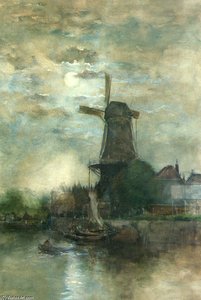
- Notable Artworks: ['A Moonlit Windmill']
- Place Of Birth: Leiden, Netherlands