 Preview
 Send
Send Share
Share
 Details

 Download
 Similars
 X-Ray
X-Ray Diaporama
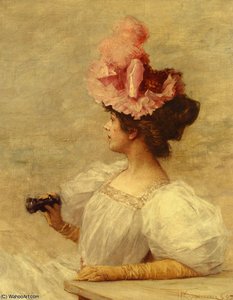
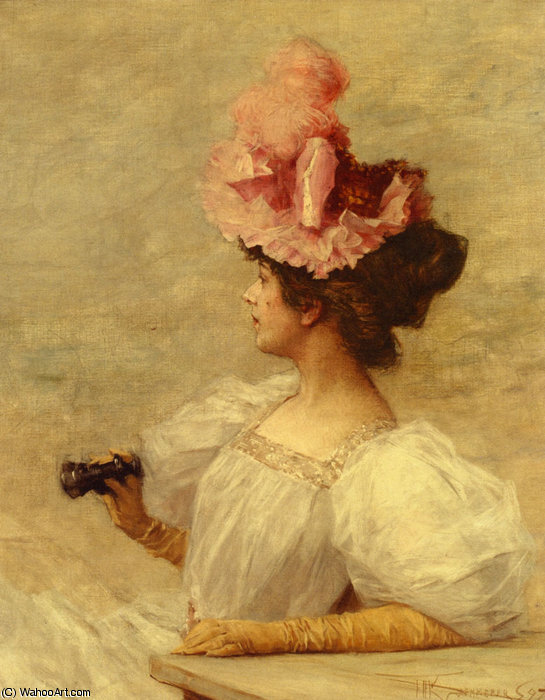
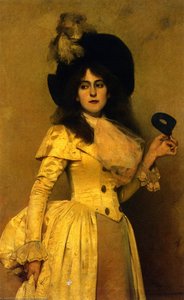
Woman with opera glasses
 Read More
Hand Made Oil Reproduction
Hand-painted oil on canvas in your size and frame, made to order by our artists. ( Buy Print Buy Image)




































Pick from our preset sizes that match the artwork's original proportions.

You may enter your own dimensions to fit a specific frame or space. If your selected size does not match the original image's proportions, we will either crop the artwork or extend the painting with additional hand-painted elements. A digital mockup will be sent for your approval before production begins.
Please note that the on-screen preview does not reflect the actual cropping or extension. Only the mockup will accurately show the final composition.
While custom sizes are available, we recommend selecting a dimension from the predefined list to preserve the original proportions.
After order, ArtsDot.com team will email client for instructions and provide a mockup preview
Worldwide Delivery () in 3/4 weeks instead of standard 5 weeks. (25 August). No compromise on quality.

Free Worldwide Express Shipping

High-Quality Linen Canvas

Full Shipping Insurance

Customs Tax Refund Guarantee

True Color Matching Guarantee

60-Day Return Policy (Defects Only)

100% Money-Back Guarantee

Bulk Discount Offer
 Glass option is only available in size under 110 CM

Woman with opera glasses
Reproduction Medium
Reproduction Size
-


Total Price
$ 263
Related Artworks
Artist Biography
Frederik Hendrik Kaemmerer: A Master of Dutch Impressionism
Frederik Hendrik Kaemmerer (October 23, 1839 – April 4, 1902) was a Dutch painter who achieved renown for his meticulous depictions of seaside scenes and Parisian social life during the Franco-Prussian War era. Initially trained in the Romantic tradition by Salomon Verveer at the Royal Academy of Art in The Hague, Kaemmerer swiftly embraced Impressionism, capturing fleeting moments of light and atmosphere with remarkable precision—a stylistic shift that cemented his place as a pivotal figure in Dutch art history.Early Years & Academic Training
Born in The Hague, Kaemmerer’s artistic inclinations were nurtured from a young age. His formal education at the Royal Academy focused on mastering classical techniques, particularly landscape painting under Verveer's guidance—a style that would inform his early works and establish a foundational understanding of composition and tonal harmony. These formative years instilled in him an unwavering dedication to accuracy and detail, qualities he carried throughout his career. His debut solo exhibition in Rotterdam in 1861 showcased landscapes executed with the characteristic elegance of the Hague School, demonstrating his initial commitment to established artistic conventions.Parisian Influences & Genre Painting
A pivotal moment arrived in 1865 when Kaemmerer ventured into Paris, drawn by the burgeoning Impressionist movement and encouraged by Goupil & Cie, a prominent art dealer who recognized his talent. He enrolled at the École des Beaux-Arts, where he studied alongside Jean-Léon Gérôme—a celebrated academic painter—and transitioned towards genre painting, capturing scenes of Parisian society with astute observation and meticulous realism. His fascination with costume design became particularly noteworthy; he amassed a substantial collection of 18th century dresses and accessories, utilizing them as props for his canvases and elevating his artistic endeavors to the level of scholarly research.The Impressionist Breakthrough & Recognition
Kaemmerer’s embrace of Impressionism marked a dramatic departure from academic formalism, yet it remained rooted in his meticulous training. Inspired by the shimmering light effects on the Scheveningen beaches—a location he frequented during his artistic retreats—he developed a distinctive style characterized by loose brushstrokes and vibrant color palettes. This stylistic innovation garnered considerable acclaim, culminating in a silver medal at the Universal Exposition of 1889 and cementing his reputation as one of the foremost Impressionist painters of his time. His landscapes were celebrated for their atmospheric depth and subtle tonal gradations—a testament to his unwavering dedication to capturing the essence of natural beauty.Later Career & Legacy
Following 1891, Kaemmerer collaborated with Elsevier Publishing Company, contributing illustrations to their “Dutch Literature Illustrated by Dutch Artists” series (“Dutch Literatur geïllustreerd door Nederlandse kunstenaars”). His initial drawings appeared in *Een illusie*, a collection of stories by Louis Couperus—a celebrated Belgian novelist—demonstrating his versatility as an artist and illustrator. Tragically, Kaemmerer’s life ended prematurely at his Paris atelier on April 4, 1902, leaving behind a legacy of approximately 350 paintings that continue to captivate audiences worldwide. His works are housed in museums across France and the Netherlands, including the Musée des Beaux-Arts de Mulhouse and the Clark Art Institute in Williamstown, Massachusetts—a testament to his enduring artistic significance.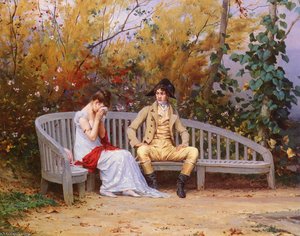
frederik hendrik kaemmerer
1839 - 1902
Quick Facts
- Artistic Movement Or Style: Impressionism & Academic
- Artists Or Movements Influenced By This Artist: Jean-Léon Gérôme
- Artists Who Influenced This Artist: Salomon Verveer
- Date Of Birth: October 23, 1839
- Date Of Death: April 4, 1902
- Full Name: Frederik Hendrik Kaemmerer
- Nationality: Dutch
- Notable Artworks:
- Two Strings to his Bow
- Merveilleuses sous le Directoire
- Baptême sous le directoire
- Place Of Birth: The Hague, Netherlands