 Preview
 Send
Send Share
Share
 Details

 Download
 Similars
 X-Ray
X-Ray Diaporama
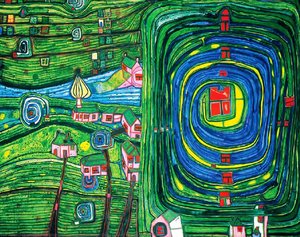
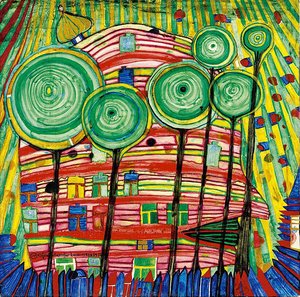
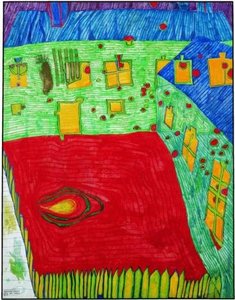
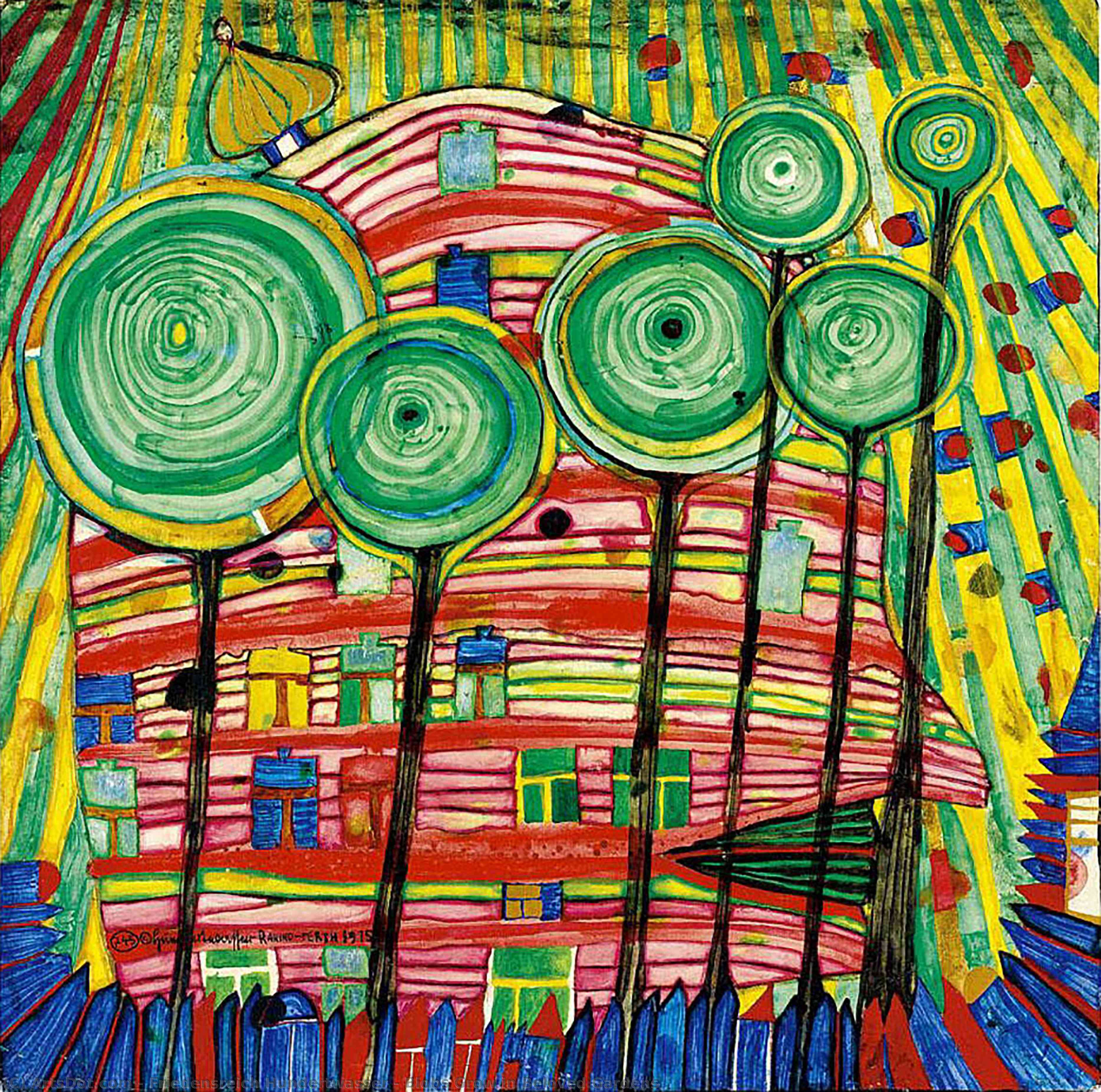
Blobs Grow in Beloved Gardens


 Read More
Hand Made Oil Reproduction
Hand-painted oil on canvas in your size and frame, made to order by our artists. ( Buy Print Buy Image)




P118B $10

P118H $10

P118W $10

P438Z $10

P508JH $12

P508YH $12

P805H $10

P805Z $10

P919BZ $10

P919G $10

P919XJ $10

P959ZH $10

P968JZ $12

W106C $8

W218G $10

W218JH $8

W218Y $10

W307PJ $10

W316G $10

W316PJ $8

W316Y $10

W398PJ $8

W4111J $10

W500HY $15

W500JH $15

W692G $12

W849H $8

W940BG $15

W953PJ $8




Pick from our preset sizes that match the artwork's original proportions.

You may enter your own dimensions to fit a specific frame or space. If your selected size does not match the original image's proportions, we will either crop the artwork or extend the painting with additional hand-painted elements. A digital mockup will be sent for your approval before production begins.
Please note that the on-screen preview does not reflect the actual cropping or extension. Only the mockup will accurately show the final composition.
While custom sizes are available, we recommend selecting a dimension from the predefined list to preserve the original proportions.
After order, ArtsDot.com team will email client for instructions and provide a mockup preview
Worldwide Delivery () in 3/4 weeks instead of standard 5 weeks. (21 August). No compromise on quality.

Free Worldwide Express Shipping

High-Quality Linen Canvas

Full Shipping Insurance

Customs Tax Refund Guarantee

True Color Matching Guarantee

60-Day Return Policy (Defects Only)

100% Money-Back Guarantee

Bulk Discount Offer
 Glass option is only available in size under 110 CM

Blobs Grow in Beloved Gardens
Reproduction Medium
Reproduction Size
-


Total Price
$ 263
Artwork Description
A Vision of Organic Harmony
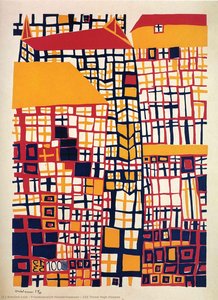
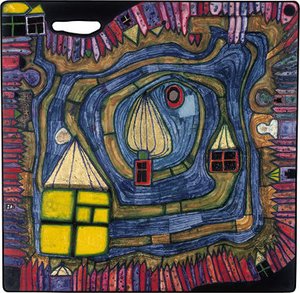
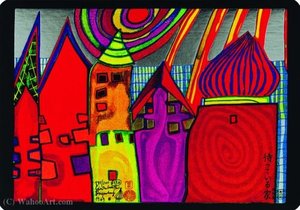
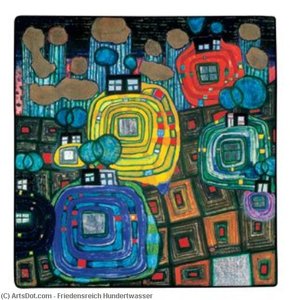
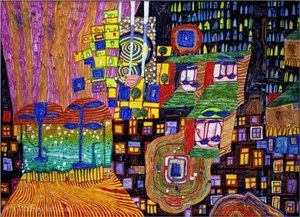
In the vibrant tapestry of twentieth-century art, few voices resonate with as much ecological passion and whimsical charm as that of Friedensreich Hundertwasser. His masterpiece, Blobs Grow in Beloved Gardens, serves as a breathtaking window into a world where the rigid boundaries between man-made structures and the natural environment dissolve into a singular, breathing entity. The painting presents a sprawling, multi-leveled architectural marvel, characterized by its deep red roofs and an intricate arrangement of windows that seem to pulse with life. This is not merely a depiction of a building, but a celebration of organic growth, where the architecture itself appears to sprout from the earth like a living organism. The presence of lush trees and verdant foliage intertwined with the structures creates a sense of profound symbiosis, inviting the viewer to imagine a future where humanity lives in quiet, colorful equilibrium with the planet.
The technique employed in this work is nothing short of hypnotic, utilizing a rich and varied palette that captures the eye and holds it captive. Hundertwasser’s use of color is both bold and intentional; the warmth of the crimson rooftops contrasts beautifully against the deep greens of the surrounding flora, while the sudden appearance of large, floating circles adds a surreal, dreamlike dimension to the composition. These celestial orbs introduce a sense of depth and cosmic scale, suggesting that the garden below is part of a much larger, interconnected universe. The brushwork, though appearing fluid and spontaneous, possesses a structured rhythm that guides the eye through the labyrinthine levels of the building, ensuring that every corner of the canvas offers a new discovery for the wandering gaze.
Symbolism and the Rejection of the Straight Line
To understand Blobs Grow in Beloved Gardens, one must delve into Hundertwasser’s profound philosophical rejection of the straight line. For the artist, the straight line was an imposition of artificiality upon the natural world—a symbol of industrial coldness and human arrogance. In this painting, we see his triumph through the use of undulating forms, soft edges, and "blobs" that suggest movement and biological vitality. The floating circles act as symbols of wholeness and the cyclical nature of life, breaking the traditional perspective to create a multidimensional experience. This piece is an architectural manifesto in paint, advocating for a "humanized" environment where every window and every roofline follows the irregular, beautiful logic of nature rather than the sterile precision of a ruler.
For the discerning collector or interior designer, this artwork offers more than just visual splendor; it provides an emotional sanctuary. The painting radiates a sense of optimism and joy, making it an ideal centerpiece for spaces designed to inspire creativity and peace. Whether placed in a contemporary gallery setting or integrated into a sophisticated residential interior, the work acts as a focal point that stimulates conversation and evokes wonder. Owning a high-quality reproduction of this piece means bringing a fragment of Hundertwasser’s utopian vision into one's own home—a constant reminder that beauty, color, and nature can always find a way to flourish, even amidst the structures we build.
Related Artworks

Artist Biography
Friedensreich Hundertwasser: A Life Dedicated to Harmony and Color
- Born: December 15, 1928, Vienna, Austria
- Died: February 19, 2000 (aged 71), on the RMS Queen Elizabeth 2 at sea
- Full Name: Friedrich Stowasser (adopted pseudonym Friedensreich Regentag Dunkelbunt Hundertwasser)
Friedensreich Hundertwasser, born Friedrich Stowasser, was an Austrian artist and architect renowned for his unique, organic designs that challenged conventional architectural norms. His name itself reflects his philosophy – “Peace-Realm Hundred-Water,” embodying a vision of harmony with nature and a rejection of rigid structures.
Early Life and Artistic Development
- Difficult Beginnings: Hundertwasser’s early life was marked by hardship, particularly during the Nazi era. His Jewish mother and he narrowly escaped persecution by posing as Christians. This experience profoundly shaped his worldview and later artistic expression.
- Artistic Training & Rejection of Convention: He briefly attended the Academy of Fine Arts in Vienna but quickly rejected its rigid academic style. This rejection fueled his independent artistic journey, leading him to develop a distinctive visual language characterized by vibrant colors, swirling patterns, and an aversion to straight lines.
- Travels and Influences: Extensive travels throughout Europe and Africa during the 1950s exposed Hundertwasser to diverse cultures and landscapes, influencing his art and solidifying his commitment to organic forms and natural beauty. He met René Brô in Florence, forming a lifelong friendship that significantly impacted his artistic development.
- The Spiral Motif: The spiral became a central motif in Hundertwasser’s work, symbolizing growth, harmony, and the cyclical nature of life – a direct contrast to the rigid geometry he despised.
Architectural Philosophy and Notable Projects
- Rejection of "Healing Architecture": Hundertwasser developed his own concept of architecture which he termed “healing architecture”. He believed that buildings should be in harmony with nature, promoting well-being and creativity for their inhabitants.
- Hundertwasserhaus (Vienna): Perhaps his most famous creation, the Hundertwasserhaus is a vibrant apartment building in Vienna characterized by its undulating floors, irregular windows, and colorful facade adorned with trees and plants. It exemplifies his rejection of straight lines and standardized design.
- Bottle House (New Zealand): Located in Kawarau Falls, New Zealand, the Bottle House is a unique residence constructed using recycled glass bottles as building materials. This project demonstrates Hundertwasser’s commitment to sustainability and innovative use of resources.
- Giardino Eden (Italy): He acquired and restored the Giardino Eden, including the Palazzo Villa delle Rose, in Italy, further showcasing his passion for preserving historical gardens and integrating architecture with natural landscapes.
Environmental Activism and Legacy
- Champion of Ecological Causes: Hundertwasser was a passionate environmental activist who campaigned tirelessly for ecological awareness and sustainable practices. He advocated for tree planting, green spaces in urban areas, and the protection of water resources.
- "Window Right": A key element of his architectural philosophy was the "window right," which granted residents the freedom to alter their windows as they pleased, promoting individuality and creativity within a shared living space.
- Advocacy for Constitutional Monarchy: Hundertwasser also expressed strong political views, advocating for a constitutional monarchy in Austria and criticizing the European Union's perceived disregard for regional peculiarities.
- Lasting Impact: Friedensreich Hundertwasser’s legacy extends beyond his artistic creations. He inspired generations of artists, architects, and environmentalists to embrace creativity, challenge convention, and strive for a more harmonious relationship between humanity and nature. His work continues to resonate with audiences worldwide, reminding us of the importance of beauty, individuality, and ecological responsibility.

Friedensreich Hundertwasser
1928 - 2000 , Austria
Quick Facts
- Artistic Movement Or Style: Organic architecture, Spiral art
- Date Of Birth: December 15, 1928
- Date Of Death: February 19, 2000
- Full Name: Friedensreich Hundertwasser
- Nationality: Austrian
- Notable Artworks:
- Green Power
- Hide Under the Meadow It Begins to Rain
- Nostalgic Roof
- Place Of Birth: Vienna, Austria
Related Articles

Crimson Threads of Narrative: Exploring Symbolism & Representation in Artworks Featuring the Red Dress
Explore the rich symbolism of the red dress in art history! From ancient power displays to iconic portraits like Cézanne’s 'Madame Cezanne', discover the cultural and artistic significance behind this captivating color. Expert analysis & insights.
Mark Rothko's Masterpieces: 25 Paintings That Define Abstract Expressionism | ArtsDot
Explore 25 iconic Mark Rothko paintings that define Abstract Expressionism. Discover the stories, colors & emotions behind these masterpieces. Find museum-quality art reproductions and curated decor ideas at ArtsDot.com.

Hokusai's Masterpieces: 25 Iconic Prints & Paintings for Art Lovers | ArtsDot
Journey through Katsushika Hokusai’s 25 most iconic artworks, including *The Great Wave*. Explore the ukiyo-e master's history, style & timeless Japanese woodblock prints. Find museum-quality reproductions for your home at ArtsDot.com.
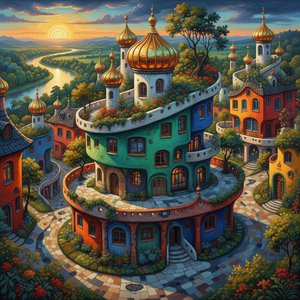
Friedensreich Hundertwasser: A Celebration of Organic Form & Rejection of Straight Lines
Explore the revolutionary art & architecture of Friedensreich Hundertwasser. Discover his rejection of straight lines, organic forms, ecological activism, and iconic projects like the Hundertwasserhaus. A deep dive into a unique artistic vision.

Kandinsky's Masterpieces: 25 Paintings That Define Abstract Art | ArtsDot
Journey through Wassily Kandinsky's 25 most iconic abstract paintings. Explore his revolutionary use of color, form & spiritual expressionism. Find museum-quality Kandinsky reproductions and elevate your home decor with ArtsDot.com. Discover all masterpieces on ArtsDot.com!