 Preview
 Send
Send Share
Share
 Details

 Download
 Similars
 X-Ray
X-Ray Diaporama
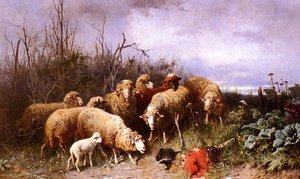
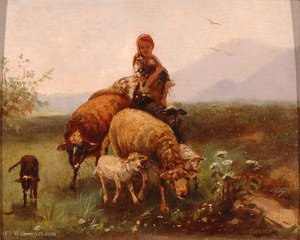
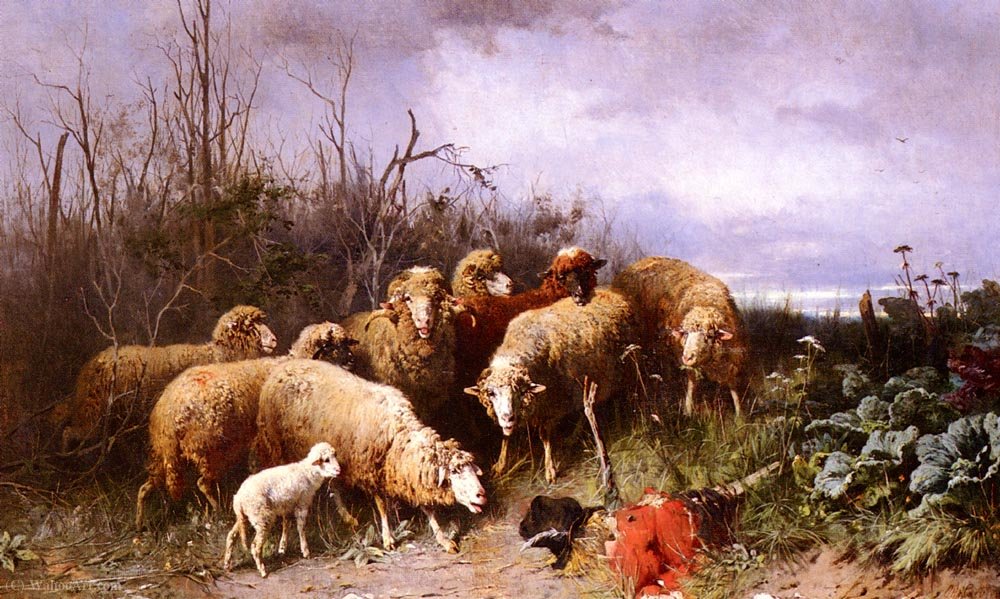
Schafe eine vogelscheuche betrachtend
 Read More
Giclée / Art Print
Museum-quality giclée or canvas print with fast production and flexible finish options. ( Buy Hand Made Painting Buy Image)




































Pick from our preset sizes that match the artwork's original proportions.

You may enter your own dimensions to fit a specific frame or space. If your selected size does not match the original image's proportions, we will either crop the artwork or extend the image with a mirrored or solid-fill edge. A digital mockup will be sent for your approval before production begins.
Please note that the on-screen preview does not reflect the actual cropping or extension. Only the mockup will accurately show the final composition.
While custom sizes are available, we recommend selecting a dimension from the predefined list to preserve the original proportions.
Worldwide Delivery () in 2 weeks instead of standard 4/5 weeks. (24 August)

Free Worldwide Express Shipping

High-Quality Linen Canvas

Full Shipping Insurance

Customs Tax Refund Guarantee

True Color Matching Guarantee

60-Day Return Policy (Defects Only)

100% Money-Back Guarantee

Bulk Discount Offer
 Glass option is only available in size under 110 CM

Schafe eine vogelscheuche betrachtend
Giclée / Art Print
Reproduction Size
-


Total Price
$ 63
Related Artworks









Artist Biography
A Life Immersed in Pastoral Beauty: Friedrich Otto Gebler
Friedrich Otto Gebler, born in Dresden in 1838 and passing away in 1917, was a German painter deeply rooted in the traditions of animal painting and landscape artistry. While biographical details remain somewhat sparse, his work speaks volumes about a life dedicated to capturing the serene beauty of rural Austria and the intimate connection between humanity and nature. Gebler’s artistic journey unfolded against a backdrop of evolving Romanticism and the burgeoning Impressionist movement, influences that subtly shaped his distinctive style. He received formal training at the prestigious academies in Dresden and Munich, laying a solid foundation in technique before embarking on a career focused primarily on depicting animals within idyllic pastoral settings. His paintings weren't merely representations; they were imbued with a sense of quiet contemplation and an appreciation for the simple rhythms of life in the countryside.The Austrian Landscape as Muse
Gebler’s artistic focus centered almost exclusively on scenes from Austria, particularly those showcasing livestock – sheep, cattle, horses – often accompanied by figures like shepherdesses or farmers. He wasn't interested in dramatic narratives or grand historical events; instead, he found beauty in the everyday moments of rural existence. Scherzo, one of his most recognizable works, exemplifies this approach. The painting depicts a lighthearted scene, likely a playful interaction between animals and their keepers, bathed in soft, natural light. This wasn’t simply documentation; Gebler infused these scenes with an emotional resonance, evoking feelings of peace, tranquility, and harmony. His landscapes weren't stark or imposing but rather gentle and inviting, often featuring rolling hills, lush meadows, and distant forests. The color palettes he employed were typically warm and earthy, reflecting the natural tones of the Austrian countryside.Influences and Artistic Development
While Gebler didn’t adhere strictly to any single artistic movement, his work reveals a clear lineage tracing back to earlier Romantic painters who celebrated nature's sublime power. Artists like Eugène Delacroix, with their emphasis on emotional expression and dynamic compositions, likely influenced his approach to capturing the energy of animals. However, Gebler’s style diverged from the more dramatic intensity of Romanticism, leaning instead towards a quieter, more contemplative aesthetic. The rise of Impressionism in France also seems to have had a subtle impact, particularly in his use of light and color. He didn't fully embrace the broken brushstrokes and fleeting effects characteristic of Impressionism, but he did adopt a looser, more painterly technique than many of his contemporaries. This is visible in the way he rendered foliage and atmospheric effects, creating a sense of depth and realism.Major Achievements and Recurring Themes
Gebler’s success lay not in groundbreaking innovation but in his masterful execution of a well-established genre. He became highly regarded for his ability to capture the anatomy and behavior of animals with remarkable accuracy, combined with a sensitivity to light and atmosphere. His paintings were popular among collectors who appreciated their idyllic beauty and nostalgic charm. Recurring themes throughout his oeuvre include:- The Shepherdess: This motif appears frequently in his work, often symbolizing innocence, grace, and the harmonious relationship between humanity and nature.
- Rural Life: Gebler consistently depicted scenes of everyday life in the Austrian countryside, celebrating the simplicity and authenticity of agricultural existence.
- Animal Portraits: His paintings showcase a deep understanding and appreciation for animals, portraying them not merely as subjects but as individuals with their own unique personalities.
- Pastoral Harmony: A central theme in his work is the idea of balance and tranquility between humans, animals, and the natural world.
Historical Significance and Legacy
Friedrich Otto Gebler’s historical significance lies in his contribution to the tradition of 19th-century animal painting. While he may not be as widely recognized as some of his more avant-garde contemporaries, his work offers a valuable glimpse into the cultural values and aesthetic sensibilities of his time. His paintings reflect a growing appreciation for nature and a desire to escape the increasing industrialization of modern life. Today, Gebler’s works are appreciated by collectors and art enthusiasts who seek out their serene beauty and nostalgic charm. They serve as a reminder of a simpler time, when life was more closely connected to the rhythms of the natural world – a vision he so skillfully captured on canvas. His paintings continue to evoke feelings of peace, tranquility, and an enduring appreciation for the pastoral landscape.
Quick Facts
- Artistic Movement Or Style:
- German Romanticism
- Austrian Impressionism
- Date Of Death: 1917
- Full Name: Friedrich Otto Gebler
- Nationality: Austrian
- Notable Artworks:
- Scherzo
- Shepherdess dt
- Shepherdess