 Preview
 Send
Send Share
Share
 Details

 Download
 Similars
 X-Ray
X-Ray Diaporama
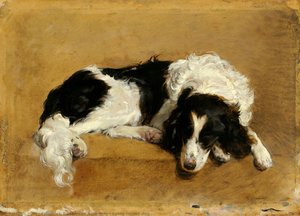
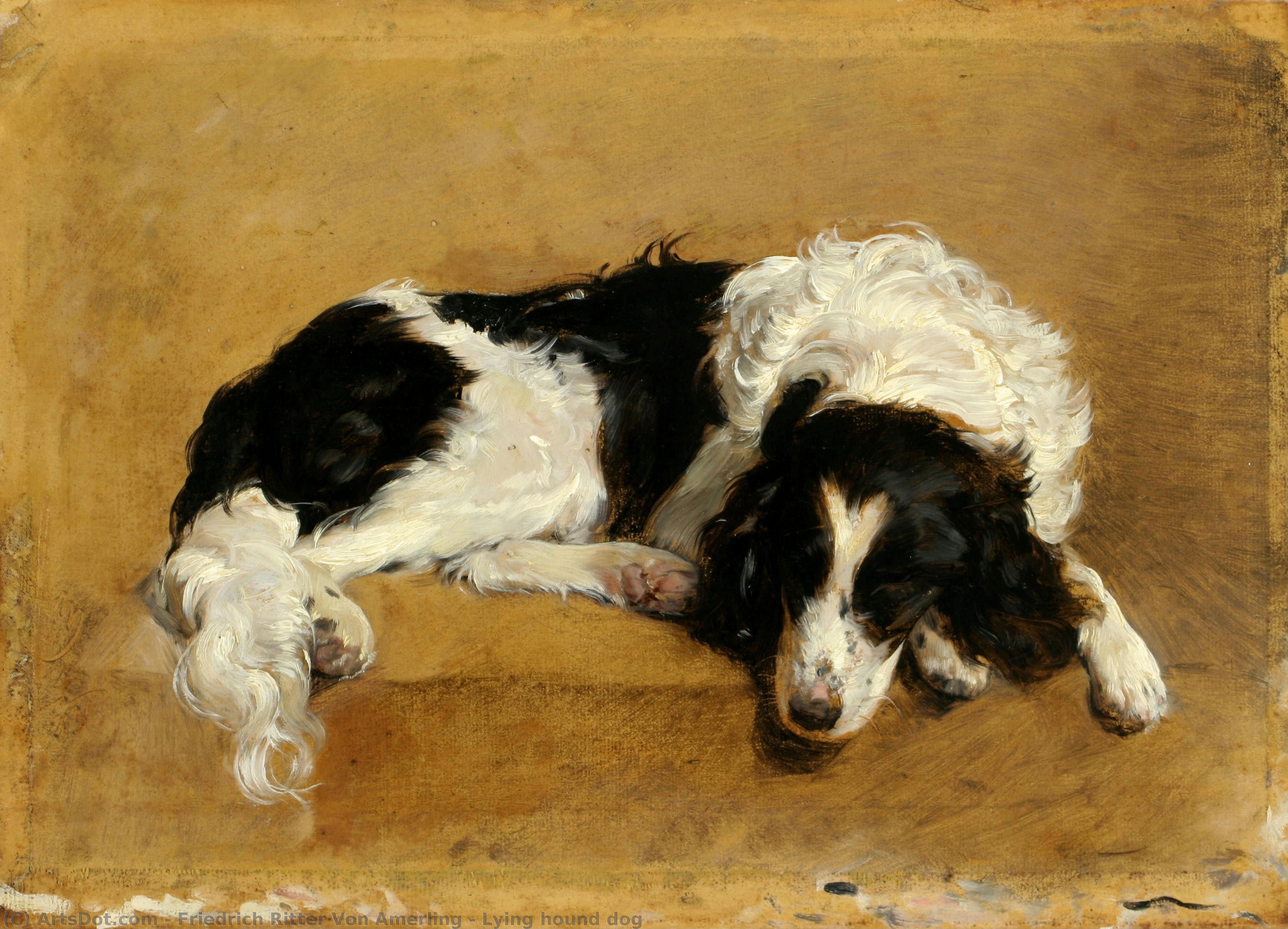
Lying hound dog
 Oil
Oil- WallArt
- Academic Realism
 19th Century
 42.0 x 30.0 cm
 Regional Gallery in Liberec
 Read More
Hand Made Oil Reproduction
Hand-painted oil on canvas in your size and frame, made to order by our artists. ( Buy Print Buy Image)




































Pick from our preset sizes that match the artwork's original proportions.

You may enter your own dimensions to fit a specific frame or space. If your selected size does not match the original image's proportions, we will either crop the artwork or extend the painting with additional hand-painted elements. A digital mockup will be sent for your approval before production begins.
Please note that the on-screen preview does not reflect the actual cropping or extension. Only the mockup will accurately show the final composition.
While custom sizes are available, we recommend selecting a dimension from the predefined list to preserve the original proportions.
After order, ArtsDot.com team will email client for instructions and provide a mockup preview
Worldwide Delivery () in 3/4 weeks instead of standard 5 weeks. (17 August). No compromise on quality.

Free Worldwide Express Shipping

High-Quality Linen Canvas

Full Shipping Insurance

Customs Tax Refund Guarantee

True Color Matching Guarantee

60-Day Return Policy (Defects Only)

100% Money-Back Guarantee

Bulk Discount Offer
 Glass option is only available in size under 110 CM

Lying hound dog
Reproduction Medium
Reproduction Size
-


Total Price
$ 263
Artwork Description
A Moment of Quietude: The Soulful Presence of the Lying Hound Dog
In the quiet corners of 19th-century academic realism, few subjects capture the essence of domestic tranquility quite like Friedrich Ritter von Amerling’s Lying Hound Dog. This intimate portrait invites the viewer into a private, hushed sanctuary where time seems to have slowed to a rhythmic, peaceful crawl. The composition centers on a canine subject, rendered with such tactile precision that one can almost feel the texture of its black and white fur against the warmth of the floor. As the dog rests with its head lifted in a state of gentle alertness or perhaps mid-dream, it serves as an anchor for the entire scene, embodying a profound sense of companionship and stillness that resonates deeply with anyone seeking a touch of serenity in their living space.
The mastery of Amerling lies in his ability to elevate a simple, everyday moment into a sophisticated study of light and atmosphere. The background, bathed in a soft, golden-yellow hue, provides a luminous contrast to the starker tones of the dog’s coat, creating a glow that feels both nostalgic and comforting. This use of color is not merely decorative; it establishes a warm, enveloping environment that cradles the subject. Scattered within this domestic landscape are subtle, evocative details—a clock perched upon the wall and the delicate presence of bottles in the periphery—which ground the painting in a tangible reality. These elements suggest a lived-in space, a home where the passage of time is marked not by urgency, but by the steady, peaceful breathing of a loyal companion.
For the discerning collector or interior designer, this piece offers much more than mere decoration; it provides an emotional anchor for a room. The painting’s classical roots and academic precision make it a versatile masterpiece, capable of lending an air of aristocratic elegance to a traditional study or adding a soulful, organic warmth to a contemporary lounge. The interplay between the subject's watchful gaze and the surrounding stillness creates a captivating tension that draws the eye and holds it. To possess a reproduction of this work is to bring a piece of Viennese Romanticism into the modern home, offering a perennial window into a world of grace, dignity, and the timeless beauty found in life's most quiet, unobserved moments.
Related Artworks
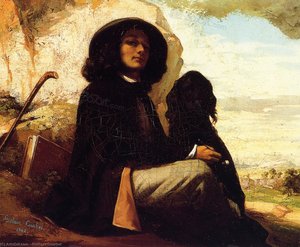
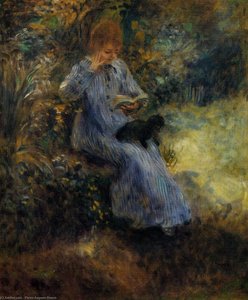
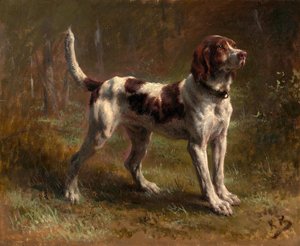
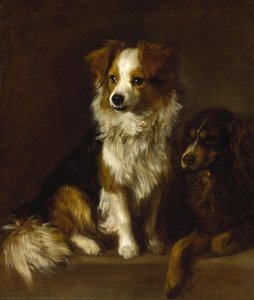
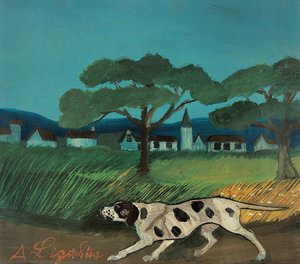
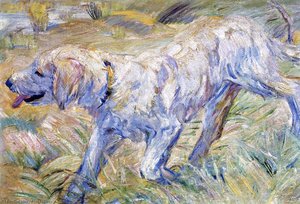
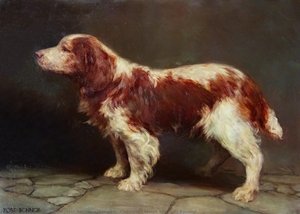
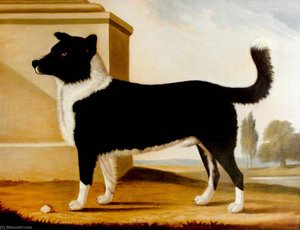
Artist Biography
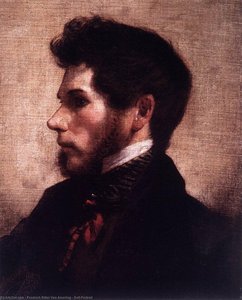
Friedrich Ritter von Amerling: A Master of Academic Portraiture
Friedrich Ritter von Amerling (b. 1803, Wien, d. 1887, Wien) stands as a prominent figure in Austrian art history, celebrated for his unwavering dedication to the academic tradition and his remarkable ability to capture the dignity and grace of aristocratic subjects during the Romantic era. Born into a family of craftsmen—a lineage that instilled within him an appreciation for meticulous detail and skillful execution—Amerling embarked on his artistic journey at the Akademie der bildenden Künste in Vienna, where he honed his talents under the tutelage of influential artists who championed classical ideals.- Early Training & Influences: Amerling’s formative years were marked by exposure to the prevailing artistic sensibilities of his time, notably those espoused by William Adolphe Bouguereau, whom he regarded as a kindred spirit in prioritizing realism and compositional harmony.
- Landscape Painting Beginnings: Initially drawn to landscape painting—a genre favored by many Viennese artists—Amerling swiftly established himself as a proficient interpreter of the Austrian Alps and Danube Valley. His canvases conveyed not merely visual impressions but also an underlying sense of grandeur and spiritual contemplation.
The Pursuit of Academic Realism
Amerling’s artistic philosophy centered on achieving meticulous accuracy in portraying his subjects—primarily portraits of nobility—through painstaking observation and skillful technique. He adhered rigorously to the principles of academic painting, prioritizing anatomical correctness, idealized beauty, and a carefully constructed pyramidal composition. This commitment to tradition reflects the broader cultural climate of Vienna during the mid-19th century, where artistic excellence was inextricably linked to upholding established conventions.- Notable Works: Among his most enduring achievements are portraits depicting figures such as Bertel Thorvaldsen—the celebrated sculptor—Ludmilla Amerling (his daughter), and numerous members of Viennese aristocratic families. These paintings exemplify Amerling’s mastery of chiaroscuro, utilizing subtle gradations of light and shadow to sculpt form and imbue his subjects with psychological depth.
- Technique & Style: Amerling's distinctive style was characterized by a deliberate restraint in color palettes—often favoring muted tones—and an unwavering focus on capturing the textures and nuances of skin, drapery, and hair. His meticulous brushwork contributed to the luminous quality of his canvases, creating images that resonate with timeless beauty.
Influence & Legacy
Friedrich Ritter von Amerling’s influence extended beyond his own oeuvre, shaping the artistic sensibilities of subsequent generations and solidifying the academic tradition's position within Viennese art. His unwavering devotion to classical ideals served as a counterpoint to emerging Impressionist tendencies, ensuring that realism and idealized beauty continued to hold sway in Austrian painting for decades afterward. Today, Amerling’s works reside primarily in museums across Europe—including Musée Maurice Denis in Paris—where they continue to inspire admiration for their technical brilliance and expressive power.- Contemporary Comparisons: Comparing Amerling's work with that of Claude Monet or Pierre-Auguste Renoir reveals a fundamental divergence in artistic vision. While Impressionists sought to capture fleeting moments of sensory experience, Amerling prioritized conveying enduring qualities of character and dignity through meticulously rendered portraits.
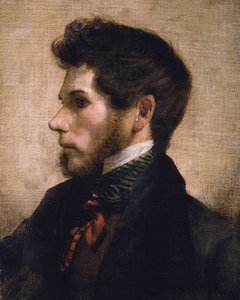
friedrich ritter von amerling
1803 - 1887
Quick Facts
- Artistic Movement Or Style: Academicism
- Artists Or Movements Influenced By This Artist: ['École de Barbizon']
- Artists Who Influenced This Artist: ['William Adolphe Bouguereau']
- Date Of Birth: 1803
- Date Of Death: 1887
- Full Name: Friedrich Ritter von Amerling
- Nationality: Austrian
- Notable Artworks:
- Mountain Landscape with River
- Portrait of a Young Woman
- Place Of Birth: Vienna, Austria
Related Articles

White on Canvas: 10 Masterpieces & Timeless Elegance for Your Home Decor
Explore 10 iconic white paintings by Monet, Whistler & Rothko! Discover the stories behind these serene masterpieces and their impact on art history. Find museum-quality reproductions for your home decor at .

Dark Masterpieces: 10 Iconic Paintings Dominated by Black Tones |
Explore 10 iconic paintings dominated by black tones, from Rembrandt’s chiaroscuro to Goya's dark expressions. Discover the stories behind these masterpieces & find museum-quality art reproductions for your home at .

Monochrome Visions: Exploring the Aesthetic & Historical Significance of Black & White Photography
Explore the rich history & artistic power of black and white photography. From early techniques to iconic masters like Ansel Adams, discover why monochrome continues to captivate art lovers today. Expert insights for collectors.

Mars Black Masterpieces: 10 Iconic Paintings & Timeless Art Decor Ideas
Delve into the power of 'Mars Black' with 10 iconic paintings by masters like Rembrandt & Caravaggio. Explore dramatic chiaroscuro, gothic art, and timeless beauty. Find museum-quality reproductions & elevate your home decor on .
The Subtleties of White: Exploring Absence, Light & Symbolism in Art History
Explore the profound symbolism & history of white in art! From ancient purity to modern abstraction, discover how artists have used absence & light. Expert insights from ArtsDot.