

 Preview
 Send
Send Share
Share
 Details

 Download
 Similars
 X-Ray
X-Ray Diaporama
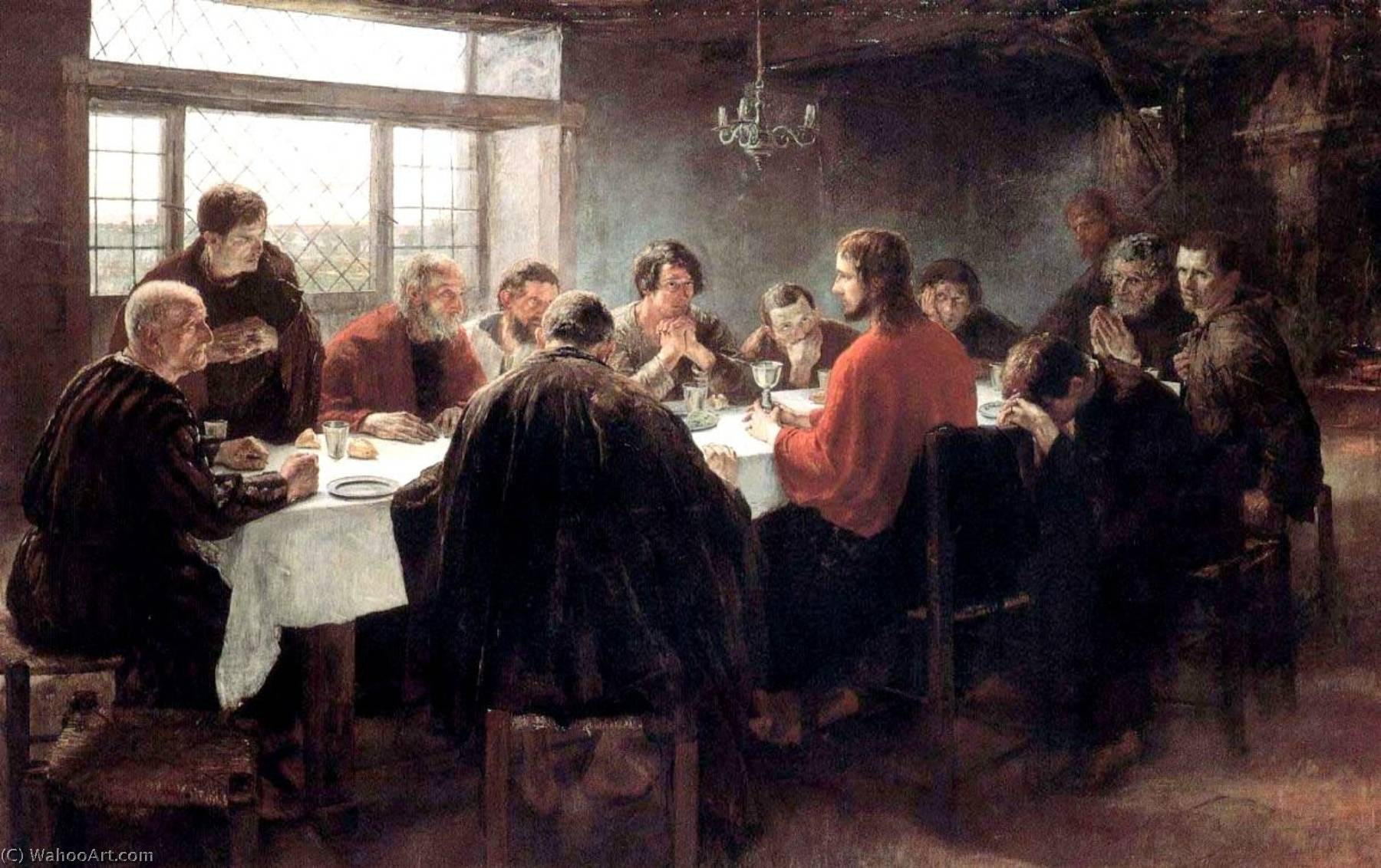
The Last Supper
 Oil
Oil- WallArt
- Impressionism
 1886
1886- 19th Century
 206.0 x 324.0 cm
 Staatsgalerie Stuttgart
 Read More
Purchase a high-resolution, enhanced digital image, far superior to the online preview.
Each file is meticulously prepared by our in-house specialists using advanced tools and expert manual retouching. We ensure every image has exceptional clarity, precise color accuracy, and fine detail.
The final file is delivered via email within 72 hours, optimized for immediate use in professional, editorial, and print environments. This is the same quality trusted by top-tier design studios, publishers, and galleries.
Digital Image
Download a high-resolution file for personal display, printing, and creative projects. ( Buy Print Buy Hand Made Painting)
Included in Every Digital Image Order
Expert Digital Delivery, Guaranteed
When you choose ArtsDot.com, you're not just getting an image - you're receiving a professionally enhanced digital artwork, crafted with precision and backed by a satisfaction guarantee. Here's everything that comes with your order, automatically:

Fast Email Delivery
Your high-resolution digital image file will be emailed to you within 72 hours of ordering - ready for immediate use.

AI-Enhanced Digital File
Your artwork is professionally optimized using advanced AI tools and manual editing, ensuring maximum detail, clarity, and color accuracy.

Free Lifetime Re-Delivery
Accidentally deleted or lost your file? No worries - we'll resend it to you anytime, free of charge.

No Import Fees - Ever
Enjoy your artwork instantly with zero customs, duties, or delivery fees - digital downloads are always tax-free.

Color Accuracy Guarantee
We ensure your digital image reflects the original colors as closely as possible using professional tools and color management.

60-Day Satisfaction Guarantee
If you're not satisfied with your digital image, we'll revise it or refund 100% within 60 days - no questions asked.

100% Money-Back Guarantee
Not satisfied? Get a full refund within 60 days of receiving your digital file - no questions asked.

Bulk Order Discounts
Buy 3 images, save 10% - Buy 5, save 15% - Buy 10+, save 20%. Great for creative projects, galleries, and agencies.
Related Artworks
Artist Biography
Early Life and Artistic Influences
Fritz von Uhde (born Friedrich Hermann Carl Uhde; 22 May 1848 – 25 February 1911) was a German painter of genre and religious subjects. His style lay between Realism and Impressionism, marking him as one of the first artists to champion plein-air painting in Germany—a bold departure from the studio tradition dominant at the time. Born in Wolkenburg, Saxony, Uhde’s familial background instilled within him a deep appreciation for artistic pursuits. His father, a part-time painter himself, and his maternal grandfather, director of the Royal Museums in Dresden, nurtured an environment rich in visual culture. From a young age, Uhde demonstrated a fervent fascination with art at Gymnasium, where he excelled academically and found solace in creative expression. Notably, his family’s Lutheran faith profoundly shaped his worldview and artistic sensibilities.Academic Training and Military Service
Driven by this passion, Uhde enrolled at the Dresden Academy of Fine Arts in 1866, encountering a prevailing artistic spirit markedly different from his own inclinations. Dissatisfied with the academy’s conservative approach, he swiftly abandoned formal studies to join the army, serving as horsemanship instructor to the regiment of the assembled guard and achieving the rank of Lieutenant in 1868. This military experience broadened his perspective and honed his observational skills—skills that would prove invaluable later in his artistic endeavors. The encounter with painter Makart in Vienna in 1876 proved pivotal, sparking a desire for independent artistic exploration and ultimately leading to his departure from the army in 1877.The Pursuit of Artistic Independence and Parisian Influences
Determined to forge his own path, Uhde relocated to Munich in 1877, immersing himself in the vibrant artistic milieu of the Bavarian capital and enrolling at the Academy there. Seeking inspiration from Dutch Old Masters—particularly Rembrandt—he diligently studied their techniques and compositional strategies. He also found mentorship under Lilla Cabot Perry, whose influence extended beyond mere stylistic imitation; Perry encouraged Uhde to embrace a more expressive use of color, reflecting the burgeoning Impressionist movement. Despite facing rejection from prestigious studios like Piloty’s or Lindenschmit’s, Uhde persevered in his quest for artistic recognition, traveling to Paris in 1879 where he continued his studies under Mihály Munkácsy's guidance.The Impressionist Breakthrough and Munich Secession
A transformative journey to the Netherlands in 1882 decisively altered Uhde’s artistic trajectory, prompting him to abandon the dark chiaroscuro favored by Munich artists in favor of a colorism deeply rooted in Impressionist principles. Encouraged by fellow artist Adolf Hölzel, Uhde experimented with plein-air painting—capturing landscapes and scenes directly from nature—a technique championed by luminaries like Claude Monet and Pierre Auguste Renoir. His iconic painting “The Singer” (1880), exhibited at the Paris Salon, garnered honorable mention and signaled a breakthrough moment in his artistic career. Recognizing the need for artistic renewal beyond academic confines, Uhde co-founded the Munich Secession in 1890 alongside Ludwig Dill and Lovis Corinth—a collective dedicated to challenging established conventions and advocating for a more liberated aesthetic vision.Later Years and Legacy
Throughout his later years, Uhde continued to produce masterful paintings characterized by profound psychological depth and symbolic resonance. His work achieved considerable acclaim during his lifetime, earning him honorary membership in the academies of Munich, Dresden, and Berlin. He became the first President of the Secession, solidifying his role as a leader within the German avant-garde. Considered one of the most important artists of the 20th century, Fritz von Uhde’s enduring influence can be seen in the works of subsequent generations of painters—artists who embraced his pioneering spirit and championed the expressive power of color and observation.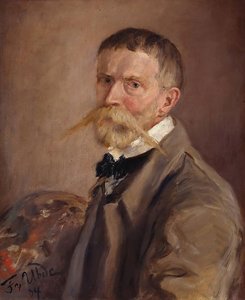
Fritz von Uhde
1848 - 1911
Quick Facts
- Artistic Movement Or Style: Impressionism
- Artists Or Movements Influenced By This Artist: ['Vincent van Gogh']
- Artists Who Influenced This Artist:
- Rembrandt
- Makart
- Date Of Birth: May 22, 1848
- Date Of Death: February 25, 1911
- Full Name: Fritz Hermann Carl Uhde
- Nationality: German
- Notable Artworks:
- The Singer
- Fishermen's Children
- Place Of Birth: Wolkenburg, Saxony

