 Preview
 Send
Send Share
Share
 Details

 Download
 Similars
 X-Ray
X-Ray Diaporama
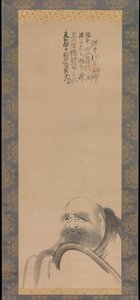
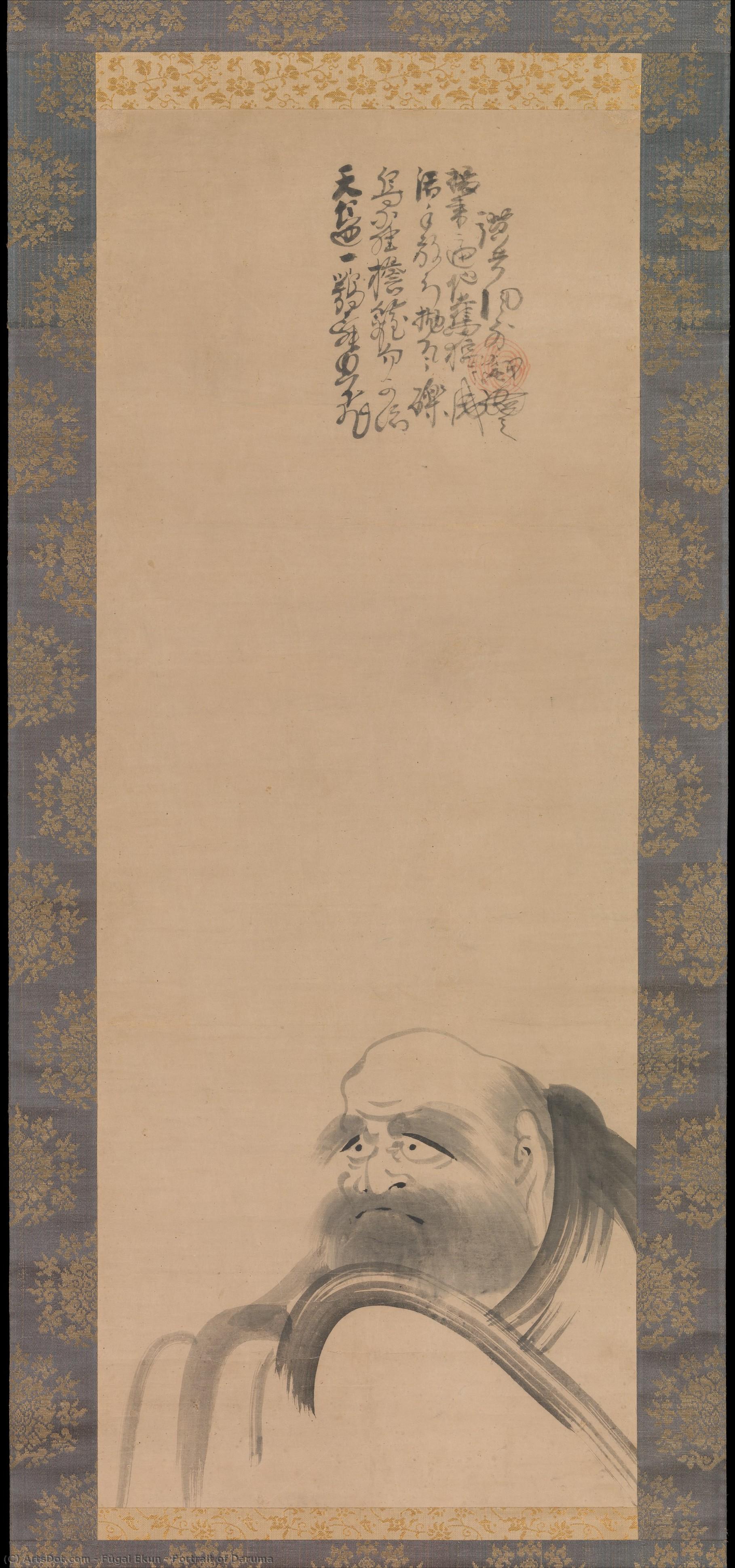
Portrait of Daruma
 601
601 78.0cm x 31.0cm
 Read More
Hand Made Oil Reproduction
Hand-painted oil on canvas in your size and frame, made to order by our artists. ( Buy Print Buy Image)




































Pick from our preset sizes that match the artwork's original proportions.

You may enter your own dimensions to fit a specific frame or space. If your selected size does not match the original image's proportions, we will either crop the artwork or extend the painting with additional hand-painted elements. A digital mockup will be sent for your approval before production begins.
Please note that the on-screen preview does not reflect the actual cropping or extension. Only the mockup will accurately show the final composition.
While custom sizes are available, we recommend selecting a dimension from the predefined list to preserve the original proportions.
After order, ArtsDot.com team will email client for instructions and provide a mockup preview
Worldwide Delivery () in 3/4 weeks instead of standard 5 weeks. (20 August). No compromise on quality.

Free Worldwide Express Shipping

High-Quality Linen Canvas

Full Shipping Insurance

Customs Tax Refund Guarantee

True Color Matching Guarantee

60-Day Return Policy (Defects Only)

100% Money-Back Guarantee

Bulk Discount Offer
 Glass option is only available in size under 110 CM

Portrait of Daruma
Reproduction Medium
Reproduction Size
-


Total Price
$ 263
Artwork Description
Related Artworks

Artist Biography
A Life Beyond the Wind: The Enigmatic Journey of Fūgai Ekun
Born in 1568, amidst the turbulent transition between the Momoyama and Edo periods of Japan, Fūgai Ekun emerged as a singular voice within the landscape of Zen painting. His very name – “Beyond the Wind” – hints at the unconventional path he would forge, one defined by solitude, spiritual seeking, and an intensely personal artistic expression. Unlike many artists bound to courtly patronage or established schools, Ekun’s life was marked by wandering, a deliberate rejection of convention that profoundly shaped his aesthetic. He began his monastic journey early, entering the Shingon sect at the tender age of four or five before transitioning to the Soto Zen tradition, laying the foundation for a lifetime dedicated to meditation and self-discovery. This early immersion in Buddhist principles would become inextricably linked with his artistic endeavors.The Ascetic Path and the Rise of Zenga
Ekun’s formative years were spent traversing Japan, seeking enlightenment through rigorous Zen training at various temples. Around 1596, he embarked on a two-decade pilgrimage, absorbing diverse influences yet remaining steadfastly independent. This period was crucial in developing his unique artistic vision. He briefly held the position of abbot at Jōganji temple, but found himself increasingly drawn to a more isolated existence. He famously retreated into mountain caves, embracing a life of deprivation and intense contemplation – a practice reminiscent of Bodhidharma, the legendary founder of Zen Buddhism. It was during this time that he began creating ink paintings as offerings to local farmers in exchange for rice, a testament to his humble lifestyle and desire to connect with the common people. This unconventional approach foreshadowed his pivotal role in the development of *Zenga*, a style of Zen painting characterized by its directness, spontaneity, and focus on capturing the essence of enlightenment through minimal brushstrokes. Ekun’s paintings weren't intended for display in elite circles; they were born from necessity and offered as tools for spiritual reflection to those who encountered them.Daruma and Hotei: Vessels of Enlightenment
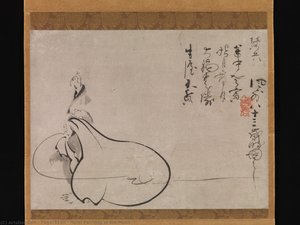
While Ekun explored landscapes and self-portraits, his most enduring legacy lies in his depictions of Daruma and Hotei. Daruma, the semi-mythical founder of Zen Buddhism, became a recurring motif – not as a grand historical figure, but as an embodiment of unwavering determination and the pursuit of enlightenment through rigorous practice. Ekun’s Darumas are often depicted with piercing eyes that seem to gaze directly into the viewer's soul, conveying a sense of profound inner strength and resilience. Similarly, his portrayals of Hotei – the “Laughing Buddha” – transcend mere representation. He captured not just the jovial exterior but also the underlying wisdom and compassion of this beloved figure. Ekun’s masterful use of ink—often employing only a few wet, gray strokes accented with precise black lines—allowed him to convey an extraordinary depth of emotion and spiritual insight. He deliberately eliminated background detail, focusing instead on the essential form and expressive power of his subjects. This minimalist approach was revolutionary for its time, anticipating later developments in abstract expressionism and emphasizing the importance of *ma* – negative space – in Zen aesthetics.A Lasting Legacy: Ekun’s Influence and Historical Significance
Despite living a relatively secluded life, far from the major cultural centers of Japan, Fūgai Ekun left an indelible mark on the art world. His paintings, though not widely circulated during his lifetime, gained recognition for their unique intensity and spiritual depth. His work is now held in prestigious collections such as the Metropolitan Museum of Art in New York and the Los Angeles County Museum of Art, a testament to its enduring appeal. Ekun’s influence extends beyond the realm of painting; he embodies the spirit of Zen Buddhism itself – a rejection of materialism, an embrace of simplicity, and a relentless pursuit of enlightenment through direct experience. He challenged conventional artistic norms, paving the way for future generations of Zen artists who sought to express their spiritual insights through spontaneous brushwork and minimalist compositions. His life serves as a powerful reminder that true artistry often arises not from formal training or societal expectations, but from a deep inner journey and an unwavering commitment to one’s own unique vision.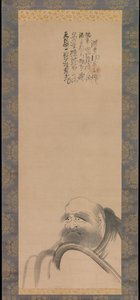
fūgai ekun
1568 - 1654 , Japan
Quick Facts
- Artistic Movement Or Style: Zen painting
- Date Of Birth: 1568
- Date Of Death: 1654
- Full Name: Fūgai Ekun
- Nationality: Japanese
- Notable Artworks:
- Portrait of Daruma
- Hotei Pointing at the Moon
- Place Of Birth: Tokyo, Japan