 Preview
 Send
Send Share
Share
 Details

 Download
 Similars
 X-Ray
X-Ray Diaporama
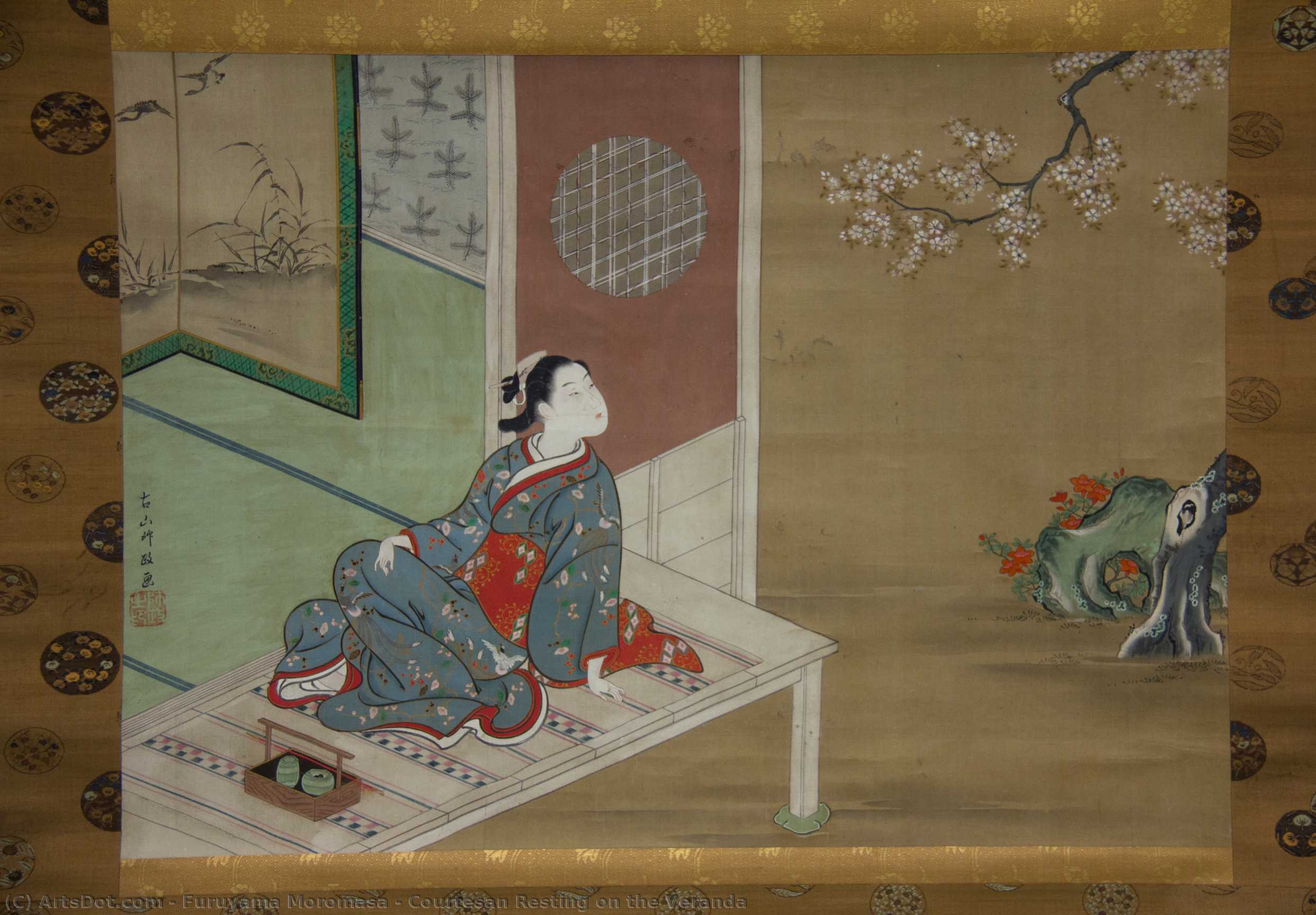
Courtesan Resting on the Veranda
 701
701 42.0cm x 59.0cm
 Read More
Hand Made Oil Reproduction
Hand-painted oil on canvas in your size and frame, made to order by our artists. ( Buy Print Buy Image)




































Pick from our preset sizes that match the artwork's original proportions.

You may enter your own dimensions to fit a specific frame or space. If your selected size does not match the original image's proportions, we will either crop the artwork or extend the painting with additional hand-painted elements. A digital mockup will be sent for your approval before production begins.
Please note that the on-screen preview does not reflect the actual cropping or extension. Only the mockup will accurately show the final composition.
While custom sizes are available, we recommend selecting a dimension from the predefined list to preserve the original proportions.
After order, ArtsDot.com team will email client for instructions and provide a mockup preview
Worldwide Delivery () in 3/4 weeks instead of standard 5 weeks. (27 August). No compromise on quality.

Free Worldwide Express Shipping

High-Quality Linen Canvas

Full Shipping Insurance

Customs Tax Refund Guarantee

True Color Matching Guarantee

60-Day Return Policy (Defects Only)

100% Money-Back Guarantee

Bulk Discount Offer
 Glass option is only available in size under 110 CM

Courtesan Resting on the Veranda
Reproduction Medium
Reproduction Size
-


Total Price
$ 263
Related Artworks







Artist Biography
A Glimpse into Edo's Vibrant Soul: The Art of Furuyama Moromasa
Furuyama Moromasa, a name perhaps less familiar than some of his contemporaries in the world of Japanese ukiyo-e, nevertheless offers a captivating window into 18th-century Edo (modern Tokyo). Born within the bustling heart of the city itself, he emerged as a significant figure during a period of remarkable artistic flourishing. His lineage connects him to a distinguished line – his father, Furuyama Moroshige, was himself an artist, and his grandfather, Hishikawa Moronobu, stands as a foundational pillar of the ukiyo-e movement. This heritage instilled in Moromasa a deep understanding of traditional techniques while simultaneously encouraging him to forge his own distinct path within the evolving artistic landscape. While precise details about his personal life remain elusive, lost to the currents of time, his artwork speaks volumes about the era he inhabited and the society he observed with such keen perception.Genre Scenes and the Dawn of Perspective
Moromasa’s artistry is characterized by a vibrant exploration of everyday life in Edo. Unlike some ukiyo-e artists who focused solely on courtesans or actors, Moromasa embraced a broader spectrum of subjects – sporting contests, lively genre scenes depicting ordinary people, and detailed portrayals of the Yoshiwara district, the city's famed pleasure quarters. He possessed an exceptional ability to capture the energy and dynamism of these environments, conveying a sense of immediacy that draws viewers into the heart of Edo’s social fabric. What truly sets Moromasa apart, however, is his pioneering use of linear perspective within ukiyo-e prints. This technique, borrowed from European (megane-e) and Chinese artistic traditions, allowed him to depict interiors – tea houses, shops, and homes – with a newfound sense of depth and realism. It was a revolutionary development, transforming the visual language of Japanese printmaking and opening up exciting new possibilities for representing space and perspective. This innovation wasn't merely technical; it fundamentally altered how viewers engaged with the depicted scenes, creating a more immersive and believable experience.Masterpieces Unveiled: Mapping Edo’s Districts
Moromasa is perhaps best known for his monumental handscroll paintings, Azuma yarō (Theater District) and Shinobu-yama (Brothel District). These breathtaking works, measuring an astonishing 13 to 16 meters in length respectively, offer unparalleled panoramic views of Edo’s entertainment districts. They are not simply depictions; they are immersive maps of social life, teeming with figures engaged in a myriad of activities – actors preparing for performances, merchants hawking their wares, and patrons enjoying the vibrant atmosphere. The sheer scale of these paintings is remarkable, demanding to be experienced as a continuous narrative rather than discrete images. Today, Azuma yarō resides within the Central Library in Edinburgh, while Shinobu-yama finds its home at the Museo Stibbert in Florence, testament to their enduring artistic and historical significance. These scrolls provide invaluable insights into the urban planning, architecture, and social customs of Edo during the mid-18th century.Influences and Legacy
While firmly rooted within the Furuyama school established by his grandfather, Moromasa’s work demonstrates a willingness to experiment with new techniques and perspectives. The influence of megane-e is undeniable in his adoption of linear perspective, but he also drew inspiration from broader artistic trends circulating throughout Japan at the time. His depictions of ‘beautiful women’ (bijin-ga) reflect the popular taste for elegant portraits that characterized the ukiyo-e genre. Though active primarily until around the mid-1700s, Moromasa left a lasting legacy. He helped to broaden the scope of ukiyo-e art beyond traditional subjects and pushed the boundaries of visual representation through his innovative use of perspective. His monumental handscroll paintings remain unparalleled in their scale and detail, offering an extraordinary glimpse into the vibrant heart of Edo’s social life – a testament to the enduring power of his artistic vision. He also wrote several texts on engraving techniques, further contributing to the development of ukiyo-e printmaking.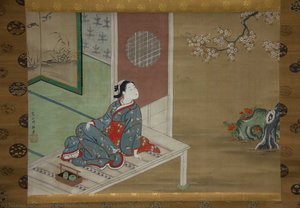
furuyama moromasa
Japan
Quick Facts
- Artistic Movement Or Style: Ukiyo-e
- Artists Who Influenced This Artist: ['Hishikawa Moronobu']
- Full Name: Furuyama Moromasa
- Nationality: Japanese
- Notable Artworks:
- Azuma yarō (theater district)
- Shinobu-yama (brothel district)