 Preview
 Send
Send Share
Share
 Details

 Download
 Similars
 X-Ray
X-Ray Diaporama
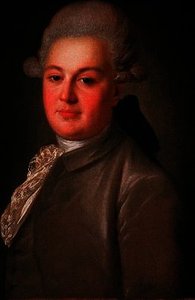
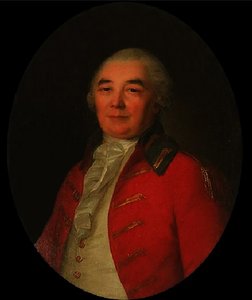
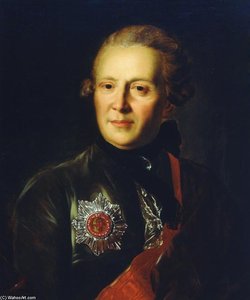
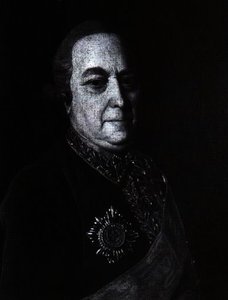
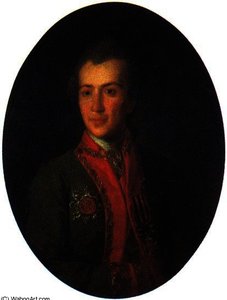
Portrait of Senator Count Artemy Vorontsov , after


 Read More
Hand Made Oil Reproduction
Hand-painted oil on canvas in your size and frame, made to order by our artists. ( Buy Print Buy Image)




































Pick from our preset sizes that match the artwork's original proportions.

You may enter your own dimensions to fit a specific frame or space. If your selected size does not match the original image's proportions, we will either crop the artwork or extend the painting with additional hand-painted elements. A digital mockup will be sent for your approval before production begins.
Please note that the on-screen preview does not reflect the actual cropping or extension. Only the mockup will accurately show the final composition.
While custom sizes are available, we recommend selecting a dimension from the predefined list to preserve the original proportions.
After order, ArtsDot.com team will email client for instructions and provide a mockup preview
Worldwide Delivery () in 3/4 weeks instead of standard 5 weeks. (24 August). No compromise on quality.

Free Worldwide Express Shipping

High-Quality Linen Canvas

Full Shipping Insurance

Customs Tax Refund Guarantee

True Color Matching Guarantee

60-Day Return Policy (Defects Only)

100% Money-Back Guarantee

Bulk Discount Offer
 Glass option is only available in size under 110 CM

Portrait of Senator Count Artemy Vorontsov , after
Reproduction Medium
Reproduction Size
-


Total Price
S$ 339
Artwork Description
A Glimpse into 18th-Century Russian Aristocracy: Portrait of Senator Count Artemy Vorontsov
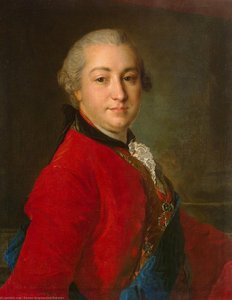
This striking portrait, painted in 1768 by Fyodor Stepanovich Rokotov, offers a compelling window into the world of 18th-century Russian nobility. The subject is Senator Count Artemy Vorontsov, a prominent figure within the Imperial court. Rokotov masterfully captures not just his likeness but also an air of quiet authority and intelligence. The composition features Vorontsov centrally positioned, gazing directly at the viewer with an unwavering gaze that commands attention. Two figures are subtly placed in the background, hinting at the social context of this formal portrait – likely a gathering or official event. The overall impression is one of refined elegance and understated power, characteristic of the Russian aristocracy during Catherine the Great's reign.Rokotov’s Artistic Style: Psychological Realism & Atmospheric Depth
Fyodor Rokotov was renowned for his unique style that blended elements of portraiture with a profound psychological insight. Unlike some of his contemporaries who favored grand, theatrical poses, Rokotov focused on capturing the inner character and emotional state of his subjects. This is evident in Vorontsov’s expression – it's not merely a representation of features but an attempt to convey something of his personality. Rokotov achieved this through subtle nuances in lighting, delicate brushwork, and a muted color palette that creates a sense of atmospheric depth. His technique involved layering thin glazes of paint, resulting in luminous skin tones and soft transitions between light and shadow – hallmarks of his distinctive style. Rokotov’s work is often compared to the Old Masters, demonstrating his mastery of classical portraiture techniques while forging his own unique path.Historical Context & The Patronage System
The late 18th century in Russia was a period of significant social and cultural change under Catherine the Great. The aristocracy flourished, commissioning portraits as symbols of their status and wealth. Rokotov benefited greatly from this patronage system, becoming one of the most sought-after portraitists in Moscow. This particular portrait likely served both as a personal keepsake for Vorontsov and as a demonstration of his standing within the Russian Empire. The Senator’s attire – the elaborate wig, formal suit with white collar, and meticulously groomed beard – all adhere to the strict conventions of aristocratic fashion at the time, further emphasizing his position in society. Rokotov's ability to secure such commissions speaks to his artistic reputation and the demand for portraits that captured both likeness and character.Symbolism & Emotional Resonance
Beyond the obvious depiction of a prominent nobleman, this portrait subtly employs symbolism. The direct gaze establishes a connection between the subject and the viewer, inviting contemplation about Vorontsov’s life and role in Russian society. The muted color palette and soft lighting contribute to an overall feeling of quiet dignity and introspection. Rokotov's skill lies in conveying not just what he *saw*, but also what he *felt* when observing his sitter. The portrait evokes a sense of calm authority, intelligence, and perhaps even a hint of melancholy – emotions that resonate with viewers across time periods. It’s this ability to capture the human spirit that elevates Rokotov's work beyond mere representation and into the realm of enduring art.Related Artworks
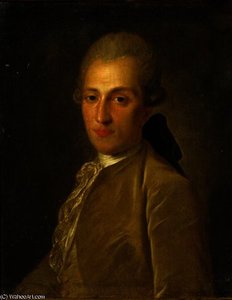
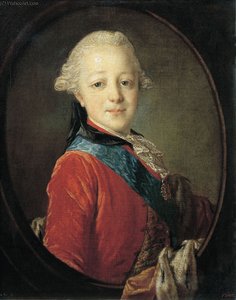
Artist Biography
The Soul of Imperial Russia: The Life and Legacy of Fyodor Rokotov
In the grand, sweeping tapestry of eighteenth-century Russian art, where many painters sought to capture the sheer opulence of the Romanov era through gilded frames and theatrical grandeur, Fyodor Stepanovich Rokotov emerged as a singular, introspective voice. Born into the humble circumstances of peasant serfdom within the Repnin estate, Rokotov’s ascent from the shadows of servitude to the heights of the Saint Petersburg Academy of Arts is nothing short of extraordinary. His journey was marked by a profound personal triumph; through astute financial maneuvering and unyielding dedication to his craft, he eventually secured his own freedom, allowing him to navigate the upper echelons of Moscow’s elite not merely as a servant, but as a master of the human spirit.
Rokotov’s artistry was defined by a departure from the rigid, formal portraiture that dominated his era. While his contemporaries often focused on the external trappings of status—the heavy silks, the intricate lace, and the imposing regalia of the aristocracy—Rokotov turned his gaze inward. He became a pioneer of psychological realism, a technique that sought to peel back the layers of social mask to reveal the flickering emotions and quiet contradictions beneath. His canvases do not merely present a likeness; they offer an intimate encounter with the subject's very essence, capturing fleeting glances and subtle shifts in expression that suggest a deep, unfolding narrative.
Mastery of Light and Atmosphere
The technical brilliance of Rokotov lies in his revolutionary use of optical effects to create a sense of living presence. He possessed an uncanny ability to manipulate light, employing atmospheric haze and diffused luminosity to soften the boundaries between the subject and their environment. This mastery of chiaroscity and airiness allowed him to imbue his portraits with a dreamlike, almost ethereal quality that anticipated the innovations of later movements like Impressionism. By integrating his subjects into a soft, breathing atmosphere, he achieved a level of immediacy that makes his work feel remarkably modern even centuries after its creation.
His most celebrated achievements are often characterized by this delicate balance of elegance and intimacy. Among his legendary contributions to the art world are:
- The Portrait of Alexandra Struyskaya: Often whispered about as the "Mona Lisa of Russia," this masterpiece stands as a pinnacle of eighteenth-century painting, renowned for its hauntingly beautiful gaze and subtle emotional depth.
- Portrait of Countess Elisabeth Santi: A work that exemplifies his ability to blend Rococo grace with a profound sense of character.
- Lady in a Pink Dress: A testament to his skill in rendering texture, light, and the soft, romantic nuances of the era.
A Lasting Impression on Russian Art
Though Rokotov chose to spend much of his later life in Moscow, far from the academic rigors of Saint Petersburg, his influence resonated throughout the Russian Empire. He avoided the trap of mere ornamentation, choosing instead to act as a poet of the human visage. His refusal to engage in the purely decorative allowed him to create a body of work that serves as a vital historical record—not just of what the Russian aristocracy looked like, but of how they felt during a period of immense social and intellectual transformation.
Ultimately, the significance of Fyodor Rokotov lies in his ability to find the universal within the particular. Through his lens, the aristocratic subjects of the Enlightenment are transformed from static icons into breathing, thinking individuals. He left behind a legacy that redefined the boundaries of portraiture, proving that the most profound truths are often found not in the grandest gestures, but in the quietest, most subtle nuances of the human soul.
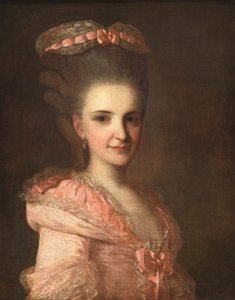
fyodor stepanovich rokotov
1730 - 1808 , Russia
Quick Facts
- Artistic Movement Or Style: Psychological Portrait
- Artists Or Movements Influenced By This Artist: ['Neoclassicism']
- Artists Who Influenced This Artist: ['Jean-Baptiste Simeon Chardin']
- Date Of Birth: Moscow, Russia (1736)
- Date Of Death: December 24, 1808
- Full Name: Fyodor Stepanovich Rokotov
- Nationality: Russian
- Notable Artworks:
- Portrait of Alexandra Struyskaya
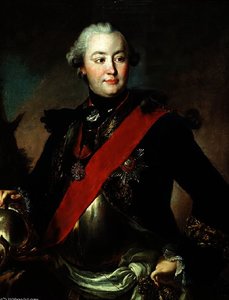
- Portrait of Count G.Olov.
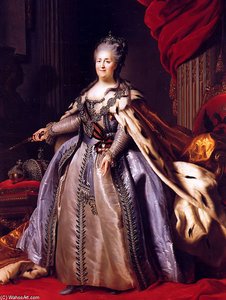
- Catherine II
- Place Of Birth: Moscow
Related Articles
Fyodor Rokotov: Intimacy & Enlightenment in Russian Portraiture
Explore the captivating portraits of Fyodor Rokotov, a master of 18th-century Russian art. Discover his unique psychological realism, Rococo elegance, and lasting influence on portrait painting. Learn about his iconic works & aristocratic patrons.
Borovikovsky: Portraiture, Enlightenment Ideals & Russian Aristocratic Identity
Explore the captivating portraits of Vladimir Borovikovsky, Russia's foremost artist of the Enlightenment era. Discover his influence on aristocratic image and sentimental style. Learn about his life, techniques & legacy.
Ivan Bilibin: A Synthesis of Folklore, Modernism & National Identity in Russian Illustration
Explore the enchanting world of Ivan Bilibin, a master Russian illustrator who synthesized folklore, Art Nouveau & national identity. Discover his iconic fairy tale illustrations and legacy with ArtsDot.
Reflections of Power: Aristocratic Life in Western Art & the Rococo Era
Explore the captivating world of aristocratic life through Western art history. Discover Rococo masterpieces & portraits of European nobility. Expert insights for collectors and enthusiasts.
The Gaze of Power: Aristocratic Portraiture & Dynastic Ambition Through the Ages
Explore the fascinating history of aristocratic portraiture & its reflection of power, wealth, and dynastic ambition. Expert insights for discerning collectors at ArtsDot.