

 Preview
 Send
Send Share
Share
 Details

 Download
 Similars
 X-Ray
X-Ray Diaporama
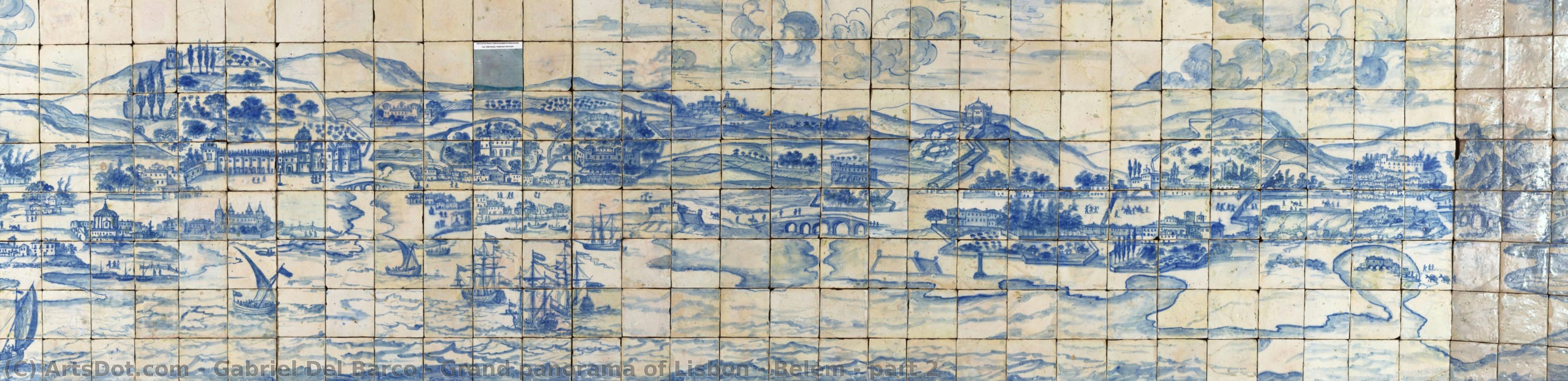
Grand panorama of Lisbon - Belém - part 2
 1700
1700 114.0 x 2247.0 cm
 National Azulejo Museum
 Read More
Purchase a high-resolution, enhanced digital image, far superior to the online preview.
Each file is meticulously prepared by our in-house specialists using advanced tools and expert manual retouching. We ensure every image has exceptional clarity, precise color accuracy, and fine detail.
The final file is delivered via email within 72 hours, optimized for immediate use in professional, editorial, and print environments. This is the same quality trusted by top-tier design studios, publishers, and galleries.
Digital Image
Download a high-resolution file for personal display, printing, and creative projects. ( Buy Print Buy Hand Made Painting)
Included in Every Digital Image Order
Expert Digital Delivery, Guaranteed
When you choose ArtsDot.com, you're not just getting an image - you're receiving a professionally enhanced digital artwork, crafted with precision and backed by a satisfaction guarantee. Here's everything that comes with your order, automatically:

Fast Email Delivery
Your high-resolution digital image file will be emailed to you within 72 hours of ordering - ready for immediate use.

AI-Enhanced Digital File
Your artwork is professionally optimized using advanced AI tools and manual editing, ensuring maximum detail, clarity, and color accuracy.

Free Lifetime Re-Delivery
Accidentally deleted or lost your file? No worries - we'll resend it to you anytime, free of charge.

No Import Fees - Ever
Enjoy your artwork instantly with zero customs, duties, or delivery fees - digital downloads are always tax-free.

Color Accuracy Guarantee
We ensure your digital image reflects the original colors as closely as possible using professional tools and color management.

60-Day Satisfaction Guarantee
If you're not satisfied with your digital image, we'll revise it or refund 100% within 60 days - no questions asked.

100% Money-Back Guarantee
Not satisfied? Get a full refund within 60 days of receiving your digital file - no questions asked.

Bulk Order Discounts
Buy 3 images, save 10% - Buy 5, save 15% - Buy 10+, save 20%. Great for creative projects, galleries, and agencies.
Related Artworks









Artist Biography
The Visionary of Lisbon: The Artistry of Gabriel del Barco
In the golden twilight of the seventeenth century, a master emerged from the streets of Madrid to reshape the visual landscape of Portugal. Gabriel del Barco, a figure whose life remains partially veiled by the mists of history, stands as a monumental pillar of the Baroque era. Though his early years are shrouded in relative obscurity, his arrival in Lisbon around 1669 signaled a transformative moment for Portuguese art. Trained under the watchful eye of the prominent painter Virgilio Barco Senior, del Barco inherited a profound legacy of dramatic illusionism and meticulous detail. This lineage of mastery allowed him to bridge the gap between Spanish tradition and the burgeoning aesthetic of the Portuguese court, creating a style that was as much about architectural grandeur as it was about emotional depth.
Del Barco’s early career in Lisbon was defined by his breathtaking command of scale. He quickly ascended to prominence through ambitious ceiling commissions, where he utilized the techniques of quadratura—the art of painting architectural perspectives—to dissolve the physical boundaries of a room. These expansive vistas were designed to transport the viewer upward, into a realm of celestial light and atmospheric depth. His ability to manipulate perspective was not merely a technical feat but a spiritual one, effectively creating a "bird's eye view" that offered a sense of divine oversight. This mastery of space would later become his hallmark, allowing him to capture the very soul of the city he came to call home.
A Legacy in Ceramic and Color
As his career matured, del Barco transitioned from the ephemeral heights of ceiling frescoes to the enduring permanence of tile painting. This evolution saw him become a pioneer of the azulejo tradition, a uniquely Portuguese medium where glazed ceramic tiles are assembled into intricate, narrative murals. In this medium, he found a new way to weave storytelling into the very fabric of architecture. His work in ceramics was characterized by a vibrant palette and a rhythmic arrangement of figures that breathed life into static walls. One of his most profound achievements lies in his ability to use the azulejo technique to document history itself.
The sheer scale of his decorative vision is perhaps best exemplified by his monumental panoramic depictions of Lisbon. These works serve as irreplaceable iconographic documents, capturing a city as it existed before the catastrophic earthquake of 1755. Through his tiles, we can wander through a lost world:
- The Grand Panorama of Lisbon: A staggering work measuring nearly 23 meters in length, documenting 14 kilometers of coastline from Algés to Xabregas.
- Architectural Preservation: His panels preserve the likenesses of St. George’s Castle, the Monastery of Jerónimos, and the Tower of Belém, providing a window into the pre-earthquake splendor of the Portuguese capital.
- The Pulse of Urban Life: Beyond mere architecture, his work captures the movement of the Ribeira Market, the activity of tide windmills, and the bustling energy of coaches and sedan chairs.
Symbolism and the Baroque Soul
Beyond the grand panoramas and architectural triumphs, del Barco possessed a rare ability to capture intimacy and quietude within the dramatic Baroque framework. In works such as "The Fisher of Hearts," painted in 1697, we see a departure from the monumental toward the melancholic. Here, the artist employs a palette of soothing blue tones to create a dreamlike atmosphere where time seems suspended. The composition focuses on a moment of profound stillness, using subtle gradations of pigment to master light and texture. This ability to balance the epic with the intimate—to move from the sweeping vistas of a coastline to the contemplative repose of a single figure—is what defines his true genius.
His narrative works, such as his interpretations of Ovid, further demonstrate his skill in ceramic storytelling. In these pieces, each tile functions as a miniature stage, capturing biblical or mythological scenes with a rhythmic vitality that guides the viewer's gaze across a mosaic landscape. Through this fusion of Spanish training and Portuguese medium, Gabriel del Barco did more than just paint; he created enduring legacies of color and light that continue to allow us to glimpse a vanished era of European splendor.
gabriel del barco
Spain
Quick Facts
- Artistic Movement Or Style: Baroque
- Date Of Birth: (Madrid)
- Date Of Death: Living
- Full Name: Gabriel del Barco
- Nationality: Spanish
- Notable Artworks: ['Grand panorama of Lisbon']
- Place Of Birth: Madrid, Spain

