 Preview
 Send
Send Share
Share
 Details

 Download
 Similars
 X-Ray
X-Ray Diaporama
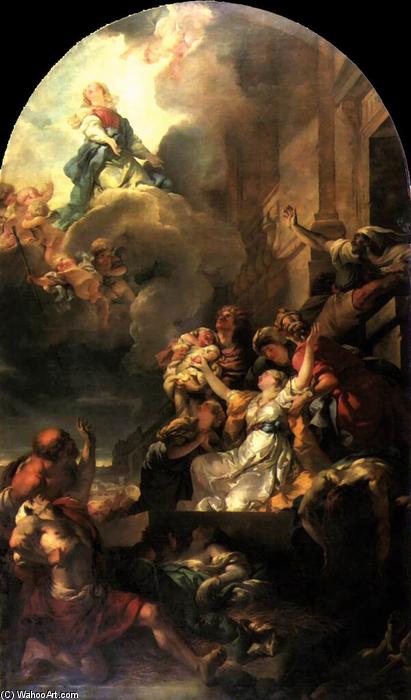
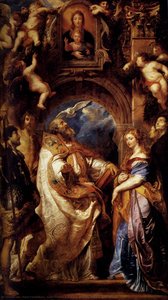
The Miracle of The Fervent
 Baroque
 665.0 x 450.0 cm
 Saint-Roch
 Read More
Hand Made Oil Reproduction
Hand-painted oil on canvas in your size and frame, made to order by our artists. ( Buy Print Buy Image)




































Pick from our preset sizes that match the artwork's original proportions.

You may enter your own dimensions to fit a specific frame or space. If your selected size does not match the original image's proportions, we will either crop the artwork or extend the painting with additional hand-painted elements. A digital mockup will be sent for your approval before production begins.
Please note that the on-screen preview does not reflect the actual cropping or extension. Only the mockup will accurately show the final composition.
While custom sizes are available, we recommend selecting a dimension from the predefined list to preserve the original proportions.
After order, ArtsDot.com team will email client for instructions and provide a mockup preview
Worldwide Delivery () in 3/4 weeks instead of standard 5 weeks. (2 September). No compromise on quality.

Free Worldwide Express Shipping

High-Quality Linen Canvas

Full Shipping Insurance

Customs Tax Refund Guarantee

True Color Matching Guarantee

60-Day Return Policy (Defects Only)

100% Money-Back Guarantee

Bulk Discount Offer
 Glass option is only available in size under 110 CM

The Miracle of The Fervent
Reproduction Medium
Reproduction Size
-


Total Price
$ 263
Related Artworks


Artist Biography
Gabriel François Doyen: The Venetian Echoes of Dramatic History
Gabriel François Doyen (1726-1806) stands as a pivotal figure in French Baroque painting, remembered for his monumental canvases depicting biblical narratives and mythological scenes imbued with theatrical grandeur. Born in Paris amidst the burgeoning artistic fervor of the Enlightenment, Doyen’s path to renown was marked by defiance against familial expectations – he pursued art despite his father's disapproval, embarking on formal training at the tender age of twelve under the tutelage of Charles-André van Loo, a leading sculptor and painter of the royal court. This early exposure instilled in him a disciplined approach that swiftly yielded impressive results; by twenty, he secured the prestigious Grand Prix de Rome, propelling him to Florence where he immersed himself in the artistic legacy of Caravaggio and Bernini.- Early Influences: Doyen’s formative years witnessed a profound engagement with the Baroque masters, particularly Caravaggio's dramatic chiaroscuro technique and Bernini’s sculptural dynamism – influences that would permeate his subsequent oeuvre.
- The Grand Prix de Rome & Florentine Studies: Winning the Grand Prix de Rome afforded him unparalleled access to artistic scholarship and provided invaluable experience in tackling ambitious projects. His time in Florence solidified his understanding of classical ideals and honed his observational skills.
Venetian Colorism and Artistic Transformation
A decisive turning point arrived during Doyen’s journey to Venice between 1752 and 1755 – a city renowned for its vibrant color palette and masterful pigmentists. This visit irrevocably altered his artistic sensibilities, exposing him to the revolutionary approach championed by Titian and Tintoretto. Unlike the prevailing monochrome tendencies of Parisian painting at the time, Venetian artists prioritized luminous hues and textural richness, prioritizing emotional impact over strict adherence to academic conventions. Doyen absorbed these techniques with fervor, recognizing their potential to elevate his compositions beyond mere representation into vehicles for conveying profound spiritual truths. This newfound appreciation for color would become a hallmark of his distinctive style—a stylistic decision that foreshadowed the burgeoning Romantic movement in France.- Titian’s Legacy: Doyen meticulously studied Titian's paintings, analyzing how he achieved unparalleled luminosity and depth through masterful layering of pigments.
- The Venetian Style: The Venetian influence is particularly evident in “The Miracle of The Fervent,” where Doyen skillfully employs color to heighten the drama and evoke a palpable sense of emotion—a technique that anticipates the expressive fervor characteristic of Romantic painting.
Return to Paris & Recognition Amidst Artistic Debate
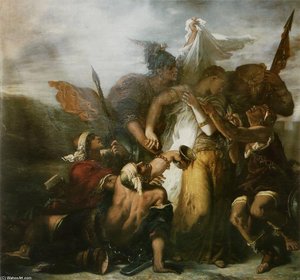
Upon his return to Paris in 1755, Doyen faced initial skepticism from Parisian critics who questioned the merits of Venetian colorism and perceived it as antithetical to French artistic tradition. However, unwavering determination fueled by a singular ambition—to establish himself as a celebrated artist—propelled him forward. His breakthrough came with “The Death of Virginia,” an emotionally charged depiction of Shakespeare’s tragic heroine – a painting that captivated audiences and secured his admission into the Académie Royale de Peinture et Sculpture. This success solidified his reputation and cemented his place within the artistic landscape of his era.Rubensian Influence & Dramatic Composition
Further enriching Doyen's artistic vocabulary was his admiration for Peter Paul Rubens, whom he encountered during a visit to Antwerp. Rubens’ dynamic compositions—characterized by swirling figures and theatrical gestures—served as an inspiration for Doyen, influencing his stylistic choices and elevating the expressive power of his paintings. Notably, “Le Miracle des Ardents,” commissioned for Saint Genevieve Church in St Roch, exemplifies this Rubensian influence; its dramatic staging and masterful use of color resonate with the aesthetic sensibilities of Romantic painters like Théodore Géricault—a connection that art historian Michael Levey has termed "the high point" of Doyen’s career.Legacy & Historical Significance
Doyen's artistic legacy extends beyond his individual masterpieces; he stands as a crucial conduit between Baroque grandeur and Romantic fervor. His Venetian style foreshadowed the stylistic innovations of the Romantic movement, demonstrating how artists could harness color and dramatic composition to convey profound emotional truths—a contribution that continues to inspire artists today. As Levey eloquently observes, Doyen’s work anticipates “the drama of the piece may be a precursor to that which characterises the french romantic painting of the 19th century.”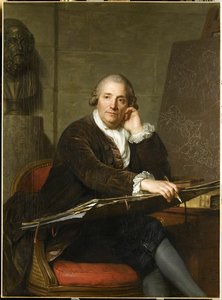
gabriel françois doyen
1726 - 1806 , France
Quick Facts
- Artistic Movement Or Style: Baroque & Venetian Colorism
- Artists Or Movements Influenced By This Artist: ['Romantic Painting']
- Artists Who Influenced This Artist:
- Charles-André van Loo
- Rubens
- Titian
- Date Of Birth: May 20, 1726
- Full Name: Gabriel François Doyen
- Nationality: French
- Notable Artworks:
- The Miracle of The Fervent
- GABRIEL FRANCOIS DOYEN
- Place Of Birth: Paris, France
Related Articles
Dante Gabriel Rossetti's 25 Masterpieces: A Journey Through Victorian Art & Symbolism | ArtsDot
Explore 25 iconic artworks by Dante Gabriel Rossetti, a leading Pre-Raphaelite artist. Discover the stories behind masterpieces like 'Proserpine' & 'Beata Beatrix'. Find museum-quality art reproductions and elevate your home decor with ArtsDot.com.

Oil on Canvas: A Historical & Technical Exploration of a Timeless Artistic Medium
Explore the rich history & enduring techniques of oil painting on canvas. Discover the science behind its longevity, conservation practices, and contemporary relevance. Expert insights for art enthusiasts.

The Enduring Legacy of Oil on Canvas: Technique, History & Aesthetic Impact
Explore the rich history & techniques of oil painting – from Renaissance masters to Impressionism. Discover pigments, layering methods, and why this timeless medium endures. Expert insights for artists & art enthusiasts.

The Enduring Legacy of Oil on Canvas: Technique, History & Contemporary Practice
Explore the rich history & enduring techniques of oil painting on canvas. Discover the science behind its longevity, conservation practices, and contemporary relevance. Expert insights for art enthusiasts.
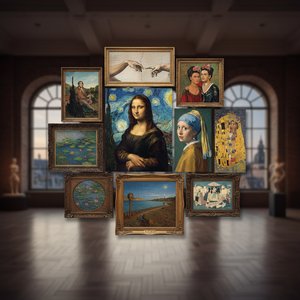
Oil on Canvas Masters: 10 Paintings That Redefined Art History |
Journey through art history with our guide to 10 legendary oil on canvas masterpieces! Explore iconic works by Van Gogh, Monet & Rembrandt. Find museum-quality reproductions and elevate your home decor at . Discover all masterpieces online.