

 Preview
 Send
Send Share
Share
 Details

 Download
 Similars
 X-Ray
X-Ray Diaporama
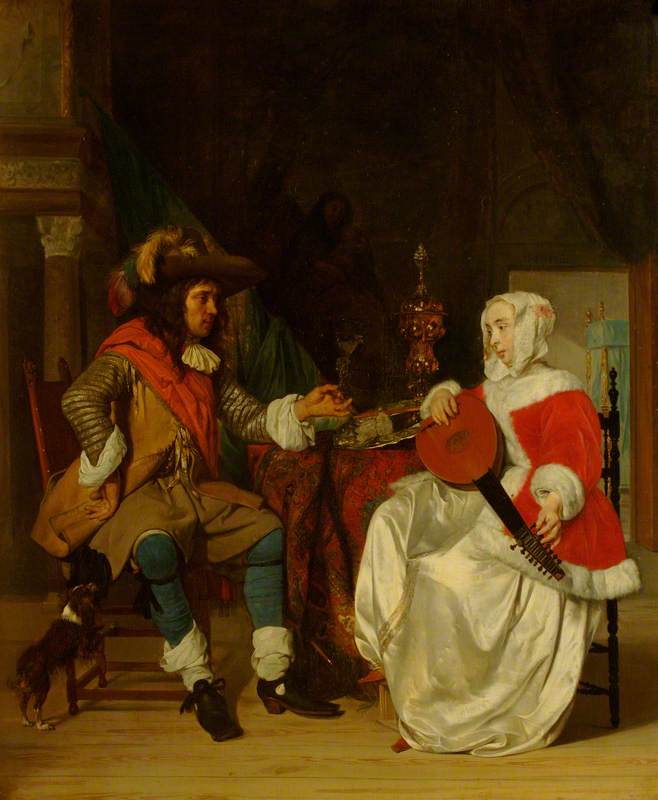
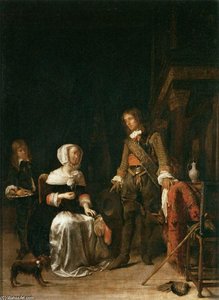
The Tête à Tête A Lady Playing a Lute, and a Cavalier
 Oil
Oil- WallArt
- Dutch Golden Age
 1665
1665- Early Modern
 47.0 x 40.0 cm
 Read More
Purchase a high-resolution, enhanced digital image, far superior to the online preview.
Each file is meticulously prepared by our in-house specialists using advanced tools and expert manual retouching. We ensure every image has exceptional clarity, precise color accuracy, and fine detail.
The final file is delivered via email within 72 hours, optimized for immediate use in professional, editorial, and print environments. This is the same quality trusted by top-tier design studios, publishers, and galleries.
Digital Image
Download a high-resolution file for personal display, printing, and creative projects. ( Buy Print Buy Hand Made Painting)
Included in Every Digital Image Order
Expert Digital Delivery, Guaranteed
When you choose ArtsDot.com, you're not just getting an image - you're receiving a professionally enhanced digital artwork, crafted with precision and backed by a satisfaction guarantee. Here's everything that comes with your order, automatically:

Fast Email Delivery
Your high-resolution digital image file will be emailed to you within 72 hours of ordering - ready for immediate use.

AI-Enhanced Digital File
Your artwork is professionally optimized using advanced AI tools and manual editing, ensuring maximum detail, clarity, and color accuracy.

Free Lifetime Re-Delivery
Accidentally deleted or lost your file? No worries - we'll resend it to you anytime, free of charge.

No Import Fees - Ever
Enjoy your artwork instantly with zero customs, duties, or delivery fees - digital downloads are always tax-free.

Color Accuracy Guarantee
We ensure your digital image reflects the original colors as closely as possible using professional tools and color management.

60-Day Satisfaction Guarantee
If you're not satisfied with your digital image, we'll revise it or refund 100% within 60 days - no questions asked.

100% Money-Back Guarantee
Not satisfied? Get a full refund within 60 days of receiving your digital file - no questions asked.

Bulk Order Discounts
Buy 3 images, save 10% - Buy 5, save 15% - Buy 10+, save 20%. Great for creative projects, galleries, and agencies.
Collectible Description
A Moment Frozen in Time: The Intimacy of Gabriel Metsu
In the quiet, amber-hued corners of the Dutch Golden Age, few artists captured the delicate tension of human connection as masterfully as Gabriel Metsu. His masterpiece, The Tête à Tête: A Lady Playing a Lute, and a Cavalier, serves as a breathtaking window into a private world, inviting the viewer to eavesdrop on a moment of profound tenderness. Painted in 1665, this work is far more than a mere portrait; it is a choreographed dance of glances and gestures. As we gaze upon the lady seated with her lute and the cavalier leaning toward her, we are drawn into a narrative of courtship and shared secrets. The composition breathes with a palpable warmth, where the soft light of a domestic interior illuminates not just the subjects, but the very essence of their companionship.
The artistry of Metsu is on full display through his exquisite command of texture and light. As an eclectic painter who drew inspiration from the likes of Rembrandt and Vermeer, Metsu employs a technique that renders every surface with tactile realism. One can almost feel the heavy weight of the man’s crimson jacket and the delicate smoothness of the lady's skin. The way the light catches the rim of a wine glass on the dining table or reflects off the polished wood of the room creates a sense of depth that pulls the observer into the scene. This meticulous attention to detail—from the subtle folds in the fabric to the gentle presence of a dog nearby—transforms a simple genre scene into a rich, sensory experience that resonates with anyone who appreciates the fine nuances of classical painting.
Symbolism and the Language of the Golden Age
Beyond its visual splendor, the painting is steeped in the symbolic language prevalent in 17th-century Dutch art. The lute, an instrument often associated with harmony and the sweetness of love, serves as a metaphor for the rhythmic connection between the two protagonists. Their joined hands act as a silent vow, a physical manifestation of the "tête à tête" promised by the title. Even the presence of the dog, a traditional symbol of fidelity, reinforces the themes of loyalty and devotion blooming within this private chamber. Every object placed within the room—the chair against the wall, the wine glass, the domestic setting—contributes to an atmosphere of refined leisure and the celebration of earthly joys, making it a quintessential example of Dutch genre painting.
For the discerning collector or interior designer, this artwork offers much more than historical significance; it provides a timeless emotional anchor. The painting’s palette of deep reds, warm ochres, and soft shadows makes it an extraordinary piece for creating a sense of sophisticated intimacy within a room. Whether placed in a grand library or a contemporary living space, a high-quality reproduction of this work brings with it a legacy of elegance and a quiet, contemplative energy. It is a piece that does not merely decorate a wall but tells a story, inviting conversation and evoking a sense of nostalgia for an era where beauty was found in the most intimate of human encounters.
Related Artworks
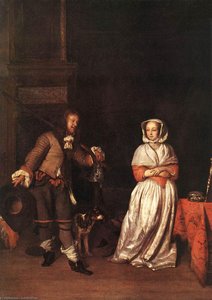

Artist Biography
**a life of artistic exploration**
gabriël metsu, a dutch painter from the netherlands, lived a life marked by artistic exploration and innovation. born in 1629, metsu's work embodied the spirit of the dutch golden age, a period renowned for its prolific artistic output. this biography delves into the life and works of this enigmatic figure, whose contributions to the art world continue to fascinate.**early life and influences**
metsu was born in 1629, the son of jacques metsu, a tapestry worker and painter originally from hainault. this eclectic background likely influenced gabriel's early interest in diverse artistic techniques. the family's move to leiden, where metsu grew up, exposed him to various cultural influences.**artistic career**
metsu's career was marked by an adherence to no single style or technique, earning him the title of "a highly eclectic artist." his work spanned history paintings, still lifes, portraits, and genre works. notably, only 14 of his 133 works are dated, leaving much to be discovered about his creative process.- rembrandt van rijn's influence on metsu's early work is evident, particularly in his use of light and color.
- metsu's move to amsterdam in 1655 marked a significant shift in his style, with more emphasis on domestic interiors and genre scenes.
- his training of michiel van musscher and joost van geel reflects his commitment to the artistic community.
**notable works and legacy**
metsu's paintings often featured young women, market scenes, and old people, drawing from popular emblems. a notable example is the poultry seller, which showcases his use of symbolism. key works:- the sick child (c. 1664), reflecting metsu's admiration for vermeer's work.
- portrait of the family hinlopen, a masterpiece that blends genre and portrait painting.
**museums and collections**
metsu's works can be found in various museums, including the rijksmuseum in amsterdam. for more information on his art and to explore other dutch golden age painters, visit /en/art/show/art-d3c627-en/ for a comprehensive overview. **conclusion:** gabriel metsu's life and art are a testament to the innovative spirit of the dutch golden age. his eclectic style, though sometimes enigmatic, has left an indelible mark on the world of art. as we continue to uncover more about his life and works, we are reminded of the profound impact he had on the development of western art.- for a deeper understanding of the dutch golden age, refer to [https://en.wikipedia.org/wiki/dutch_golden_age_painting](https://en.wikipedia.org/wiki/dutch_golden_age_painting).
- explore more of metsu's works and those of his contemporaries at [https://ArtsDot.com/@/gabriel-metsu](https://ArtsDot.com/@/gabriel-metsu).
**references:**
- the house of orange-nassau historic collection trust (the hague, netherlands), [https://ArtsDot.com/@@/a@d3ccx5](https://ArtsDot.com/@@/a@d3ccx5).
- van gogh museum (netherlands) - a haven for art lovers, [https://ArtsDot.com/@@/a@d3c8x3](https://ArtsDot.com/@@/a@d3c8x3).
- dutch golden age painting, [https://en.wikipedia.org/wiki/dutch_golden_age_painting](https://en.wikipedia.org/wiki/dutch_golden_age_painting).
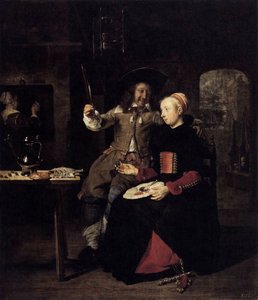
Gabriel Metsu
1629 - 1667 , Netherlands
Quick Facts
- Artistic Movement Or Style: Dutch Golden Age painting
- Artists Or Movements Influenced By This Artist:
- Michiel van Musscher
- Joost van Geel
- Artists Who Influenced This Artist:
- Rembrandt van Rijn
- Johannes Vermeer
- Date Of Birth: 1629
- Date Of Death: 1667
- Full Name: Gabriel Metsu
- Nationality: Dutch
- Notable Artworks:
- The Sick Child
- Poultry Seller
- Portrait of the Hinlopen Family
- Place Of Birth: Leiden, Netherlands

