 Preview
 Send
Send Share
Share
 Details

 Download
 Similars
 X-Ray
X-Ray Diaporama
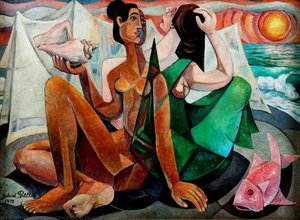
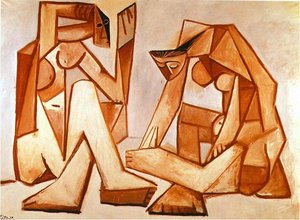
Women on the beach
 Painting
- Cubism
 1978
1978- Modern
 61.0 x 77.0 cm
 Pinacoteca Universidad de Colima
 Read More
Giclée / Art Print
Museum-quality giclée or canvas print with fast production and flexible finish options. ( Buy Hand Made Painting Buy Image)




P118B $10

P118H $10

P118W $10

P438Z $10

P508JH $12

P508YH $12

P805H $10

P805Z $10

P919BZ $10

P919G $10

P919XJ $10

P959ZH $10

P968JZ $12

W106C $8

W218G $10

W218JH $8

W218Y $10

W307PJ $10

W316G $10

W316PJ $8

W316Y $10

W398PJ $8

W4111J $10

W500HY $15

W500JH $15

W692G $12

W849H $8

W940BG $15

W953PJ $8




Pick from our preset sizes that match the artwork's original proportions.

You may enter your own dimensions to fit a specific frame or space. If your selected size does not match the original image's proportions, we will either crop the artwork or extend the image with a mirrored or solid-fill edge. A digital mockup will be sent for your approval before production begins.
Please note that the on-screen preview does not reflect the actual cropping or extension. Only the mockup will accurately show the final composition.
While custom sizes are available, we recommend selecting a dimension from the predefined list to preserve the original proportions.
Worldwide Delivery () in 2 weeks instead of standard 4/5 weeks. (22 August)

Free Worldwide Express Shipping

High-Quality Linen Canvas

Full Shipping Insurance

Customs Tax Refund Guarantee

True Color Matching Guarantee

60-Day Return Policy (Defects Only)

100% Money-Back Guarantee

Bulk Discount Offer
 Glass option is only available in size under 110 CM

Women on the beach
Giclée / Art Print
Reproduction Size
-


Total Price
$ 63
Collectible Description
A Sun-Drenched Moment in Color
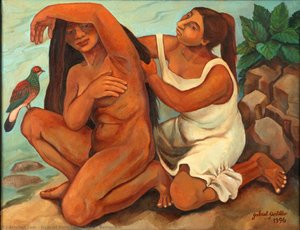
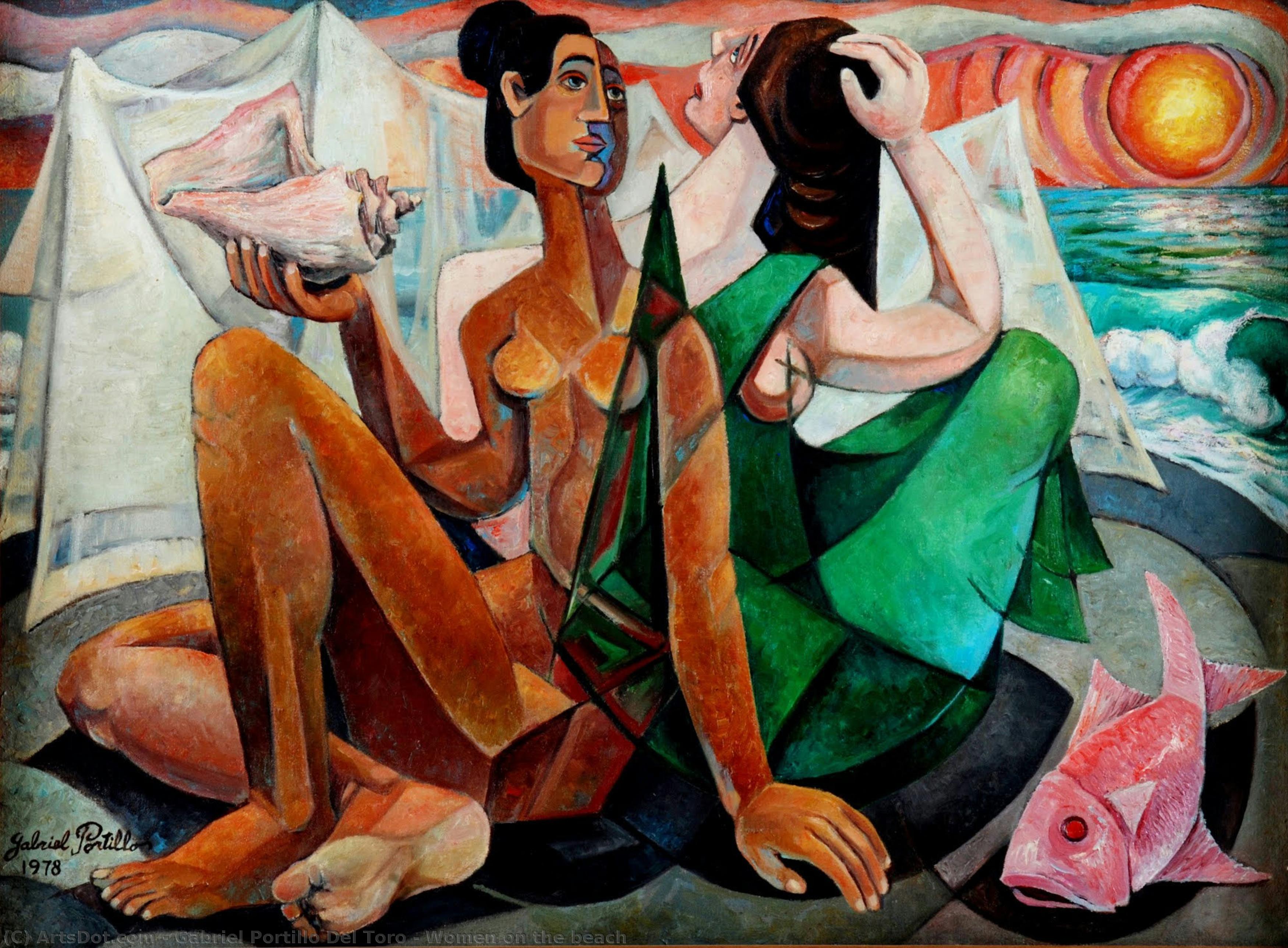
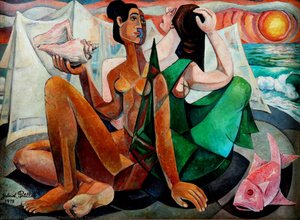
In the vibrant tapestry of Mexican modernism, few works capture the tranquil essence of coastal life as evocatively as "Women on the beach" by the esteemed Gabriel Portillo del Toro. Painted in 1978, this masterpiece invites the viewer into a serene, sun-soaked afternoon where the boundaries between humanity and nature seem to dissolve into a rhythmic dance of color. The composition centers on two women seated upon the sand, their presence anchored by a profound sense of stillness amidst a lively environment. One figure tenderly cradles a bird, a gesture that serves as a poignant focal point for the painting's themes of connection and gentleness. As your eyes wander across the canvas, you encounter a spirited assembly of birds scattered throughout the scene, their movements adding a dynamic, fluttering energy to the otherwise peaceful atmosphere.
The background unfolds like a dream of the Mexican coastline, where distant boats sway upon the horizon, hinting at the industrious yet rhythmic life of the sea. A solitary potted plant rests near the figures, introducing a touch of terrestrial greenery that contrasts beautifully with the maritime setting. Through this careful arrangement, Portillo del Toro creates a world that feels both expansive and intimate, making it an ideal centerpiece for those looking to infuse a living space with the warmth of a summer memory.
The Mastery of Form and Light
Drawing from his deep roots in the Mexican muralist tradition and the structural influences of Cubism, Portillo del Toro employs a technique that is as much about geometry as it is about emotion. In "Women on the beach," the artist utilizes bold, deliberate strokes to define shapes, yet he avoids the rigidity often associated with geometric abstraction. Instead, his brushwork breathes life into the scene, using a palette of vibrant, saturated hues to evoke the heat of the sun and the coolness of the coastal breeze. The interplay of light and shadow is not merely a technical feat but a narrative tool, used to sculpt the figures and imbue the landscape with a palpable sense of depth.
For the discerning collector or interior designer, this piece offers a sophisticated balance of complexity and accessibility. The way the colors interact—the bright pops of life against the more grounded tones of the shore—creates a visual rhythm that can anchor a room's aesthetic. Whether placed in a contemporary gallery setting or a classic study, the painting’s ability to command attention through its structural integrity and chromatic brilliance makes it a timeless acquisition.
A Legacy of Cultural Connection
To understand this work is to understand the soul of Gabriel Portillo del Toro. As an artist who navigated the intersection of regional Colima heritage and international modernist movements, his work often serves as a bridge between the local and the universal. "Women on the beach" transcends its specific setting to become a meditation on peace, companionship, and the enduring beauty of the natural world. The symbolism of the bird—often representing freedom or the fleeting nature of time—complements the stability of the women, creating a profound emotional resonance that lingers long after one has finished viewing the piece.
Owning a high-quality reproduction of this work allows for the preservation of this cultural dialogue within the modern home. It is more than just a decoration; it is an invitation to pause, to breathe, and to reconnect with the simple, profound joys of existence. For those seeking to curate a collection that speaks of history, artistry, and an unyielding passion for life, Portillo del Toro’s vision remains an incomparable inspiration.
Related Artworks
Artist Biography
The Vibrant Legacy of Gabriel Portillo del Toro
In the grand tapestry of Mexican modernism, few artists managed to weave together the structural rigor of European avant-garde with the soulful warmth of regional tradition as masterfully as Gabriel Portly Del Toro. Born in 1927 in the culturally rich landscape of Colima, Mexico, his life and work served as a bridge between the monumental social realism of the muralist movement and the fragmented, rhythmic beauty of Cubism. His artistic journey was not merely a pursuit of aesthetic perfection but a profound exploration of identity, where the geometric precision of modern art met the sun-drenched, folkloric essence of his homeland.
Portillo del Toro’s early years were deeply rooted in the textures of Colima, an environment that nurtured his initial appreciation for indigenous art forms and local folklore. This foundational connection to Mexican heritage would later become the heartbeat of his compositions. Seeking to refine this raw, intuitive talent, he pursued formal studies at the Universidad Nacional Autónoma de México (UNAM). It was within these hallowed halls that he encountered the towering shadows of legends like Diego Rivera and José Clemente Orozco. While he absorbed their commitment to art as a vehicle for national consciousness, Portillo del Toro chose a different path—one that moved away from strictly didactic social realism toward a more lyrical, abstract language of form and color.
A Symphony of Cubist Geometry and Coastal Light
As his style matured, the influence of Cubism became the defining architectural element of his oeuvre. Inspired by the revolutionary techniques of Picasso and Braque, he embraced the fragmentation of perspective, allowing him to depict multiple viewpoints within a single plane. Yet, unlike the often austere or intellectualized Cubism of Europe, Portillo del Toro infused his geometric compositions with a vibrant, pulsating energy. He utilized bold, deliberate strokes to define shapes, yet his brushwork remained fluid, breathing life into every canvas so that even the most structured forms seemed to vibrate with movement.
His subject matter often returned to the serene and the pastoral, finding extraordinary beauty in the everyday rhythms of Mexican life. His paintings frequently act as windows into sun-soaked moments, where the boundaries between humanity and nature dissolve:
- Women on the Beach (1978): A masterpiece of tranquility, where figures are anchored by a profound stillness amidst a lively environment of birds and distant maritime horizons.
- The Circus (1973): A dynamic display of Cubist style, capturing the swirling motion of dancers and horses through interlocking circles and shapes.
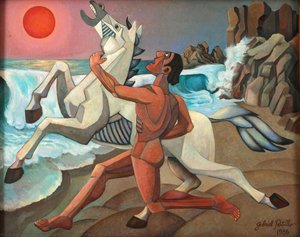
- Bather with Horse (1986): A breathtaking exploration of vitality, where the coastal landscape becomes a rhythmic dance of light and shadow.
- The Boy and the Cat (1992): An intimate encounter that showcases his ability to blend regional warmth with the structured complexities of modernism.
Historical Significance and Artistic Endurance
Beyond the individual beauty of his canvases, Gabriel Portillo del Toro’s significance lies in his role as a transitional figure in Mexican art history. He proved that the revolutionary spirit of the muralists could be translated into a more personal, decorative, and abstract vocabulary without losing its cultural soul. His monumental murals, which adorned public spaces across Mexico, solidified his reputation as an artist capable of commanding large-scale narratives, while his smaller paintings offered a more intimate dialogue with the viewer.
Through his death in 2013, a significant chapter of Mexican modernism closed, yet his legacy remains vibrant. His work continues to resonate with collectors and scholars because it refuses to be categorized solely as either traditional or abstract. Instead, it exists in that magical, liminal space where the geometric precision of the modern age meets the eternal, sun-drenched spirit of Mexico. To look upon a Portillo del Toro painting is to witness a lasting dialogue between form and feeling, a legacy of color that continues to illuminate the history of Latin American art.
gabriel portillo del toro
1927 - 2013 , Mexico
Quick Facts
- Artistic Movement Or Style: Cubism
- Date Of Death: 2013
- Full Name: Gabriel Portillo del Toro
- Nationality: Mexican
- Notable Artworks:
- Girls
- Bathers
- Place Of Birth: Mexico
Related Articles
Deconstructing Identity: A Comprehensive Exploration of Cubist Portraiture
Explore the revolutionary world of Cubist portraiture with our comprehensive guide. Discover Picasso, Braque, Gris & the movement's impact on modern art. Expert analysis for collectors and enthusiasts.
Deconstructing Reality: Cubism's Revolutionary Impact on 20th-Century Art
Explore the revolutionary world of Cubism with ArtsDot. Discover Picasso & Braque's groundbreaking techniques, its philosophical roots, and lasting impact on modern art. Expert insights for collectors.
Deconstructing Reality: A Comprehensive Exploration of Cubist Still Life
Explore the revolutionary world of Cubist Still Life with ArtsDot. Discover Picasso & Braque's groundbreaking techniques, its philosophical roots, and lasting impact on modern art. Expert insights for collectors.
Cubism's Revolution: 10 Masterpieces That Redefined Modern Art | ArtsDot
Explore 10 Cubist masterpieces by Picasso, Braque & more! Delve into the history of this revolutionary art movement. Find museum-quality reproductions and elevate your home decor with ArtsDot. Discover all masterpieces on ArtsDot.com

Deconstructing Reality: Cubism's Evolution, Impact & Enduring Legacy
Explore the revolutionary world of Cubism with expert insights from ArtsDot. Discover Picasso & Braque's groundbreaking techniques, its philosophical roots, and lasting impact on modern art. Expert appraisal & custom reproductions available.