 Preview
 Send
Send Share
Share
 Details

 Download
 Similars
 X-Ray
X-Ray Diaporama
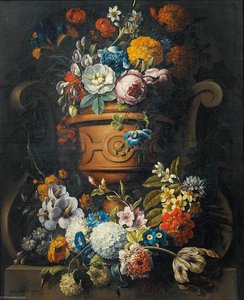
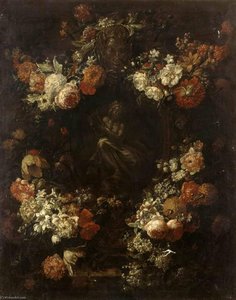
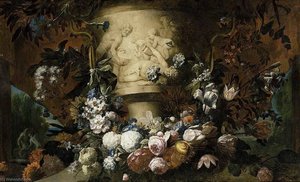
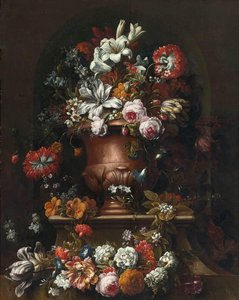
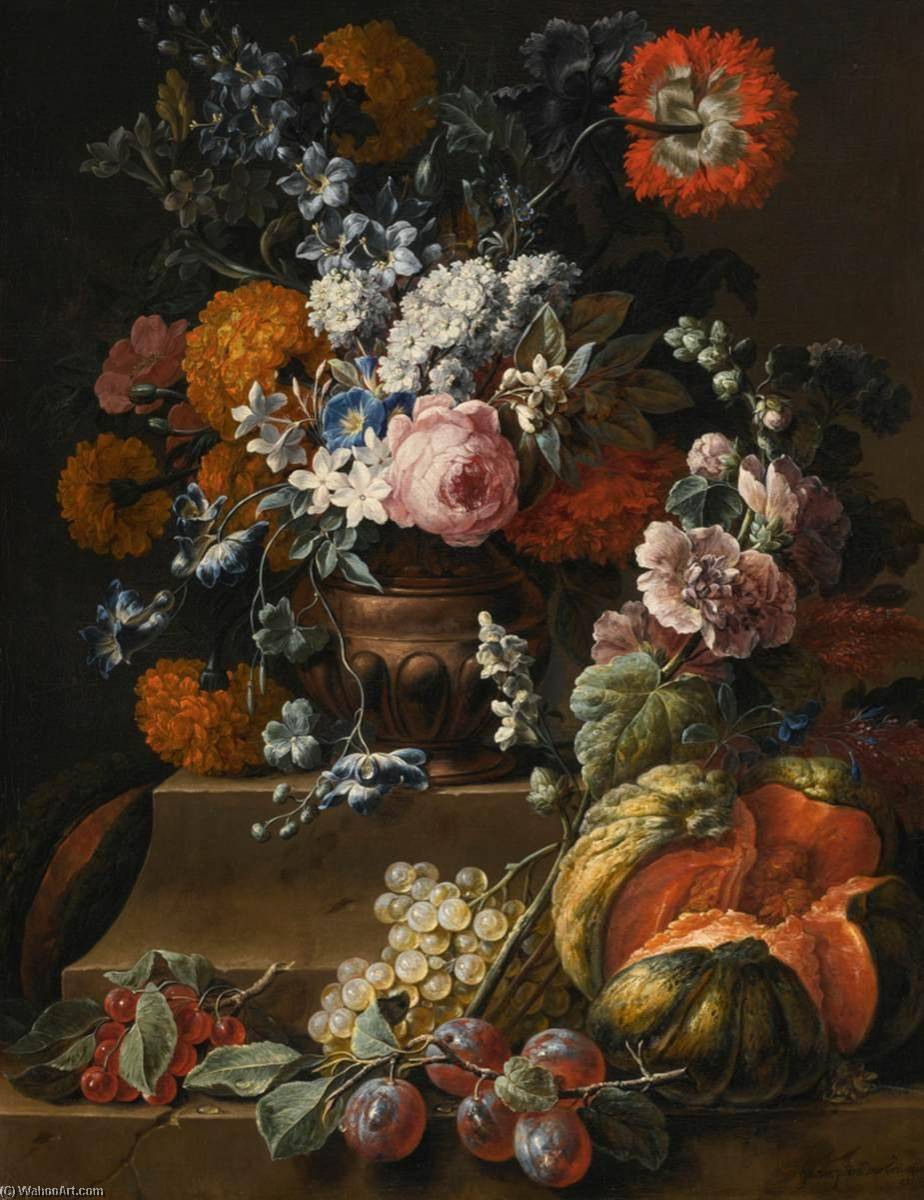
Still Life
 85.0 x 67.0 cm
 Read More
Hand Made Oil Reproduction
Hand-painted oil on canvas in your size and frame, made to order by our artists. ( Buy Print Buy Image)




































Pick from our preset sizes that match the artwork's original proportions.

You may enter your own dimensions to fit a specific frame or space. If your selected size does not match the original image's proportions, we will either crop the artwork or extend the painting with additional hand-painted elements. A digital mockup will be sent for your approval before production begins.
Please note that the on-screen preview does not reflect the actual cropping or extension. Only the mockup will accurately show the final composition.
While custom sizes are available, we recommend selecting a dimension from the predefined list to preserve the original proportions.
After order, ArtsDot.com team will email client for instructions and provide a mockup preview
Worldwide Delivery () in 3/4 weeks instead of standard 5 weeks. (23 August). No compromise on quality.

Free Worldwide Express Shipping

High-Quality Linen Canvas

Full Shipping Insurance

Customs Tax Refund Guarantee

True Color Matching Guarantee

60-Day Return Policy (Defects Only)

100% Money-Back Guarantee

Bulk Discount Offer
 Glass option is only available in size under 110 CM

Still Life
Reproduction Medium
Reproduction Size
-


Total Price
$ 263
Related Artworks








Artist Biography
A Life Immersed in Blooms: The World of Gaspar Peeter Verbruggen the Younger
Gaspar Peeter Verbruggen the Younger, born in Antwerp in 1664 and passing away in the same city in 1730, was a Flemish still life painter whose name became synonymous with opulent floral arrangements and decorative artistry. He wasn’t merely recording flowers; he was crafting miniature worlds of beauty, imbued with symbolism and technical mastery. His story is one woven into the rich tapestry of Antwerp's artistic guilds, familial legacy, and the shifting tastes of 17th- and 18th-century Europe. Born into a family already steeped in the tradition of still life painting—his father, Gaspar Peeter Verbruggen the Elder, was a successful artist in his own right—the younger Verbruggen’s path seemed predetermined, yet he carved out a distinct style that resonated with both Flemish and Dutch sensibilities. From an incredibly young age, demonstrating exceptional talent, he entered the Antwerp Guild of Saint Luke in 1677-1678 at just thirteen years old, a testament to his precocious skill. This early entry signaled not only his aptitude but also the strong support system within his family that fostered his artistic development.The Flourishing Career and Collaborative Spirit
Verbruggen quickly established himself as a sought-after painter, becoming deacon of the Guild in 1691/1692. His success allowed him to live comfortably on Antwerp’s prestigious Meir street, but life took an unfortunate turn with the early death of his wife, Dymphna van der Voort, in 1702. Financial difficulties soon followed, forcing him to sell his possessions in 1703. This hardship prompted a relocation to the Dutch Republic in 1705, initially to Amsterdam and then settling in The Hague. It was here that he found renewed patronage, receiving commissions for decorating prominent residences. His membership in the Hague’s Guild of Saint Luke in 1708 further solidified his position within the artistic community. However, even with commercial success, Verbruggen struggled with financial instability, a recurring theme throughout his life. A return to Antwerp in 1723 saw him take on a humble role as a ‘knaap’ (boy) at the Guild of Saint Luke until his death in 1730. What is particularly striking about Verbruggen's career is his frequent collaboration with figure painters. He didn’t see still life as an isolated genre but rather as a component within larger, more complex compositions. Artists like Peter Ykens and Jacob Leyssens in Antwerp, and Matheus Terwesten in The Hague, often partnered with him, creating works where their figures were seamlessly integrated into Verbruggen's vibrant floral displays.Influences and the Evolution of Style
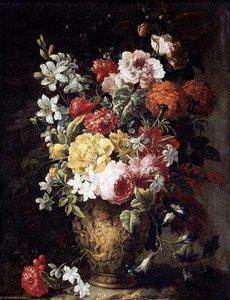
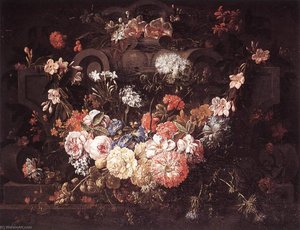
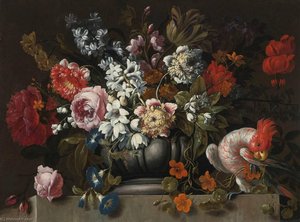
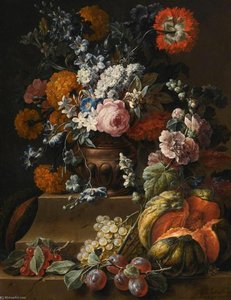
Verbruggen’s artistic style wasn’t born in a vacuum; it was shaped by the currents flowing through European art at the time. The broad, impasto brushstrokes characteristic of his work echo the innovations introduced by Italian artists Mario Nuzzi and Michele Pace del Campidoglio. He also drew inspiration from the French painter Jean-Baptiste Monnoyer, known for his lavish flower paintings. These influences coalesced into a uniquely Flemish aesthetic—a move towards greater decoration and monumentality in still life painting. His compositions often featured bouquets arranged within grand stone vases or cascading as garlands around garden ornaments, creating a sense of abundance and theatricality. He wasn’t simply replicating nature; he was elevating it, transforming flowers and fruit into symbols of wealth, beauty, and the fleeting nature of existence.Major Achievements and Lasting Legacy
While pinpointing specific “masterpieces” can be subjective, Verbruggen's enduring contribution lies in his ability to synthesize various influences into a cohesive and recognizable style. His *Flower garland surrounding a statue of Apollo*, gifted to the Antwerp Guild in 1694 as thanks for accepting his pupils without fee, exemplifies his technical skill and generosity. Beyond individual works, his impact is visible in the proliferation of decorative still lifes during the late 17th and early 18th centuries. He trained several pupils—including his half-brother Balthasar Hyacinth Verbruggen, Jacob Melchior van Herck, Frans d'Olivero, Peter Frans Casteels, and Gillis Vinck—ensuring that his techniques and aesthetic sensibilities were passed down to the next generation of artists.Historical Significance: A Reflection of an Era
Gaspar Peeter Verbruggen the Younger’s work provides a fascinating glimpse into the tastes and values of his time. The opulent displays of flowers and fruit reflected the prosperity of the merchant class, while the inclusion of classical motifs—like Apollo—hinted at a broader cultural appreciation for antiquity. His collaborative spirit speaks to the interconnectedness of the artistic world, where painters often worked together to create more ambitious and complex compositions. Though he faced personal hardships throughout his life, Verbruggen left behind a legacy of beauty and technical skill that continues to captivate audiences today. He stands as a testament to the enduring power of still life painting—a genre capable of conveying not only visual delight but also profound symbolism and emotional resonance.- Born: 11 April 1664, Antwerp
- Died: 14 March 1730, Antwerp
- Style: Flemish Still Life, Decorative Floral Paintings
- Influences: Mario Nuzzi, Michele Pace del Campidoglio, Jean-Baptiste Monnoyer
- Key Themes: Opulence, Symbolism, Collaboration
gaspar peeter the younger verbruggen
1664 - 1730
Quick Facts
- Artistic Movement Or Style: Still life, Decorative
- Artists Who Influenced This Artist:
- Mario Nuzzi
- Michele Pace del Campidoglio
- Jean-Baptiste Monnoyer
- Date Of Birth: 1664
- Date Of Death: 1730
- Full Name: Gaspar Peeter Verbruggen the Younger
- Nationality: Flemish
- Notable Artworks: ['Flower garland surrounding Apollo']
- Place Of Birth: Antwerp, Flanders