

 Preview
 Send
Send Share
Share
 Details

 Download
 Similars
 X-Ray
X-Ray Diaporama
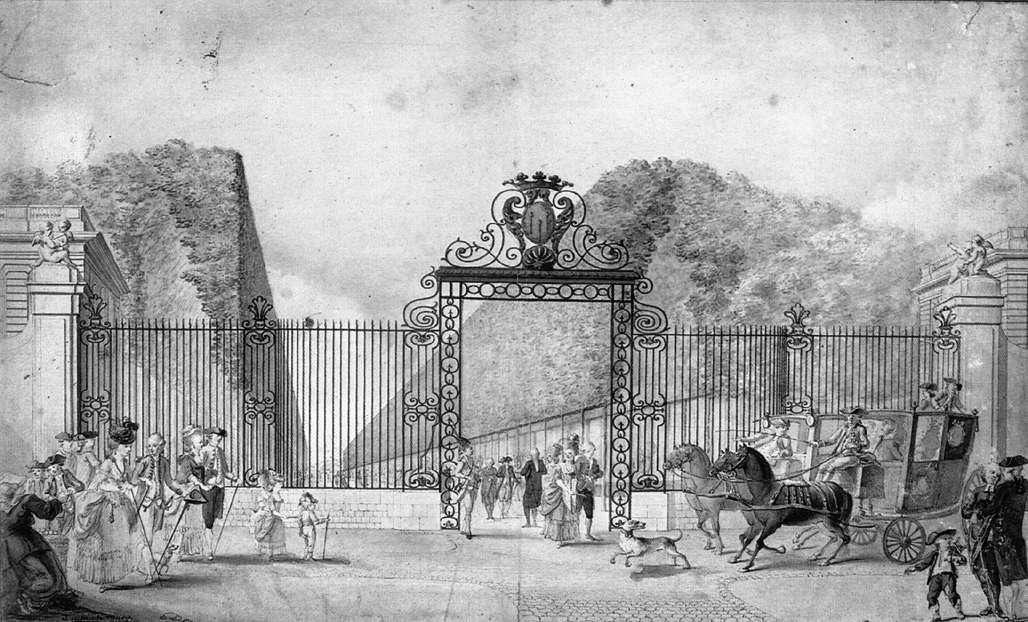
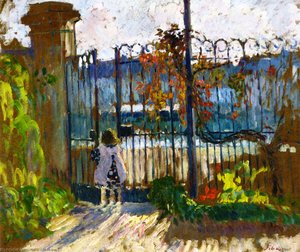
The Entrance to Blossac Park in Poitiers
 360.0 x 560.0 cm
 Public library
 Read More
Purchase a high-resolution, enhanced digital image, far superior to the online preview.
Each file is meticulously prepared by our in-house specialists using advanced tools and expert manual retouching. We ensure every image has exceptional clarity, precise color accuracy, and fine detail.
The final file is delivered via email within 72 hours, optimized for immediate use in professional, editorial, and print environments. This is the same quality trusted by top-tier design studios, publishers, and galleries.
Digital Image
Download a high-resolution file for personal display, printing, and creative projects. ( Buy Print Buy Hand Made Painting)
Included in Every Digital Image Order
Expert Digital Delivery, Guaranteed
When you choose ArtsDot.com, you're not just getting an image - you're receiving a professionally enhanced digital artwork, crafted with precision and backed by a satisfaction guarantee. Here's everything that comes with your order, automatically:

Fast Email Delivery
Your high-resolution digital image file will be emailed to you within 72 hours of ordering - ready for immediate use.

AI-Enhanced Digital File
Your artwork is professionally optimized using advanced AI tools and manual editing, ensuring maximum detail, clarity, and color accuracy.

Free Lifetime Re-Delivery
Accidentally deleted or lost your file? No worries - we'll resend it to you anytime, free of charge.

No Import Fees - Ever
Enjoy your artwork instantly with zero customs, duties, or delivery fees - digital downloads are always tax-free.

Color Accuracy Guarantee
We ensure your digital image reflects the original colors as closely as possible using professional tools and color management.

60-Day Satisfaction Guarantee
If you're not satisfied with your digital image, we'll revise it or refund 100% within 60 days - no questions asked.

100% Money-Back Guarantee
Not satisfied? Get a full refund within 60 days of receiving your digital file - no questions asked.

Bulk Order Discounts
Buy 3 images, save 10% - Buy 5, save 15% - Buy 10+, save 20%. Great for creative projects, galleries, and agencies.
Related Artworks
Artist Biography
Gaspard Duché de Vancy: A Vanishing Vision of the Orient
The name Gaspard Duché de Vancy, a 18th-century French artist, might not be immediately familiar to modern art enthusiasts. Yet, within the annals of European painting lies a fascinating story – one intertwined with exploration, exotic locales, and ultimately, a tragic disappearance. De Vancy’s legacy rests primarily on his meticulously rendered depictions of Asian cultures, particularly those encountered during the ill-fated La Pérouse expedition, a journey that claimed his life and left behind a collection of captivating images offering a unique window into a world largely unknown to European audiences at the time.
Born in Vienna in 1756, Gaspard’s early life remains somewhat shrouded in mystery. Records suggest he spent his formative years immersed in the artistic traditions of Central Europe, receiving training that instilled in him a strong foundation in classical techniques and composition. He arrived in Paris during a period of burgeoning artistic innovation, finding patronage within the Salon of Young Artists – a crucial stepping stone for aspiring painters seeking recognition. This early exposure to Parisian art circles shaped his style, blending meticulous detail with an emerging interest in capturing the nuances of foreign cultures. His work at the Royal Academy in London further broadened his audience and established him as a painter capable of producing works suitable for international display.
De Vancy’s most significant contribution to art history stems from his involvement as the official artist of the La Pérouse expedition (1785-1788). This ambitious scientific voyage, led by French naval officer Jean-François de Galaup, comte de Lapérouse, aimed to chart unexplored territories in the Pacific Ocean. De Vancy’s role was to document the expedition's encounters – not just with geographical features and botanical specimens, but crucially, with the diverse populations inhabiting these distant lands. He produced a series of stunning portraits, meticulously capturing the costumes, customs, and appearances of inhabitants from Manila, Korea, Russia, Japan, Samoa, Tonga, and other Pacific islands. These paintings are particularly remarkable for their attention to detail, showcasing an impressive ability to render fabrics, jewelry, and facial features with astonishing accuracy – a testament to his observational skills and artistic talent.
The images produced during the expedition represent more than just visual records; they offer invaluable insights into the cultural landscape of the 18th century Pacific. De Vancy’s work provides a rare glimpse into societies largely untouched by Western influence, revealing intricate social structures, religious practices, and artistic traditions. His depictions of Manila, for example, are particularly noteworthy, showcasing the vibrant colors and elaborate garments worn by its inhabitants – a far cry from the stereotypical European portrayals of Asian cultures prevalent at the time. His paintings of Lituya Bay in Alaska, captured during the expedition’s exploration of North America, stand out as some of his most celebrated works, offering a detailed representation of indigenous life in a remote and challenging environment.
Tragically, the La Pérouse expedition met with disaster. In April 1788, the two ships, *Astrolabe* and *Bucentaure*, were wrecked on the reefs of Vanikoro Island in the Solomon Islands. All hands were lost, including De Vancy. The discovery of his skull off Vanikoro in 2003 offered a tantalizing, yet inconclusive, clue to his fate – DNA analysis proved unable to definitively identify him. Despite this unresolved mystery, De Vancy’s artistic legacy endures through the remarkable collection of paintings he produced during the expedition. These works are now housed in museums around the world, offering a unique and poignant reminder of an artist whose life was tragically cut short but whose vision continues to captivate viewers with its beauty and historical significance.
The Legacy of a Lost Explorer
De Vancy’s work is notable for its technical skill and its commitment to representing the cultures he encountered with respect and accuracy. He wasn't simply sketching exotic figures; he was attempting to capture the essence of these societies, documenting their customs and appearances in a way that reflected his own observations and artistic sensibilities. His attention to detail—particularly in rendering fabrics and jewelry—demonstrates a meticulous approach to his craft, reflecting the standards of portraiture prevalent during his time.
His involvement with the La Pérouse expedition is crucial to understanding his artistic development. The journey itself provided him with unparalleled opportunities for observation and documentation, shaping his style and influencing his subject matter. It’s important to note that this was a scientific expedition as much as it was an exploratory one; De Vancy's role wasn't just to paint pretty pictures but to record the discoveries of the expedition's scientists.
Despite the tragic circumstances surrounding his disappearance, De Vancy’s work has had a lasting impact on art history. His paintings offer valuable insights into 18th-century Asian cultures and serve as a reminder of the importance of cultural exchange and understanding. The fact that his skull was found decades after his presumed death adds an element of mystery to his story, fueling speculation about his fate and further cementing his place in the annals of exploration.
Artistic Influences and Style
While De Vancy’s early training in Vienna undoubtedly influenced his foundational skills, his work demonstrates a clear shift towards the Neoclassical style prevalent in Paris during the 1780s. This is evident in his precise draftsmanship, balanced compositions, and emphasis on detail – characteristics that align with the artistic ideals of the era.
However, De Vancy’s style also incorporates elements of Orientalism—a trend popular among European artists at the time, which involved depicting scenes from the East. This influence is particularly apparent in his choice of subjects and his rendering of Asian costumes and customs. It's important to note that this depiction was often filtered through a Western lens, reflecting the biases and assumptions prevalent during the colonial era.
Furthermore, De Vancy’s work shows an interest in capturing the textures and colors of foreign fabrics—a skill he honed through meticulous observation and careful brushwork. His depictions of Manila textiles, for example, are particularly striking for their vibrant hues and intricate patterns. This attention to detail reflects a broader trend among European artists during the 18th century, who were increasingly interested in documenting the visual richness of non-European cultures.
Historical Significance and Lasting Impact
Gaspard Duché de Vancy’s contribution to art history lies not only in his artistic skill but also in his role as a chronicler of a lost world. His paintings provide invaluable insights into the cultures of the Pacific Islands during the 18th century, offering a rare glimpse into societies largely untouched by Western influence.
His work is particularly significant for its depiction of indigenous populations—a subject that was often overlooked or misrepresented in European art at the time. De Vancy’s portraits are respectful and nuanced, capturing the dignity and complexity of these cultures with remarkable accuracy.
The mystery surrounding his disappearance only adds to his historical significance, fueling speculation about his fate and ensuring that his story continues to be told. De Vancy's legacy serves as a reminder of the importance of cultural exchange and understanding—and of the tragic consequences that can result from exploration and discovery.
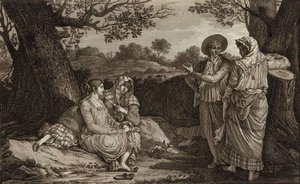
gaspard duché de vancy
1756 - 1788 , France
Quick Facts
- Artistic Movement Or Style: Portraiture, Asian art
- Artists Or Movements Influenced By This Artist: ['La Pérouse expedition']
- Artists Who Influenced This Artist: ['Jean-François de Galaup, comte de Lapérouse']
- Date Of Birth: 1756
- Date Of Death: 1788
- Full Name: Gaspard Duché de Vancy
- Nationality: French
- Notable Artworks:
- The costumes of the inhabitants of Manila
- Costumes of the inhabitants of Port des Francais
- Place Of Birth: Vienna, Austria

