 Preview
 Send
Send Share
Share
 Details

 Download
 Similars
 X-Ray
X-Ray Diaporama
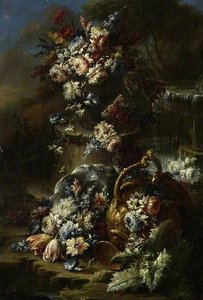
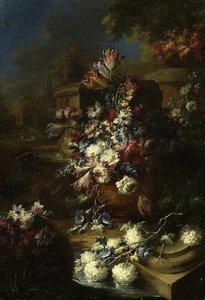
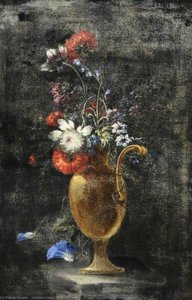
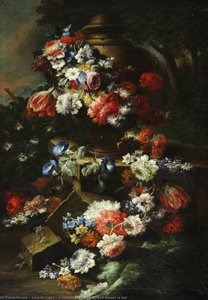
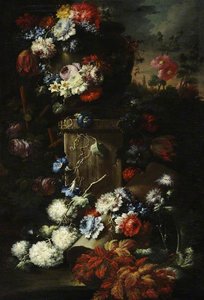
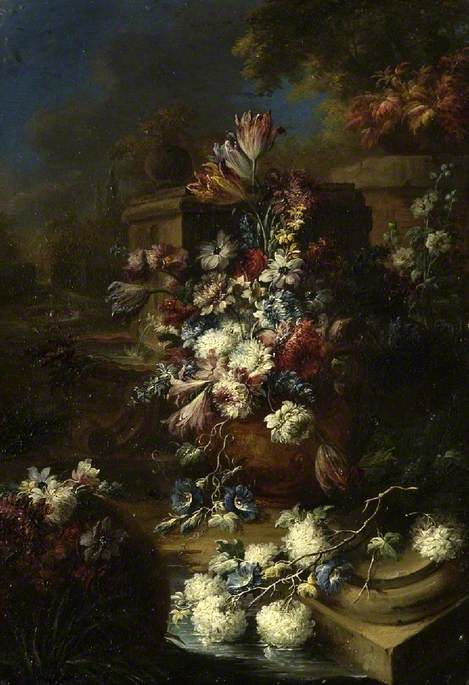
Flowers in a Landscape
 35.0 x 25.0 cm
 Fitzwilliam College
 Read More
Hand Made Oil Reproduction
Hand-painted oil on canvas in your size and frame, made to order by our artists. ( Buy Print Buy Image)




































Pick from our preset sizes that match the artwork's original proportions.

You may enter your own dimensions to fit a specific frame or space. If your selected size does not match the original image's proportions, we will either crop the artwork or extend the painting with additional hand-painted elements. A digital mockup will be sent for your approval before production begins.
Please note that the on-screen preview does not reflect the actual cropping or extension. Only the mockup will accurately show the final composition.
While custom sizes are available, we recommend selecting a dimension from the predefined list to preserve the original proportions.
After order, ArtsDot.com team will email client for instructions and provide a mockup preview
Worldwide Delivery () in 3/4 weeks instead of standard 5 weeks. (27 August). No compromise on quality.

Free Worldwide Express Shipping

High-Quality Linen Canvas

Full Shipping Insurance

Customs Tax Refund Guarantee

True Color Matching Guarantee

60-Day Return Policy (Defects Only)

100% Money-Back Guarantee

Bulk Discount Offer
 Glass option is only available in size under 110 CM

Flowers in a Landscape
Reproduction Medium
Reproduction Size
-


Total Price
$ 263
Related Artworks









Artist Biography
The Floral Legacy of Gasparo Lopez
In the grand, sweeping tapestry of the Baroque era, few artists captured the ephemeral splendor of nature with as much intimacy and grace as Gasparo Lopez. Known to his contemporaries by the affectionate moniker Gasparo dei Fiori—the Gasparo of Flowers—his name became synonymous with a particular kind of botanical elegance. Born in Naples around 1677, Lopez emerged from an Italian tradition that celebrated both the meticulous observation of reality and the dramatic flair of the late Baroque. His life was a journey through the most vibrant artistic hubs of Europe, moving from the sun-drenched landscapes of Italy to the sophisticated courts of Germany, leaving behind a trail of canvases that breathe with the vitality of a summer garden.
The foundation of Lopez’s mastery was laid under the rigorous guidance of esteemed masters such as Jean Baptiente Du Buisson and Andrea Belvedere. From these mentors, he inherited a profound command of disegno, the essential Italian discipline of drawing and design. This training instilled in him an unwavering commitment to anatomical accuracy and structural integrity, which allowed him to render the delicate veins of a petal or the heavy curve of a ripening fruit with startling realism. As his talent blossomed, so too did his travels; his time in Venice introduced him to the luminous, atmospheric qualities of the Venetian school. Here, he absorbed the subtle light and expansive perspectives that would later define his landscapes, moving away from mere botanical studies toward compositions that felt integrated into a living, breathing world.
A Journey Through European Courts
Lopez’s career was not merely a collection of paintings but a nomadic odyssey through the centers of European power and culture. His ability to marry the scientific precision of a naturalist with the poetic soul of a painter made him an irresistible figure for royal patrons. In Dresden, he found significant acclaim under the patronage of Augustus II Frederic, Duke of Saxe-Gotha-Altenburg. The Duke’s commissions allowed Lopez to explore his fascination with urn motifs and ornamental gardens, creating works where flowers were not just subjects but protagonists in a larger narrative of classical beauty and fleeting time.
The breadth of his artistic development can be seen through the various stages of his life:
- The Neapolitan Roots: His early years provided the technical rigor and the initial spark of interest in the natural world.
- The Venetian Influence: A period of stylistic expansion where he mastered light, shadow, and atmospheric depth.
- The Dresden Period: The height of his professional prestige, characterized by grand floral compositions and courtly elegance.
- The Florentine Finale: His later years in Florence, where he served as a court painter to the Grand Duke, marking a period of settled mastery before his tragic and untimely death.
Symbolism and the Baroque Sensibility
To look upon a work by Gasparo Lopez is to engage with the profound symbolism inherent in the vanitas tradition of the seventeenth and eighteenth centuries. While his paintings are undeniably beautiful, they often carry an underlying melancholy—a reminder of the transient nature of life. A blooming rose, at the peak of its perfection, carries within it the seed of decay; a piece of fruit, heavy with juice, is destined to wither. Through his exquisite use of color and texture, Lopez captured this tension between the eternal ideal and the fleeting moment. His urn motifs, often featuring weathered masonry or classical ruins, serve as anchors to the past, contrasting the soft, organic life of the flowers with the enduring, yet crumbling, remnants of human endeavor.
Ultimately, the historical significance of Gasparo Lopez lies in his ability to elevate the still life from a secondary genre to a profound medium of expression. He did not merely paint flowers; he painted the very essence of vitality and the inevitable passage of time. His legacy remains etched in the vibrant pigments of his floral arrangements, offering a window into a world where beauty was both celebrated and mourned with equal intensity.
gasparo lopez
1677 - 1732
Quick Facts
- Artistic Movement Or Style: Baroque
- Artists Or Movements Influenced By This Artist: ['Classical Painting']
- Artists Who Influenced This Artist:
- Jean Baptiste Du Buisson
- Andrea Belvedere
- Date Of Death: 1732
- Full Name: Gasparo Lopez
- Nationality: Italian
- Notable Artworks:
- Allegorie der Künste und Wissenschaften
- Flower Piece
- Place Of Birth: Naples