

 Preview
 Send
Send Share
Share
 Details

 Download
 Similars
 X-Ray
X-Ray Diaporama
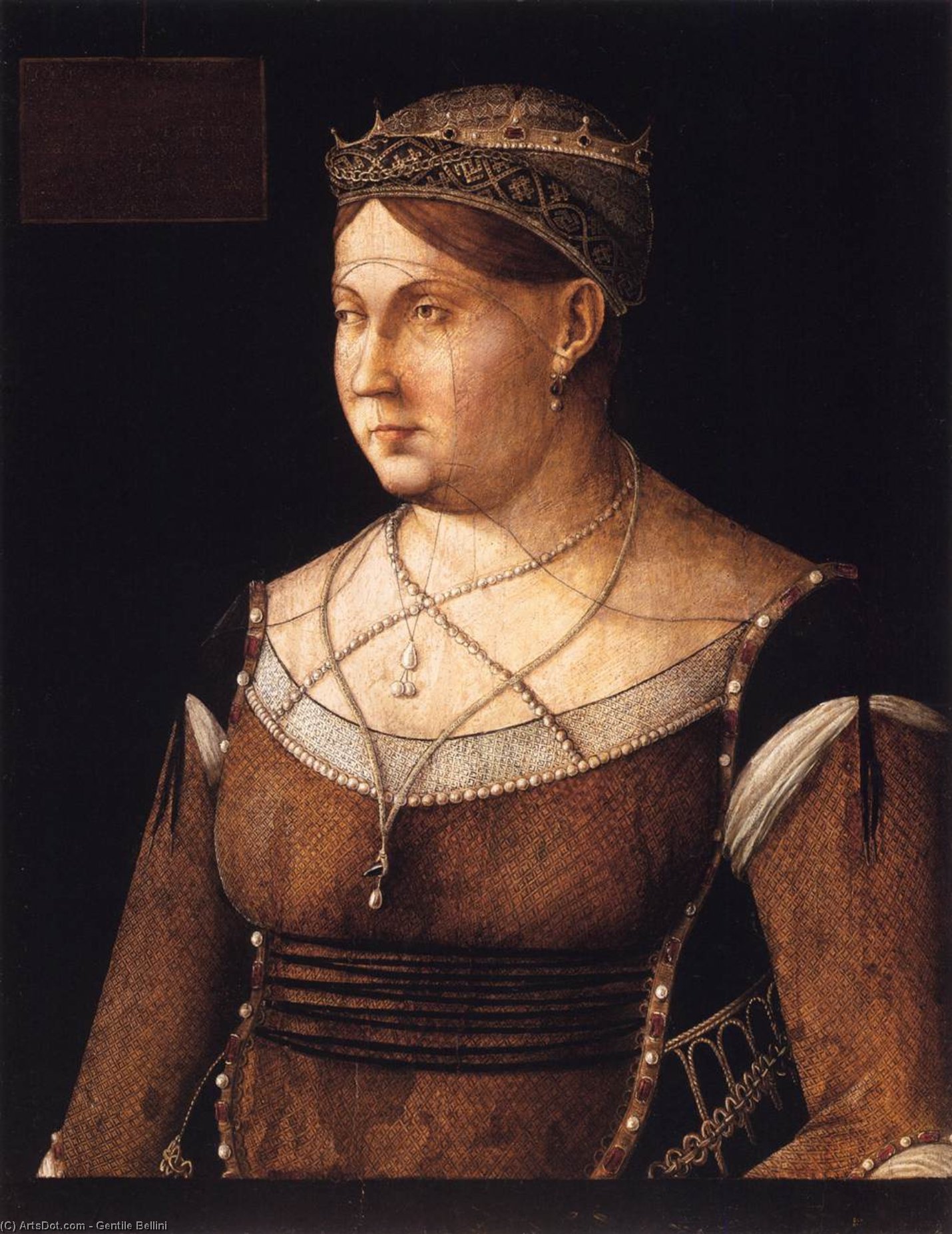
Portrait of Caterina Cornaro, Queen of Cyprus
 Oil On Canvas
- WallArt
- Renaissance
 1500
1500 63.0 x 49.0 cm
 Szépmûvészeti Múzeum
 Read More
Purchase a high-resolution, enhanced digital image, far superior to the online preview.
Each file is meticulously prepared by our in-house specialists using advanced tools and expert manual retouching. We ensure every image has exceptional clarity, precise color accuracy, and fine detail.
The final file is delivered via email within 72 hours, optimized for immediate use in professional, editorial, and print environments. This is the same quality trusted by top-tier design studios, publishers, and galleries.
Digital Image
Download a high-resolution file for personal display, printing, and creative projects. ( Buy Print Buy Hand Made Painting)
Included in Every Digital Image Order
Expert Digital Delivery, Guaranteed
When you choose ArtsDot.com, you're not just getting an image - you're receiving a professionally enhanced digital artwork, crafted with precision and backed by a satisfaction guarantee. Here's everything that comes with your order, automatically:

Fast Email Delivery
Your high-resolution digital image file will be emailed to you within 72 hours of ordering - ready for immediate use.

AI-Enhanced Digital File
Your artwork is professionally optimized using advanced AI tools and manual editing, ensuring maximum detail, clarity, and color accuracy.

Free Lifetime Re-Delivery
Accidentally deleted or lost your file? No worries - we'll resend it to you anytime, free of charge.

No Import Fees - Ever
Enjoy your artwork instantly with zero customs, duties, or delivery fees - digital downloads are always tax-free.

Color Accuracy Guarantee
We ensure your digital image reflects the original colors as closely as possible using professional tools and color management.

100-Day Satisfaction Guarantee
If you're not satisfied with your digital image, we'll revise it or refund 100% within 100 days - no questions asked.

100% Money-Back Guarantee
Not satisfied? Get a full refund within 100 days of receiving your digital file - no questions asked.

Bulk Order Discounts
Buy 3 images, save 10% - Buy 5, save 15% - Buy 10+, save 20%. Great for creative projects, galleries, and agencies.
A Regal Portrait: Gentile Bellini’s Enigmatic Queen
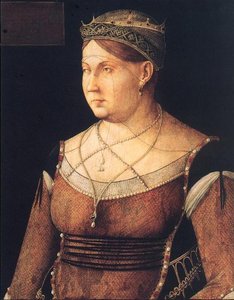
Gentile Bellini's “Portrait of Caterina Cornaro, Queen of Cyprus” is more than a simple likeness; it’s a carefully constructed tableau of power, melancholy, and the quiet dignity of a woman navigating the treacherous currents of political destiny. Painted around 1500 during the height of Venice’s artistic ascendancy, this oil-on-wood masterpiece offers a rare glimpse into the life of a queen who traded the throne for a strategic marriage and ultimately found herself a pawn in the ambitions of empires.
The subject, Caterina Cornaro, was not born to royalty. A Venetian noblewoman, she became Queen of Cyprus through her marriage to James II, a man whose claim to the throne was tenuous at best. Her story is one of calculated diplomacy and quiet resilience—a woman forced to abdicate her kingdom in favor of Venice, yet retaining an aura of regal composure that transcends the circumstances of her life. Bellini masterfully captures this duality, presenting Caterina not as a triumphant ruler, but as a thoughtful observer, subtly conveying both strength and vulnerability.
The Venetian Renaissance: Style and Technique
Bellini’s style is distinctly Venetian, reflecting the artistic trends of his time. He employs a rich palette dominated by deep browns, ochres, and subtle blues—colors that lend an air of solemnity to the portrait. The composition is carefully balanced, with Caterina positioned slightly off-center, drawing the viewer's eye to her face. Bellini’s technique showcases remarkable attention to detail; the intricate folds of her gown, the delicate texture of her jewelry, and the subtle nuances of her expression are all rendered with exquisite precision.
Notably, Bellini departs from traditional portraiture conventions by focusing less on idealized beauty and more on psychological depth. He doesn’t shy away from portraying Caterina's age—a hint of weariness around her eyes suggests the burdens she carried as a queen in exile. The painting is executed with a smooth, polished surface, characteristic of Venetian oil painting, creating an almost luminous quality that enhances the portrait’s impact.
Symbolism and Narrative
Beyond its technical brilliance, “Portrait of Caterina Cornaro” is laden with symbolism. Her averted gaze—a deliberate choice by Bellini—suggests a sense of detachment, perhaps reflecting her isolation as a queen without a kingdom. The elaborate gown, adorned with pearls and jewels, speaks to her former status, while the simple background emphasizes her solitude. The inscription in the upper left corner – “You see how great I am; but even greater is the hand of Gentile Bellini which portrays me on such a small panel” – adds another layer of meaning, acknowledging the artist’s skill and subtly asserting Caterina's enduring presence.
The painting’s historical context is crucial to understanding its significance. Caterina Cornaro was a key figure in Venetian politics, used as a bargaining chip between rival powers. Her story embodies the complex interplay of diplomacy, power, and personal sacrifice that characterized Renaissance Italy. Bellini's portrait serves not only as a likeness of a queen but also as a poignant commentary on her fate.
A Timeless Masterpiece: Reproduction and Legacy
“Portrait of Caterina Cornaro, Queen of Cyprus” remains one of Gentile Bellini’s most celebrated works, admired for its psychological depth, technical mastery, and historical resonance. Reproductions offer a remarkable opportunity to experience the painting's beauty and contemplate its profound themes. Whether adorning a grand salon or a more intimate space, this portrait evokes a sense of timeless elegance and invites viewers to reflect on the complexities of power, identity, and the enduring legacy of one extraordinary woman.
Related Artworks





Artist Biography
A Venetian Renaissance Master
Gentile Bellini, born in Venice in 1429, emerged from a family deeply entrenched in the artistic heart of the city. His father, Jacopo Bellini, was a pioneering figure who embraced the relatively new medium of oil paint, and his younger brother, Giovanni, would later achieve renown as one of Venice’s most celebrated masters. Gentile's initial training unfolded within his father’s workshop, where he mastered the techniques that would define his career. One of Venice’s oldest surviving oil paintings, The Blessed Lorenzo Giustinian (1445), stands as a testament to this early skill and is now housed in the Accademia Museum. From these beginnings, Gentile quickly distinguished himself, earning recognition for his remarkable talent in portraiture and securing his position as the official painter of the Doges – the rulers of Venice. This prestigious role would profoundly shape his artistic trajectory, placing him at the center of Venetian power and society.Influences and Artistic Development
Gentile Bellini’s style was a fascinating synthesis of diverse influences. The rich traditions of the Byzantine Empire cast a long shadow over Venetian art, imbuing it with a distinctive aesthetic that resonated in Gentile's work through stylized figures and opulent color palettes. However, his artistic horizons expanded dramatically following an extraordinary journey to Constantinople in 1479. Invited by Sultan Mehmed II himself, Bellini spent time at the Ottoman court, an experience that proved pivotal in shaping his later creations. This encounter with a different culture, architecture, and way of life infused his paintings with a unique perspective. His portrait of Mehmed II, now residing in the National Gallery, London, is a striking example of this influence – a compelling depiction of power and personality informed by firsthand observation. Gentile’s compositions often feature grand scale scenes populated with numerous figures, reflecting the demands of commissions from Venice's powerful Scuole Grandi, major confraternities that played a vital role in civic life.Masterpieces and Artistic Legacy
Among Gentile Bellini’s most celebrated works are two monumental paintings: The Procession of the True Cross in Piazza San Marco (1496) and The Miracle of the True Cross at the S. Lorenzo Bridge (c. 1500). The former is a breathtaking panorama of Venetian life, capturing the energy and spectacle of a religious procession with meticulous detail. It showcases his ability to portray large crowds and intricate architectural settings with remarkable precision. The Miracle of the True Cross at the S. Lorenzo Bridge is particularly noteworthy for its inclusion of self-portraits – both Gentile’s own likeness and that of his brother, Giovanni Bellini. This subtle artistic collaboration offers a fascinating glimpse into their relationship and creative dialogue. Beyond individual paintings, Gentile Bellini holds an important place in art history as one of the founders of Orientalist art—a movement characterized by depictions of Eastern cultures and settings.Historical Significance
Gentile Bellini’s legacy rests on several key achievements. His pioneering use of oil paint solidified its position as the dominant medium in Venetian painting, allowing for greater detail, luminosity, and realism. Furthermore, his exposure to Ottoman culture and subsequent incorporation of Eastern motifs into his work established him as a significant figure in the development of Orientalist art—a trend that would captivate European artists for centuries. While often overshadowed by the fame of his brother Giovanni, Gentile Bellini’s contributions are now widely recognized as essential to understanding the evolution of Western painting. He skillfully blended Venetian artistic traditions with influences from both the Byzantine Empire and Ottoman culture, creating a unique and compelling style that resonated throughout Europe. His work stands as a testament not only to his exceptional skill and talent but also to the power of cultural exchange in shaping artistic innovation.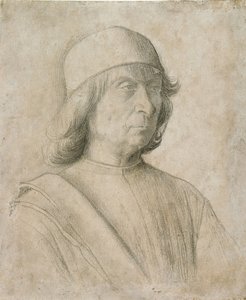
Gentile Bellini
1429 - 1507 , Italy
Quick Facts
- Artistic Movement Or Style: Renaissance
- Artists Or Movements Influenced By This Artist: ['Orientalist art']
- Artists Who Influenced This Artist:
- Jacopo Bellini
- Gentile da Fabriano
- Date Of Birth: 1429
- Date Of Death: 1507
- Full Name: Gentile Bellini
- Nationality: Italian
- Notable Artworks:
- Procession in Piazza San Marco
- Miracle of the True Cross
- Portrait of Mehmed II
- Place Of Birth: Venice, Italy