

 Preview
 Send
Send Share
Share
 Details

 Download
 Similars
 X-Ray
X-Ray Diaporama
 Stats
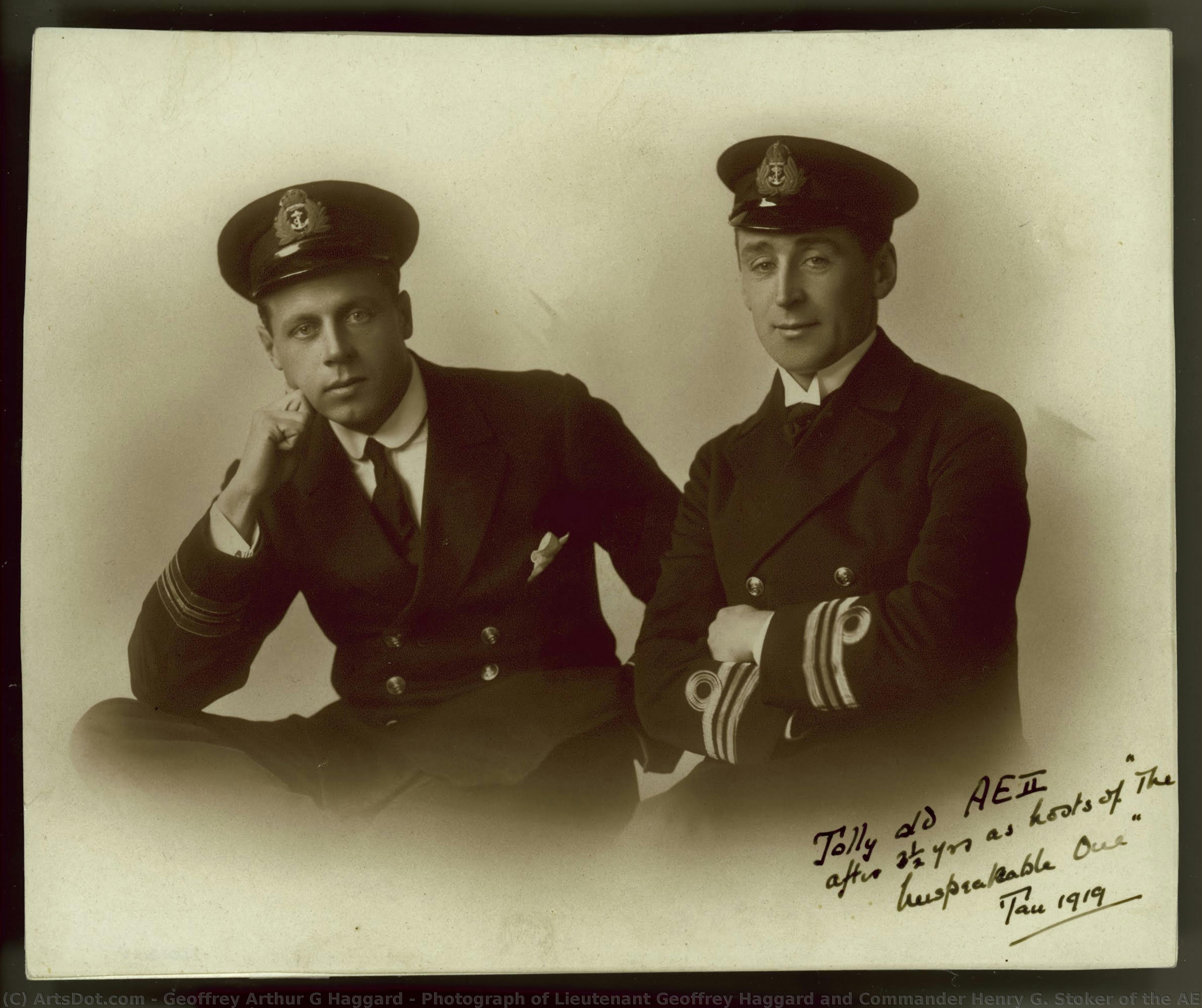
StatsPhotograph of Lieutenant Geoffrey Haggard and Commander Henry G. Stoker of the AE2

 Read More
Purchase a high-resolution, enhanced digital image, far superior to the online preview.
Each file is meticulously prepared by our in-house specialists using advanced tools and expert manual retouching. We ensure every image has exceptional clarity, precise color accuracy, and fine detail.
The final file is delivered via email within 72 hours, optimized for immediate use in professional, editorial, and print environments. This is the same quality trusted by top-tier design studios, publishers, and galleries.
Digital Image
Download a high-resolution file for personal display, printing, and creative projects. ( Switch to Print Buy Hand Made Painting)
Included in Every Digital Image Order
Expert Digital Delivery, Guaranteed
When you choose ArtsDot.com, you're not just getting an image - you're receiving a professionally enhanced digital artwork, crafted with precision and backed by a satisfaction guarantee. Here's everything that comes with your order, automatically:

Fast Email Delivery
Your high-resolution digital image file will be emailed to you within 72 hours of ordering - ready for immediate use.

AI-Enhanced Digital File
Your artwork is professionally optimized using advanced AI tools and manual editing, ensuring maximum detail, clarity, and color accuracy.

Free Lifetime Re-Delivery
Accidentally deleted or lost your file? No worries - we'll resend it to you anytime, free of charge.

No Import Fees - Ever
Enjoy your artwork instantly with zero customs, duties, or delivery fees - digital downloads are always tax-free.

Color Accuracy Guarantee
We ensure your digital image reflects the original colors as closely as possible using professional tools and color management.

100-Day Satisfaction Guarantee
If you're not satisfied with your digital image, we'll revise it or refund 100% within 100 days - no questions asked.

100% Money-Back Guarantee
Not satisfied? Get a full refund within 100 days of receiving your digital file - no questions asked.

Bulk Order Discounts
Buy 3 images, save 10% - Buy 5, save 15% - Buy 10+, save 20%. Great for creative projects, galleries, and agencies.
Related Artworks








Artist Biography
Vincent van Gogh: A Life Painted in Light and Shadow
Vincent van Gogh, a name synonymous with passionate intensity and groundbreaking artistic vision, remains one of the most recognizable figures in art history. Born in 1853 in Groot-Zundert, Netherlands, his life was tragically short – just 37 years – yet within that brief span, he produced over 860 paintings, etchings, and drawings that continue to captivate and move audiences worldwide. More than simply a painter, Van Gogh was an innovator who fundamentally altered the course of Western art, laying the groundwork for Expressionism with his bold use of color, dynamic brushstrokes, and deeply personal emotional expression.
Van Gogh’s early life offered little indication of the turbulent artistic journey that lay ahead. He worked as an art dealer in The Hague and London, a period marked by financial instability and a growing sense of disillusionment. He briefly studied theology at the Protestant University of Amsterdam but abandoned his studies after only one year, feeling ill-suited to the rigid demands of religious life. A stint as a teacher in England followed, further fueling his dissatisfaction with conventional paths. It was during this time that he began seriously pursuing art, initially drawn to the realism and social commentary of Millet’s paintings.
His artistic development truly accelerated when he moved to Paris in 1886, immersing himself in the vibrant Impressionist and Post-Impressionist scene. He encountered artists like Toulouse-Lautrec, Émile Bernard, and Paul Gauguin, absorbing their techniques and experimenting with new approaches to color and composition. Gauguin’s influence was particularly profound; Van Gogh adopted Gauguin's use of intense colors and simplified forms, but infused his work with a uniquely personal emotional intensity. The period in Paris saw the creation of some of his most iconic works, including *Self-Portrait with Bandaged Ear*, a poignant reflection on his struggles with mental illness.
The Yellow House and the Rise of Expressionism
In 1888, Van Gogh moved to Arles in Provence, southern France, seeking a haven for artistic creation. He envisioned establishing an artist’s colony – “The Yellow House” – where artists could live and work together, fostering collaboration and inspiration. This period proved incredibly productive, yielding masterpieces such as *Sunflowers*, *Bedroom in Arles*, and *The Night Café*. However, it was also marked by increasing mental instability, exacerbated by loneliness, financial difficulties, and a strained relationship with Gauguin. The infamous incident involving the stabbing of his ear remains shrouded in mystery, though it’s widely believed to have been triggered by a heated argument with Gauguin.
During this time, Van Gogh began experimenting with techniques that would later define Expressionism – using thick impasto brushstrokes, distorted forms, and vibrant, often clashing colors to convey intense emotions. He sought to capture not just the appearance of things but also their underlying psychological essence. His landscapes, particularly those depicting the Provençal countryside, are characterized by a restless energy and a sense of profound connection to nature.
A Final Year of Turmoil and Legacy
Following a period of hospitalization in Saint-Rémy, Van Gogh moved to Auvers-sur-Oise near Paris. Despite receiving medical care, his mental health continued to deteriorate. He painted feverishly during this time, producing works like *Wheatfield with Crows* and *The Starry Night*, both imbued with a sense of unease and impending doom. Tragically, on July 27, 1890, Van Gogh shot himself in the chest and died two days later at the age of 37. His brother Theo was by his side.
During his lifetime, Van Gogh sold only one painting, *The Red Vineyard*. However, after his death, his work gained increasing recognition, transforming him from a relatively obscure artist into an international icon. Today, his paintings are among the most valuable and beloved in the world, celebrated for their emotional power, innovative techniques, and enduring legacy as a pioneer of modern art. His life story—a tale of passion, struggle, and ultimately, profound artistic achievement—continues to inspire artists and viewers alike.
Influences and Artistic Style
Van Gogh’s artistic style was shaped by a complex interplay of influences. Early in his career, he admired the realism of Jean-François Millet and the social commentary of Gustave Courbet. However, it was the Impressionists and Post-Impressionists who truly ignited his imagination. He studied the works of artists like Claude Monet, Edgar Degas, and Paul Cézanne, absorbing their techniques for capturing light and color. Gauguin’s emphasis on bold colors and simplified forms had a particularly strong impact, leading Van Gogh to develop his own distinctive style characterized by expressive brushstrokes, vibrant hues, and emotionally charged subjects.
His technique involved applying paint directly from the tube in thick layers, creating a textured surface that seemed to vibrate with energy. He often used complementary colors – such as blue and orange or red and green – to heighten the intensity of his paintings. Van Gogh’s compositions were frequently dynamic and asymmetrical, reflecting his turbulent emotional state. His use of color was not always realistic; he often exaggerated hues to convey specific moods and emotions.
Historical Significance
Vincent van Gogh's impact on art history is undeniable. He is widely considered a pivotal figure in the transition from Impressionism to Expressionism, paving the way for artists who sought to express their inner feelings through color and form. His bold experimentation with technique and his willingness to break with traditional artistic conventions profoundly influenced generations of artists. Furthermore, Van Gogh’s life story—a testament to the struggles of an artist battling mental illness—has resonated deeply with audiences, transforming him into a symbol of creative passion and personal struggle. His work continues to be studied and admired for its beauty, emotional depth, and enduring relevance.
geoffrey arthur g haggard
1888 - 1939 , United Kingdom
Quick Facts
- Artistic Movement Or Style: Post-Impressionism
- Artists Or Movements Influenced By This Artist:
- Expressionism
- Post-Impressionism
- Artists Who Influenced This Artist:
- Eugène Delacroix
- Edgar Degas
- Paul Gauguin
- Date Of Birth: March 30, 1853
- Date Of Death: July 29, 1890
- Full Name: Vincent Willem van Gogh
- Nationality: Dutch
- Notable Artworks:
- Sunflowers
- Bedroom in Arles
- The Starry Night
- Wheatfield with Crows
- Place Of Birth: Ghent, Belgium