

![Title (original): Calechut Celeberrimum Indiae [with] Ormus [with] Cananor — Georg Braun (cartographer)](/media/artworks/images-full/f4/e9/f4e90ae4df7d2cc9d74511d7ae05a605.jpg)
 Preview
 Send
Send Share
Share
 Details

 Download
 Similars
 X-Ray
X-Ray Diaporama
Title (Original): Calechut Celeberrimum Indiae [with] Ormus [with] Cananor
 Print
Print- WallArt
 Early Modern
 39.0 x 53.0 cm
 Kalakriti Archives
 Read More
Purchase a high-resolution, enhanced digital image, far superior to the online preview.
Each file is meticulously prepared by our in-house specialists using advanced tools and expert manual retouching. We ensure every image has exceptional clarity, precise color accuracy, and fine detail.
The final file is delivered via email within 72 hours, optimized for immediate use in professional, editorial, and print environments. This is the same quality trusted by top-tier design studios, publishers, and galleries.
Digital Image
Download a high-resolution file for personal display, printing, and creative projects. ( Buy Print Buy Hand Made Painting)
Included in Every Digital Image Order
Expert Digital Delivery, Guaranteed
When you choose ArtsDot.com, you're not just getting an image - you're receiving a professionally enhanced digital artwork, crafted with precision and backed by a satisfaction guarantee. Here's everything that comes with your order, automatically:

Fast Email Delivery
Your high-resolution digital image file will be emailed to you within 72 hours of ordering - ready for immediate use.

AI-Enhanced Digital File
Your artwork is professionally optimized using advanced AI tools and manual editing, ensuring maximum detail, clarity, and color accuracy.

Free Lifetime Re-Delivery
Accidentally deleted or lost your file? No worries - we'll resend it to you anytime, free of charge.

No Import Fees - Ever
Enjoy your artwork instantly with zero customs, duties, or delivery fees - digital downloads are always tax-free.

Color Accuracy Guarantee
We ensure your digital image reflects the original colors as closely as possible using professional tools and color management.

60-Day Satisfaction Guarantee
If you're not satisfied with your digital image, we'll revise it or refund 100% within 60 days - no questions asked.

100% Money-Back Guarantee
Not satisfied? Get a full refund within 60 days of receiving your digital file - no questions asked.

Bulk Order Discounts
Buy 3 images, save 10% - Buy 5, save 15% - Buy 10+, save 20%. Great for creative projects, galleries, and agencies.
Collectible Description
A Window into the Golden Age of Exploration
In this breathtaking cartographic masterpiece, we are transported back to the late 16th century, an era when the horizon was not a boundary but an invitation. The work, titled Calechut Celeberrimum Indiae [with] Ormus [with] Cananor, serves as a profound visual chronicle of the Malabar Coast. Created by the renowned cartographer Georg Braun, this piece is far more than a mere map; it is a window into the soul of the Age of Discovery. The scene unfolds with a sweeping view of coastal India, where the rhythmic dance of maritime life meets the majestic permanence of distant mountains. Through the delicate interplay of water, vessels, and human activity, the artwork captures the very essence of a world being rediscovered by European eyes.
The composition is masterfully balanced, drawing the viewer’s gaze across a tranquil yet bustling seascape. Large, stately boats dominate the central waters, their presence suggesting the heavy weight of commerce and the immense wealth flowing from the Indian subcontinent to the ports of Europe. Smaller vessels drift near the shoreline, adding a sense of scale and movement to the composition. The landscape itself is a triumph of early topographical art, featuring lush, undulating mountains that provide a dramatic backdrop to the coastal settlements. This juxtaposition of the fluid, ever-changing sea against the steadfast earth creates a visual harmony that is both soothing and intellectually stimulating.
The Artistry of Historical Documentation
Technically, this work belongs to the celebrated Civitates Orbis Terrarum series, a landmark achievement in the history of printmaking and cartography. The style is characterized by an exquisite level of detail that reflects the meticulous observations of the era. While the imagery may be rooted in the accounts of Portuguese mariners and early travelers, the execution possesses a painterly quality that transcends simple documentation. The use of light and shadow across the water's surface and the intricate rendering of the distant architecture suggest a deep reverence for the subject matter. For the collector, this piece offers a rare opportunity to own a fragment of history, rendered with a precision that honors the original 16th-century engravings.
Beyond its aesthetic beauty, the artwork carries immense historical weight. It represents a time when the "exotic wonders" of India were first being etched into the European consciousness. The depiction of Calicut and Cannanore is imbued with an authoritative sense of place, acting as a contemporary record of these vital trade centers. There is a palpable sense of wonder embedded in every line—a reflection of the awe felt by those who first witnessed the immense riches of the East. This emotional resonance makes the piece particularly captivating for interior designers looking to introduce a sense of narrative and worldly sophistication into a space.
A Timeless Addition to the Sophisticated Interior
For the discerning art lover or interior designer, this reproduction offers much more than decoration; it offers an atmosphere. The muted, earthy tones and the classical composition make it a versatile centerpiece that complements both traditional and contemporary settings. Whether placed in a library filled with leather-bound volumes or as a focal point in a modern, minimalist gallery, the artwork invites contemplation and conversation. It serves as a bridge between the past and the present, bringing the spirit of exploration into the modern home.
Investing in such a high-quality reproduction allows one to celebrate the intersection of science, art, and history. The piece evokes a sense of wanderlust and intellectual curiosity, making it an ideal choice for those who find inspiration in the stories of the great explorers. It is a sophisticated tribute to the enduring human desire to map the unknown and to find beauty in the far reaches of our world.
Related Artworks


Artist Biography
El Greco: A Visionary of Faith and Emotion
Domenikos Theotokopoulos, better known as El Greco (1541-1614), remains one of the most enigmatic and intensely personal figures in Western art. Born in Crete – then a Venetian possession – his early life offers little concrete information, hinting at an upbringing steeped in Byzantine artistic traditions, evidenced by his initial work depicting icons. However, it was his relocation to Spain, specifically Toledo, that irrevocably shaped his unique style and cemented his legacy as a revolutionary painter. El Greco’s journey wasn't simply geographical; it represented a profound shift in artistic sensibility, moving away from the established conventions of his time towards an intensely subjective and emotionally charged vision. His work is characterized by elongated figures, dramatic lighting, vibrant colors, and a sense of spiritual intensity that continues to captivate viewers centuries later.Early Influences and Venetian Roots
El Greco’s formative years in Venice (around 1577-1580) proved pivotal. While he initially sought patronage from the influential artist Giulio Clovio, he found himself largely unsupported by the established Venetian school. Despite this initial lack of formal recognition, El Greco absorbed much from the Venetian masters, particularly Tintoretto. The dynamism and theatricality of Tintoretto’s compositions – his use of swirling movement, dramatic lighting effects, and emotionally charged figures – profoundly impacted El Greco's own approach to painting. He adopted Tintoretto’s penchant for intense color contrasts and a sense of overwhelming scale, though he ultimately developed these elements into something entirely his own. The influence of Mannerism is also evident in his elongated figures and the distortion of perspective, creating an otherworldly atmosphere that anticipates later developments in abstract art. His early works, such as the *Purification of the Temple* (Minneapolis Institute of Arts) and the portrait of Clovio (Museo di Capodimonte, Naples), demonstrate this nascent style – a departure from the more realistic depictions prevalent at the time.The Toledo Period: Spiritual Intensity and Monumental Altarpieces
El Greco’s arrival in Toledo in 1576 marked the true flowering of his artistic genius. The city's vibrant religious atmosphere, with its numerous churches and convents, provided a fertile ground for his creative output. He quickly gained commissions to paint monumental altarpieces, transforming these spaces into immersive experiences of faith and emotion. Works like *The Disrobing of Christ* (1577-1579), *The Burial of the Count of Orgaz* (1586–88), and *Assumption of the Virgin* (1577–9) are testaments to his extraordinary skill and dramatic vision. These paintings are not merely depictions of biblical events; they are explorations of spiritual ecstasy, conveying a sense of overwhelming emotion and divine presence. The figures seem to float in an ethereal space, bathed in intense light, their gestures imbued with profound meaning. The use of vibrant colors – reds, blues, yellows – further amplifies the emotional impact, creating a visual language that transcends mere representation.A Unique Style: Distortion and Emotional Expression
El Greco’s distinctive style is instantly recognizable, characterized by elongated figures, distorted perspectives, and an almost hallucinatory quality. He deliberately moved away from naturalistic representation, prioritizing emotional expression over anatomical accuracy. His figures are often depicted in dramatic poses, their faces contorted with emotion – anguish, ecstasy, or profound contemplation. This deliberate distortion creates a sense of unease and mystery, inviting the viewer to engage with the painting on an emotional level rather than simply observing it as a realistic depiction. The use of swirling lines and dynamic compositions further contributes to this sense of movement and energy. It’s important to note that El Greco's style wasn't born overnight; it evolved gradually over his career, becoming increasingly bold and expressive in his later works.Legacy and Historical Significance
El Greco’s influence on subsequent generations of artists is undeniable. He paved the way for Expressionism and Surrealism, demonstrating the power of art to convey subjective experience and emotional intensity. His work continues to be studied and admired for its originality, spiritual depth, and dramatic visual impact. He remains a controversial figure – some critics dismiss his style as chaotic and mannered, while others recognize it as a groundbreaking expression of faith and emotion. Regardless of one’s personal opinion, El Greco's contribution to the history of art is profound. His paintings are housed in major museums around the world, including the Prado Museum in Madrid, the National Gallery in Washington D.C., and the Art Institute of Chicago, ensuring that his visionary work will continue to inspire and challenge viewers for generations to come. His legacy lies not just in his individual masterpieces but also in his radical departure from artistic conventions and his unwavering commitment to expressing the inner world of faith and emotion through paint.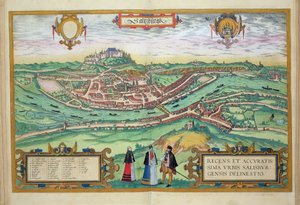
georg braun (cartographer)
1541 - 1622 , Germany
Quick Facts
- Artistic Movement Or Style: El Greco School
- Artists Or Movements Influenced By This Artist: ['Mannerism']
- Artists Who Influenced This Artist:
- Tintoretto
- Titian
- Date Of Birth: 1 October 1541
- Date Of Death: 7 April 1614
- Full Name: Domenikos Theotokopoulos
- Nationality: Cretan-born, Spanish
- Notable Artworks:
- Disrobing of Christ
- Burial of the Count of Orgaz
- The Adoration of the Shepherds
- Place Of Birth: Fodele, Crete

