 Preview
 Send
Send Share
Share
 Details

 Download
 Similars
 X-Ray
X-Ray Diaporama
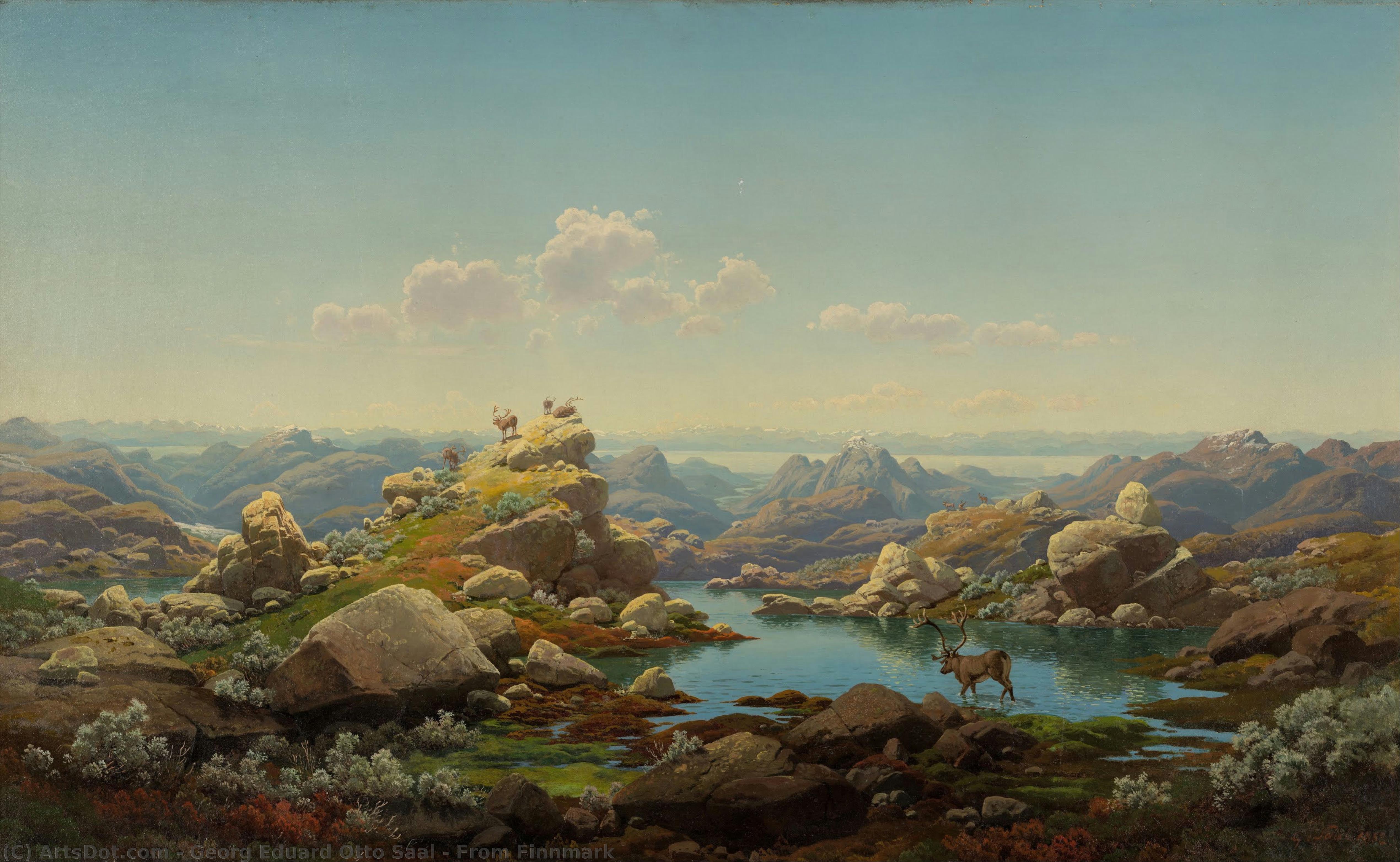
From Finnmark
 1852
1852 60.0 x 98.0 cm
 Nordnorsk Kunstmuseum
 Read More
Hand Made Oil Reproduction
Hand-painted oil on canvas in your size and frame, made to order by our artists. ( Buy Print Buy Image)




































Pick from our preset sizes that match the artwork's original proportions.

You may enter your own dimensions to fit a specific frame or space. If your selected size does not match the original image's proportions, we will either crop the artwork or extend the painting with additional hand-painted elements. A digital mockup will be sent for your approval before production begins.
Please note that the on-screen preview does not reflect the actual cropping or extension. Only the mockup will accurately show the final composition.
While custom sizes are available, we recommend selecting a dimension from the predefined list to preserve the original proportions.
After order, ArtsDot.com team will email client for instructions and provide a mockup preview
Worldwide Delivery () in 3/4 weeks instead of standard 5 weeks. (21 August). No compromise on quality.

Free Worldwide Express Shipping

High-Quality Linen Canvas

Full Shipping Insurance

Customs Tax Refund Guarantee

True Color Matching Guarantee

60-Day Return Policy (Defects Only)

100% Money-Back Guarantee

Bulk Discount Offer
 Glass option is only available in size under 110 CM

From Finnmark
Reproduction Medium
Reproduction Size
-


Total Price
$ 263
Artwork Description
Related Artworks








Artist Biography
The Soul of the Northern Wilderness
Georg Eduard Otto Saal, a name whispered with reverence among admirers of nineteenth-century Romanticism, possessed a singular ability to translate the rugged majesty of the natural world onto canvas. Born in 1817 in the historic city of Koblenz, Prussia, Saal’s early life was steeped in the architectural and artistic traditions of his homeland. His initial foray into the arts began under the guidance of Konrad Zick, whose lessons provided the foundational precision that would later allow Saal to render the intricate geological textures of mountain ranges and the delicate translucency of alpine lakes. Before he had even fully matured as an artist, Saal’s proficiency was such that he contributed to the reconstruction efforts at the ruins of Stolzenfels Castle, a task that undoubtedly instilled in him a lifelong fascination with the enduring strength of stone and the romantic allure of ancient structures reclaimed by nature.
The trajectory of Saal’s career was irrevocably altered when he entered the Kunstakademie Düsseldorf between 1842 and 1846. It was within these hallowed halls that he encountered the titans of landscape painting, studying under Johann Wilhelm Schirmer and mastering the architectural nuances of Rudolf Wiegmann. However, it was his profound friendship with the Norwegian master Hans Gude that would become the most defining influence of his life. Inspired by Gude’s passion for the North, Saal turned his gaze toward the dramatic fjords and soaring peaks of Norway. This period of exploration was not merely a geographical journey but an artistic metamorphosis; through his travels alongside contemporaries like August Leu and August Becker, Saal began to move beyond mere topographical accuracy, seeking instead to capture the atmospheric soul of the Scandinavian wilderness.
A Symphony of Light and Atmosphere
Saal’s technical evolution is a testament to the shifting tides of European art, moving from the structured precision of the Düsseldorf School toward the emotive, light-drenched sensibilities of the Barbizon movement. As he established a residence in Paris after 1857, his work began to breathe with a new, luminous vitality. He embraced the principles of plein air painting, working directly from nature to observe how the fleeting moments of sunlight could transform a landscape from a somber, shadowed valley into a radiant sanctuary of color. His canvases became masterclasses in tonal gradation, where the heavy mists of a fjord might dissolve into the brilliant clarity of a midnight sun, or where the dense, dark foliage of a Black Forest glade would yield to a soft, ethereal glow.
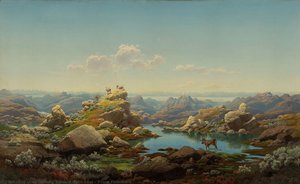
The brilliance of Saal’s technique lies in his ability to balance the monumental with the minute. While his compositions often feature the overwhelming scale of towering mountains and vast, reflective waters, he never neglected the delicate life teeming within these landscapes. A single reindeer traversing a rocky outcrop or the quiet movement of a sailboat upon a calm sea serves to ground his grander visions, providing a sense of scale and a touch of narrative intimacy. This duality—the sublime grandeur of the earth paired with the quiet pulse of living things—allowed him to evoke a profound spiritual contemplation in his viewers, inviting them to find peace within the wildness.
Legacy of a Court Painter
Despite the immense scale of his artistic vision, Saal’s life was marked by a certain refined elegance and official recognition. His appointment as the court painter to Grand Duke Louis II of Baden-Baden signaled his arrival as a figure of significant cultural importance. Settling in Baden-Baden, he became a central figure in the region's artistic life, even as his heart remained tethered to the rugged landscapes of Norway and the atmospheric experiments of France. His prolific output, which includes over 300 documented works, serves as a panoramic record of the nineteenth-century landscape tradition.
The final years of Saal’s life were shadowed by the turbulent events of European history and personal frailty. Following a period of recovery from a stroke in 1869, the onset of the Siege of Paris in 1870 prompted him to return home, only for a second stroke to claim his life shortly after his arrival. Though his time was tragically brief, the impact of Georg Eduard Otto Saal remains indelible. He stands as a bridge between the rigorous academic traditions of Germany and the emotive, light-focused revolutions of France, leaving behind a body of work that continues to inspire awe through its profound sensitivity to the eternal beauty of the natural world.
georg eduard otto saal
1817 - 1870 , Germany
Quick Facts
- Artistic Movement Or Style: Barbizon school
- Artists Or Movements Influenced By This Artist: ['Landscape Painting']
- Artists Who Influenced This Artist: ['Hans Gude']
- Date Of Birth: 1817
- Full Name: Georg Eduard Otto Saal
- Nationality: German
- Notable Artworks: ['Norwegian Landscapes']
- Place Of Birth: Koblenz, Germany