 Preview
 Send
Send Share
Share
 Details

 Download
 Similars
 X-Ray
X-Ray Diaporama
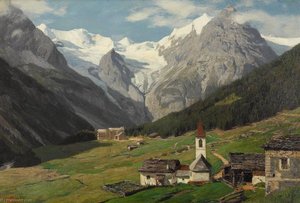
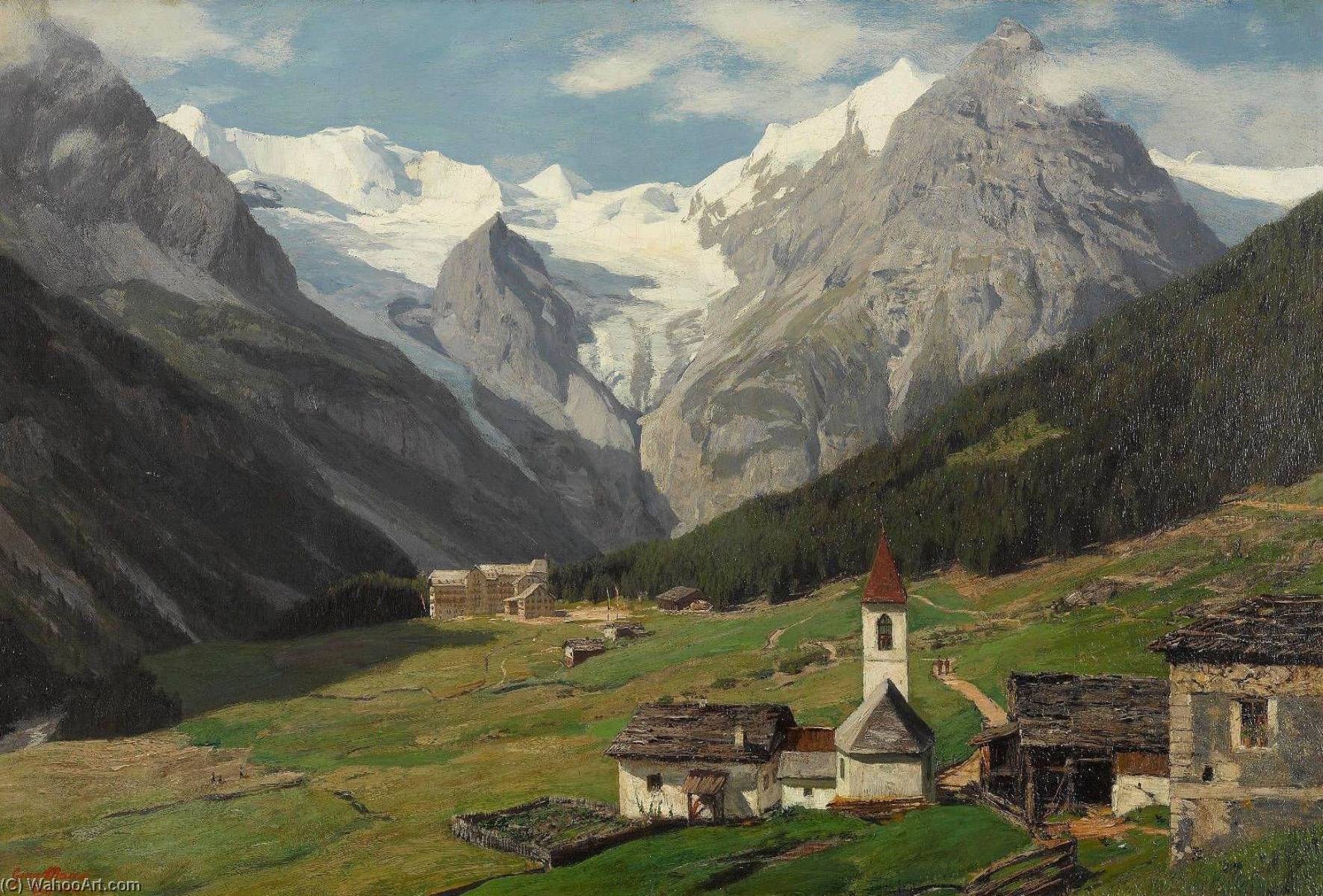
Trafoi am Ortler
 1896
1896 50.0 x 75.0 cm
 Read More
Hand Made Oil Reproduction
Hand-painted oil on canvas in your size and frame, made to order by our artists. ( Buy Print Buy Image)




































Pick from our preset sizes that match the artwork's original proportions.

You may enter your own dimensions to fit a specific frame or space. If your selected size does not match the original image's proportions, we will either crop the artwork or extend the painting with additional hand-painted elements. A digital mockup will be sent for your approval before production begins.
Please note that the on-screen preview does not reflect the actual cropping or extension. Only the mockup will accurately show the final composition.
While custom sizes are available, we recommend selecting a dimension from the predefined list to preserve the original proportions.
After order, ArtsDot.com team will email client for instructions and provide a mockup preview
Worldwide Delivery () in 3/4 weeks instead of standard 5 weeks. (24 August). No compromise on quality.

Free Worldwide Express Shipping

High-Quality Linen Canvas

Full Shipping Insurance

Customs Tax Refund Guarantee

True Color Matching Guarantee

60-Day Return Policy (Defects Only)

100% Money-Back Guarantee

Bulk Discount Offer
 Glass option is only available in size under 110 CM

Trafoi am Ortler
Reproduction Medium
Reproduction Size
-


Total Price
$ 263
Related Artworks










Artist Biography
Georg Macco: Echoes of the Orient in a Düsseldorf Landscape
Georg Macco, born in Aachen in 1863 and tragically passing away in Genoa in 1933, remains a captivating figure within the realm of Orientalist painting. More than simply a landscape artist, Macco was an explorer of spirit and sensation, meticulously translating the vibrant hues and profound mysteries of the Middle East onto canvas. His work isn’t merely a depiction of exotic locales; it's a deeply personal dialogue between German artistic tradition – specifically the Düsseldorfer Malerschule – and the intoxicating allure of distant lands.
His early life, steeped in familial history, provided an unexpected foundation for his artistic journey. Macco’s great-great-uncle, Alexander Macco, a renowned portraitist and historian associated with figures like Beethoven and Goethe, instilled within him a respect for meticulous observation and the power of visual storytelling. This lineage, combined with his formal training at the Kunstakademie Düsseldorf under Eugen Gustav Dücker and Johann Peter Theodor Janssen – masters known for their emphasis on realism and atmospheric perspective – shaped Macco’s technical abilities from the outset. Initially, he focused on capturing the stark beauty of Alpine and Nordic landscapes, honing his skills in rendering light and shadow with remarkable precision. However, a restless spirit and an insatiable curiosity soon led him to embark on a transformative series of journeys eastward.
The Orient Beckons: Travels and Transformations
Beginning around 1890, Macco’s life became inextricably linked to the Middle East. He wasn't merely a tourist; he was an intensely observant chronicler, immersing himself in the daily rhythms, religious practices, and social structures of countries like Syria, Palestine, Egypt, and Persia. These weren’t fleeting snapshots but extended periods of residence, allowing him to build relationships with local communities and develop a nuanced understanding of their culture. This deep engagement is evident in his paintings – they are infused with an authenticity rarely found in the work of contemporaries who relied solely on secondhand accounts or superficial observations.
Crucially, Macco’s artistic development during these travels wasn't simply about replicating what he saw. He actively sought to capture the *feeling* of the Orient—the heat shimmering off ancient stones, the scent of spices mingling with incense, the quiet reverence of a mosque or church. His palette shifted dramatically, embracing rich, saturated colors – deep blues and greens for the desert landscapes, fiery oranges and reds for the sun-drenched architecture, and vibrant purples and golds for the intricate details of Islamic art and textiles. He employed loose brushstrokes and a sense of atmospheric perspective to convey both the grandeur and the intimacy of these environments.
Key Works and Artistic Style
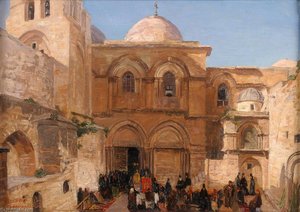
Among Macco’s most celebrated works are “The Holy Sepulchre of Jerusalem” (1897) and “Trafoi am Ortler” (1902). The Holy Sepulchre, a monumental canvas depicting the sacred site with an almost overwhelming sense of solemnity, showcases his mastery of light and shadow, creating a palpable atmosphere of reverence. “Trafoi am Ortler,” a dramatic mountain scene bathed in golden sunlight, exemplifies his ability to capture the rugged beauty of the Alps while simultaneously evoking the spirit of the Orient through color and composition. His paintings often feature solitary figures—pilgrims, merchants, or local inhabitants—engaged in everyday activities, providing a sense of scale and human connection within the vast landscapes.
Macco’s style is often categorized as Orientalist, but it transcends simple labels. He was influenced by artists like Eugène Delacroix and Jean-Léon Gérôme, who had previously explored similar themes, yet he possessed a unique sensibility—a quiet intensity and an unwavering commitment to capturing the essence of his subjects. His work reflects not only his artistic training but also his personal experiences and spiritual journey.
Legacy and Historical Context
Georg Macco’s paintings gained considerable recognition during his lifetime, particularly in Germany, where they were exhibited at major art salons and acquired by prominent collectors. He became a leading figure within the Düsseldorfer Malerschule, a group of artists who championed a distinctly German approach to landscape painting. His work also aligns with broader trends in 19th-century European art—a fascination with exotic cultures and a growing interest in exploring themes of faith, spirituality, and the human condition.
Despite his success, Macco’s legacy has been somewhat overshadowed by the rise of modernism. However, in recent decades, there has been a renewed appreciation for his work – particularly for its evocative power and its unique blend of artistic skill and cultural sensitivity. His paintings continue to resonate with viewers today, offering a glimpse into a world both distant and deeply familiar—a testament to the enduring allure of the Orient and the transformative potential of travel and artistic exploration.
georg macco
1863 - 1933
Quick Facts
- Artistic Movement Or Style: Orientalist Painting
- Artists Or Movements Influenced By This Artist:
- Düsseldorfer Malerschule
- Alexander Macco
- Artists Who Influenced This Artist:
- Eugen Dücker
- Johann Peter Theodor Janssen
- Date Of Birth: March 23, 1863
- Date Of Death: April 20, 1933
- Full Name: Georg Macco
- Nationality: German
- Notable Artworks:
- The Holy Sepulchre
- Trafoi am Ortler
- Place Of Birth: Aachen, Germany