

 Preview
 Send
Send Share
Share
 Details

 Download
 Similars
 X-Ray
X-Ray Diaporama
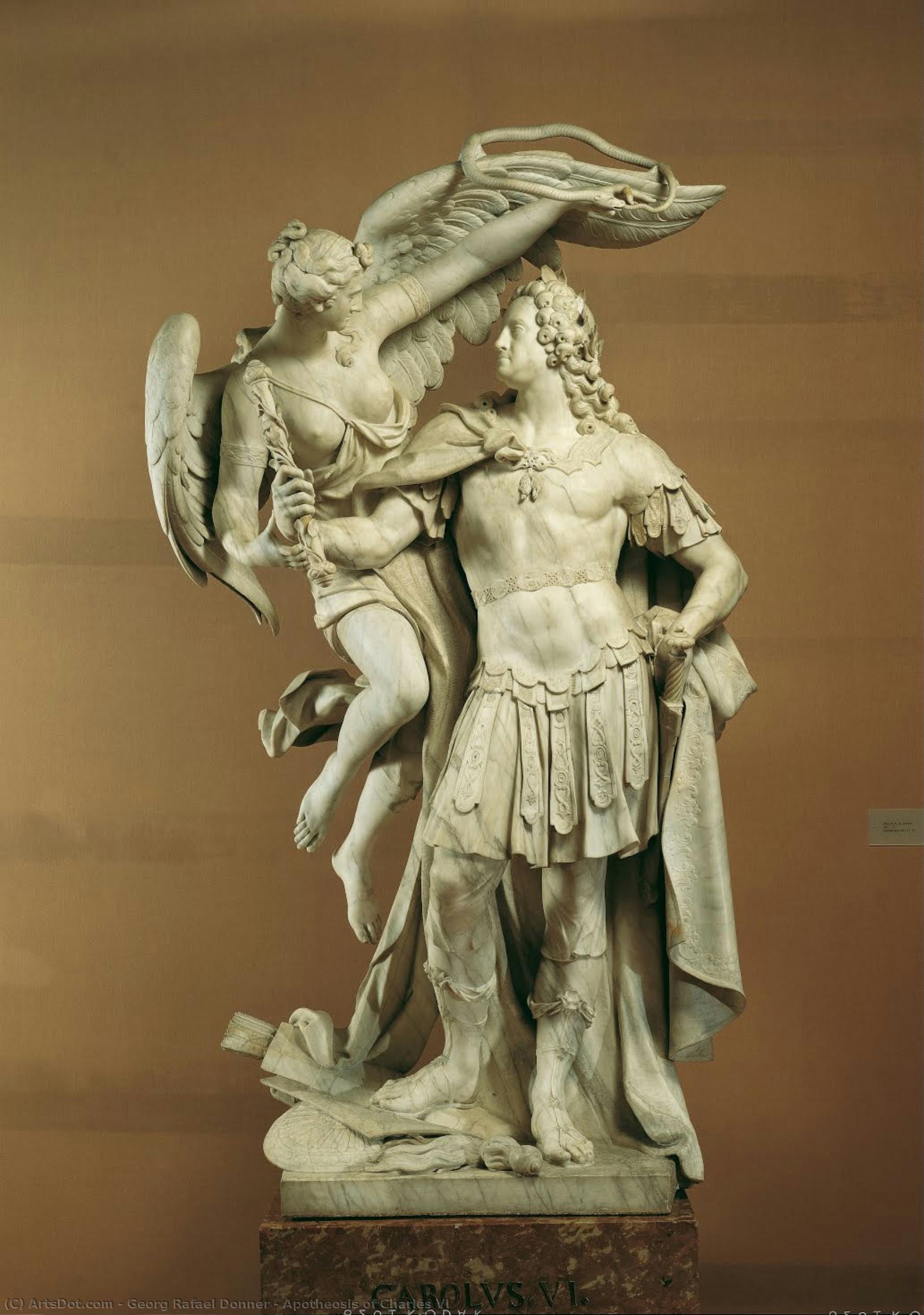
Apotheosis of Charles VI

 Read More
Giclée / Art Print
Museum-quality giclée or canvas print with fast production and flexible finish options. ( Buy Hand Made Painting Buy Image)




































Pick from our preset sizes that match the artwork's original proportions.

You may enter your own dimensions to fit a specific frame or space. If your selected size does not match the original image's proportions, we will either crop the artwork or extend the image with a mirrored or solid-fill edge. A digital mockup will be sent for your approval before production begins.
Please note that the on-screen preview does not reflect the actual cropping or extension. Only the mockup will accurately show the final composition.
While custom sizes are available, we recommend selecting a dimension from the predefined list to preserve the original proportions.
Worldwide Delivery () in 2 weeks instead of standard 4/5 weeks. (25 August)

Free Worldwide Express Shipping

High-Quality Linen Canvas

Full Shipping Insurance

Customs Tax Refund Guarantee

True Color Matching Guarantee

60-Day Return Policy (Defects Only)

100% Money-Back Guarantee

Bulk Discount Offer
 Glass option is only available in size under 110 CM

Apotheosis of Charles VI
Giclée / Art Print
Reproduction Size
-


Total Price
$ 63
Related Artworks










Artist Biography
The Sculptor of Baroque Grace: The Life and Legacy of Georg Rafael Donner
In the heart of the eighteenth century, a period defined by the dramatic flourishes of the Baroque era, Georg Rafael Donner emerged as a transformative force in European sculpture. Born in 1693 in Essling, near Vienna, Donner’s journey was one of profound metamorphosis—from a student of the priesthood to one of the most celebrated sculptors of his age. His early years were shaped by the rigorous discipline of theological study in Heiligenkreutz, yet it was through his encounter with the studio of Giovanni Giuliani that his true vocation revealed itself. Under Giuliani’s mentorship, Donner mastered the intricate language of marble and bronze, learning to breathe life into cold stone through a meticulous command of anatomy and texture.
Donner’s artistic evolution was deeply rooted in a reverence for antiquity. While many of his contemporaries were content with the exuberant, often overwhelming ornamentation of the high Baroque, Donner sought a more refined synthesis. He drew immense inspiration from the classical sculptures housed within Vienna’s Academy, finding a way to marry the emotional intensity of Bernini with the poised, dignified grace of ancient Greek and Roman masters. This unique stylistic blend allowed him to create works that possessed both a monumental presence and a subtle, poetic intimacy. His ability to manipulate drapery—making heavy marble appear as light as silk—became a hallmark of his technical virtuosity.
Masterpieces of Emotion and Stone
The breadth of Donner’s oeuvre spans across significant architectural and religious landscapes, leaving an indelible mark on the cities of Salzburg and Bratislava. His work is characterized by a rare ability to convey profound human emotion through stillness. One of his most breathtaking achievements remains the Donnersteig in Mirabel Castle, Salzburg (1725–1727), where he sculpted life-size marble figures that adorn the magnificent staircase. This project cemented his reputation as a master of the monumental, blending mythological narratives with an architectural grandeur that continues to captivate visitors today.
Beyond the grand staircases of Salzburg, Donner’s hand can be found in the very fabric of urban Vienna and the courts of the nobility. His career saw him working in Pozsony at the court of count-bishop Emeric Esterházy, where he produced significant works such as a horse monument of St. Martin and an evocative gravestone for the Bishop. In the streets of Vienna, his legacy is etched in water and stone through the Fountain of Austria's Rivers (1737–1739) and the sculptural source featuring Perzei and Andromeda in front of the City Hall. Even as he approached the end of his life, his devotion to the spiritual and the classical remained undiminished, evidenced by the hauntingly beautiful Pietà at the cathedral in Gurk (1741), one of his final, poignant masterpieces.
A Lasting Impression on European Art
The historical significance of Georg Rafael Donner extends far beyond the physical monuments he left behind. As a teacher and a pioneer, he educated many of the most prominent German sculptors of his era, including his own son, Matthäus Donner, thereby ensuring that his stylistic innovations—a blend of Baroque dynamism and pseudo-ancient elegance—would ripple through subsequent generations. His influence was not merely technical but philosophical, as he championed a way of seeing that respected both the natural world and the idealized forms of the past.
Today, the memory of Donner is preserved not only in museums like the Belvedere in Vienna, which houses much of his work, but also in the very currency of Austria. His selection as the main motif for the Austrian gold euro commemorative coin serves as a testament to his status as a national treasure. Through his ability to capture the ephemeral beauty of emotion within the permanence of stone, Georg Rafael Donner remains a singular figure whose work continues to echo the splendor and the soul of the eighteenth century.
Georg Rafael Donner
1693 - 1741 , Austria
Quick Facts
- Artistic Movement Or Style: Baroque
- Artists Or Movements Influenced By This Artist: ['Antique Sculpture']
- Artists Who Influenced This Artist: ['Giovanni Giuliani']
- Date Of Birth: Esslingen am Neckar, Austria (1693)
- Date Of Death: Vienna, 1741
- Full Name: Georg Rafael Donner
- Nationality: Austrian
- Notable Artworks:
- Donnersteig Salzburg
- Salzburg Gravestone
- St Martin Monument Pozsony
- Austria's Rivers Fountain Vienna
- Place Of Birth: Esslingen am Neckar, Austria

