 Preview
 Send
Send Share
Share
 Details

 Download
 Similars
 X-Ray
X-Ray Diaporama
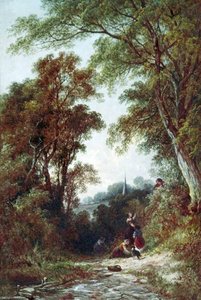
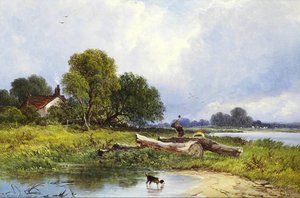
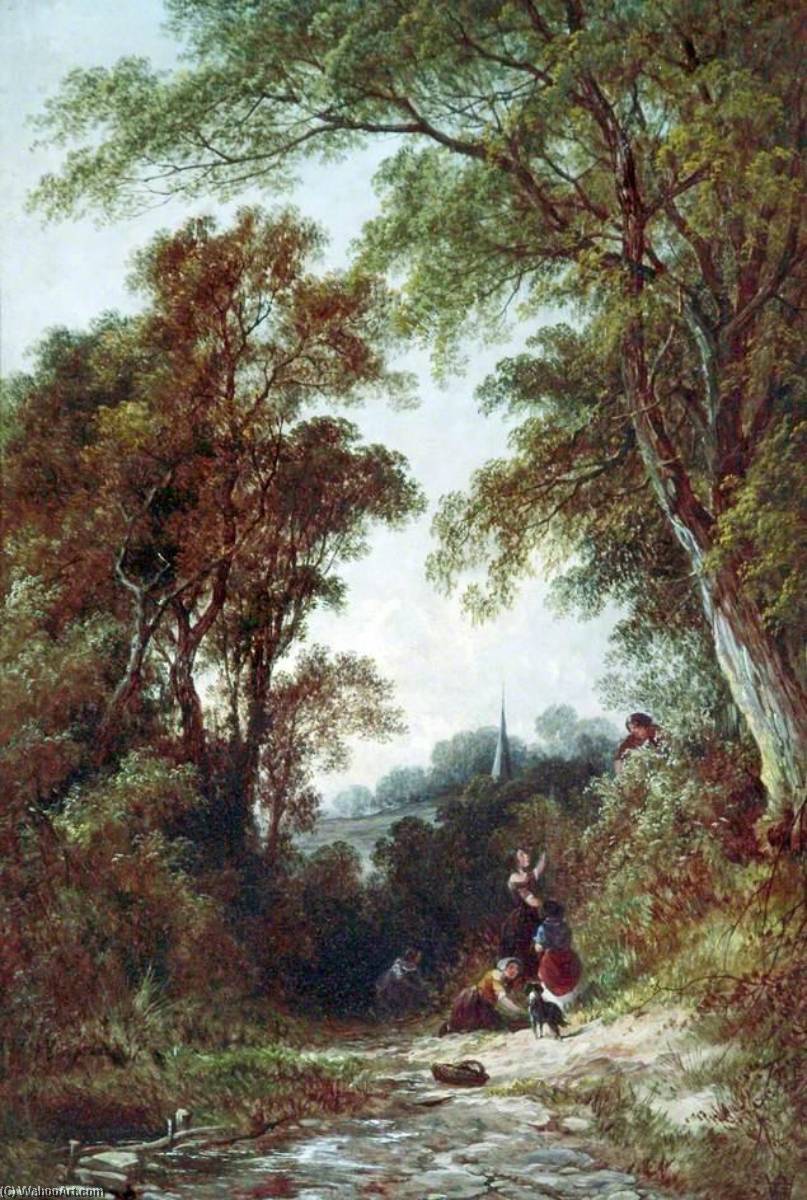
Lane near Beckenham, Kent

 Read More
Giclée / Art Print
Museum-quality giclée or canvas print with fast production and flexible finish options. ( Buy Hand Made Painting Buy Image)




































Pick from our preset sizes that match the artwork's original proportions.

You may enter your own dimensions to fit a specific frame or space. If your selected size does not match the original image's proportions, we will either crop the artwork or extend the image with a mirrored or solid-fill edge. A digital mockup will be sent for your approval before production begins.
Please note that the on-screen preview does not reflect the actual cropping or extension. Only the mockup will accurately show the final composition.
While custom sizes are available, we recommend selecting a dimension from the predefined list to preserve the original proportions.
Worldwide Delivery () in 2 weeks instead of standard 4/5 weeks. (27 August)

Free Worldwide Express Shipping

High-Quality Linen Canvas

Full Shipping Insurance

Customs Tax Refund Guarantee

True Color Matching Guarantee

60-Day Return Policy (Defects Only)

100% Money-Back Guarantee

Bulk Discount Offer
 Glass option is only available in size under 110 CM

Lane near Beckenham, Kent
Giclée / Art Print
Reproduction Size
-


Total Price
$ 63
Related Artworks









Artist Biography
A Legacy Carved in Light and Landscape
In the golden age of Victorian landscape painting, few names resonate with the quiet, enduring grace of George Augustus Williams. Born in London on May 4, 1814, Williams was not merely an artist but a vital link in a prestigious lineage of painters known as the Williams family. As the third son of the esteemed Edward Williams, he was immersed from birth in an environment where the brush and palette were the primary languages of expression. This familial heritage provided him with a profound, albeit informal, education; under his father’s watchful eye, he mastered the delicate art of capturing the ephemeral qualities of light and atmosphere, a skill that would later define his contribution to the Barnes School of landscape art.
The life of Williams was deeply intertwined with the natural rhythms of the British Isles. While his roots remained in the bustling heart of London, his artistic soul wandered through the serene riverbanks of the Thames and the rugged, mist-shrouded valleys of Wales. His development as an artist was characterized by a transition from the meticulous observational techniques inherited from his father to a more nuanced, atmospheric approach that embraced the Romantic aesthetic. This movement, which sought to evoke emotional depth through the grandeur of nature, found its perfect vessel in Williams’s ability to render the subtle gradations of a twilight sky or the tranquil reflections upon a still estuary.
The Mastery of Atmosphere and Terrain
To gaze upon a work by George Augustus Williams is to experience a moment of profound stillness. His technical prowess lay in his command over atmospheric perspective, using soft tonal shifts to create an illusion of immense depth and distance. He possessed a singular talent for portraying riverscapes, particularly the Thames, where he captured not just the water itself, but the very mood of the river—the way light dances upon ripples or how fog clings to the shoreline at dawn. His depictions of the Dolgelly Estuary in Wales showcase a different facet of his mastery, blending the dramatic, mountainous terrain of Snowdonia with a sense of pastoral peace.
His repertoire was diverse, ranging from the crystalline clarity of winter scenes to the evocative mystery of moonlit landscapes. Some of his most celebrated themes include:
- Riverscapes and Waterways: Capturing the rhythmic life of the Thames and the tranquil reaches of Kentish rivers.
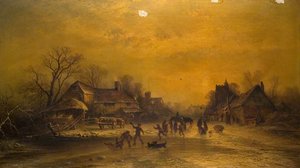
- Seasonal Transitions: Notable works such as 'Frozen Mill Pond' demonstrate his ability to render the textures of ice and the stark, quiet beauty of a dormant landscape.
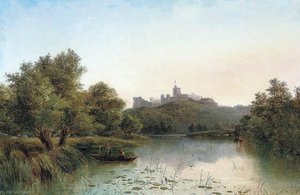
- Architectural Grandeur: Integrating historical landmarks into natural settings, as seen in his serene rendering of 'Windsor Castle from the Thames.'
- Nocturnal Studies: Utilizing subtle light sources to create depth and a sense of Romantic wonder.
Historical Significance and Artistic Heritage
The significance of George Augustus Williams extends far beyond his individual canvases. He was a cornerstone of a movement that celebrated the British countryside, helping to establish a national visual identity during a period of rapid industrial change. His regular exhibitions at the Royal Academy from 1841 onwards solidified his reputation among his peers and ensured that the traditions of the Williams family would be recognized by the highest echelons of the art world. Through his work, the landscapes of the Victorian era were preserved with a level of intimacy and reverence that continues to captivate collectors and historians alike.
Furthermore, his influence lived on through the next generation of painters within his family, such as his daughter Caroline Fanny Williams, who adopted his subject matter while infusing it with even more vibrant color. As a pioneer of the Barnes School, George Augustus Williams remains a master of the subtle and the sublime, leaving behind a body of work that serves as a window into the tranquil, much-loved landscapes of a bygone era. His ability to find the extraordinary within the ordinary—a quiet river bend, a dusting of snow, or a distant castle—ensures his enduring place in the annals of British art history.
george augustus williams
1814 - 1901
Quick Facts
- Artistic Movement Or Style: Victorian Landscape Art
- Artists Or Movements Influenced By This Artist: ['Williams Family Painters']
- Artists Who Influenced This Artist:
- James Ward
- George Morland
- Date Of Birth: May 4, 1814
- Date Of Death: May 26, 1901
- Full Name: George Augustus Williams
- Nationality: English
- Notable Artworks:
- Frozen Mill Pond
- Near Dolgelly
- Place Of Birth: London, England