

 Preview
 Send
Send Share
Share
 Details

 Download
 Similars
 X-Ray
X-Ray Diaporama
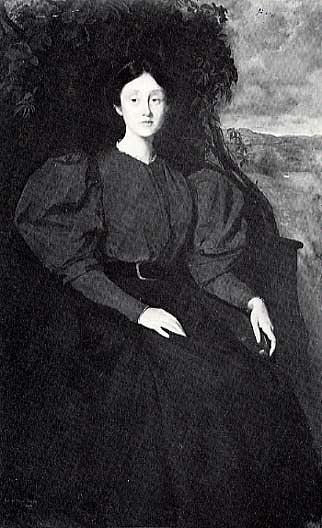
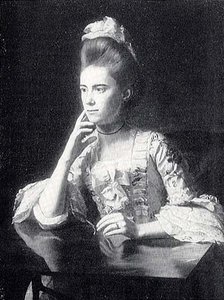
Polly Cabot, (painting)

 Read More
Purchase a high-resolution, enhanced digital image, far superior to the online preview.
Each file is meticulously prepared by our in-house specialists using advanced tools and expert manual retouching. We ensure every image has exceptional clarity, precise color accuracy, and fine detail.
The final file is delivered via email within 72 hours, optimized for immediate use in professional, editorial, and print environments. This is the same quality trusted by top-tier design studios, publishers, and galleries.
Digital Image
Download a high-resolution file for personal display, printing, and creative projects. ( Buy Print Buy Hand Made Painting)
Included in Every Digital Image Order
Expert Digital Delivery, Guaranteed
When you choose ArtsDot.com, you're not just getting an image - you're receiving a professionally enhanced digital artwork, crafted with precision and backed by a satisfaction guarantee. Here's everything that comes with your order, automatically:

Fast Email Delivery
Your high-resolution digital image file will be emailed to you within 72 hours of ordering - ready for immediate use.

AI-Enhanced Digital File
Your artwork is professionally optimized using advanced AI tools and manual editing, ensuring maximum detail, clarity, and color accuracy.

Free Lifetime Re-Delivery
Accidentally deleted or lost your file? No worries - we'll resend it to you anytime, free of charge.

No Import Fees - Ever
Enjoy your artwork instantly with zero customs, duties, or delivery fees - digital downloads are always tax-free.

Color Accuracy Guarantee
We ensure your digital image reflects the original colors as closely as possible using professional tools and color management.

60-Day Satisfaction Guarantee
If you're not satisfied with your digital image, we'll revise it or refund 100% within 60 days - no questions asked.

100% Money-Back Guarantee
Not satisfied? Get a full refund within 60 days of receiving your digital file - no questions asked.

Bulk Order Discounts
Buy 3 images, save 10% - Buy 5, save 15% - Buy 10+, save 20%. Great for creative projects, galleries, and agencies.
Related Artworks
Artist Biography
The Soul of the Canvas: The Life and Legacy of George de Forest Brush
George de Forest Brush (1855–1941) was an artist who possessed the rare ability to bridge two seemingly disparate worlds: the disciplined, classical elegance of the Italian Renaissance and the raw, spiritual vitality of Native American life. Born in Shelbyville, Tennessee, but raised amidst the intellectual and artistic currents of New and Connecticut, Brush’s early life was steeped in a profound appreciation for beauty and tradition. His mother, a self-taught artist, nurtured his innate talent from a tender age, fostering a lifelong devotion to the visual arts. This foundational love for drawing and painting would eventually lead him far beyond the borders of his New England upbringing, guiding him toward the prestigious studios of Paris and the vast, sun-drenched landscapes of the American West.
The trajectory of Brush’s career was irrevocably altered by his formal training under the legendary Jean-Léon Gérôme at the École des Beaux-Arts. In the hallowed halls of Parisian academia, he mastered the meticulous techniques of classical realism and absorbed the principles of Renaissance composition. This period instilled in him a reverence for anatomical precision and a sophisticated understanding of light and shadow. However, Brush was never content to merely replicate the past; he sought a way to infuse these academic rigors with a contemporary, spiritual pulse. Upon returning to the United States, his gaze turned toward the Wind River region of Wyoming, where his encounters with the Shoshone and Arapahoe peoples would provide the most profound inspiration of his life.
A Symbiosis of Tradition and Spirit
Brush’s work is characterized by a unique tension between ethnographic observation and romanticized idealism. Unlike many of his contemporaries who approached Native American subjects through a purely documentary lens, Brush sought to capture what he perceived as the underlying spiritual essence of these communities. His canvases often feature idealized depictions that transcend mere portraiture, leaning instead toward the allegorical. In masterpieces such as The Indian and the Lily, one observes a seamless integration of classical motifs with indigenous subjects, creating a visual language where the sacredness of nature and the dignity of human tradition are inextricably linked.
As his style matured, Brush’s technique underwent a subtle yet significant evolution. While he maintained the disciplined structure learned in Paris, his later works began to embrace a more expressive use of color and light, echoing the burgeoning influence of Impressionism. He moved away from the rigid, almost sculptural figures of his early academic period toward compositions that felt more atmospheric and fluid. This shift allowed him to explore secularized Madonna motifs—portraying mothers and children with a tenderness that resonated with universal themes of nurture and divinity. His ability to translate the profound rituals and quiet dignity of Native American life into a format that spoke to the Western classical tradition remains his most enduring artistic achievement.
Beyond the Brush: Innovation and Influence
The significance of George de Forest Brush extends beyond the boundaries of the fine arts, touching upon the intersections of science, patriotism, and social philosophy. His intellectual curiosity was matched by a practical ingenuity; notably, in collaboration with his friend Abbott H. Thayer, Brush contributed to the development of early military camouflage, applying his keen understanding of light, texture, and pattern to the needs of modern warfare. This period of innovation highlights an artist whose mind was as engaged with the complexities of the changing world as it was with the timeless beauty of his subjects.
Throughout his long and distinguished career, Brush remained a figure of immense cultural importance, earning election to the National Academy of Design and leaving an indelible mark on American art history. His legacy is defined by several key pillars:
- The Synthesis of Styles: Successfully merging the academic precision of the French Beaux-Arts tradition with the spiritual landscapes of the American West.
- Cultural Interpretation: Providing a deeply empathetic, albeit romanticized, window into Native American cultures during a period of immense historical transition.
- Technical Versatility: Transitioning from the meticulous realism of the Hudson River School influence to a more luminous and atmospheric Impressionistic approach.
- Interdisciplinary Contribution: Applying artistic principles to scientific advancements in camouflage and engaging with the social philosophies of his era.
Today, the works of George de Forest Brush continue to captivate audiences, serving as poignant reminders of a time when art sought to find the universal thread connecting the ancient traditions of the Old World with the burgeoning spirit of the New.
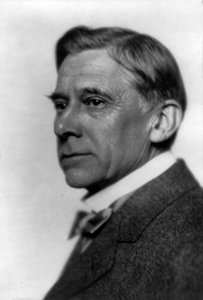
george de forest brush
1855 - 1941
Quick Facts
- Artistic Movement Or Style: Hudson River School & Realism
- Artists Who Influenced This Artist:
- Charles Webster Hawthorne
- Edward Penfield
- Date Of Birth: 1855
- Date Of Death: 1941
- Full Name: George de Forest Brush
- Nationality: American
- Notable Artworks:
- Mrs Fiske Warren, née Osgood
- Mother and Child
- Laying Away a Brave
- Place Of Birth: New York City, USA

